


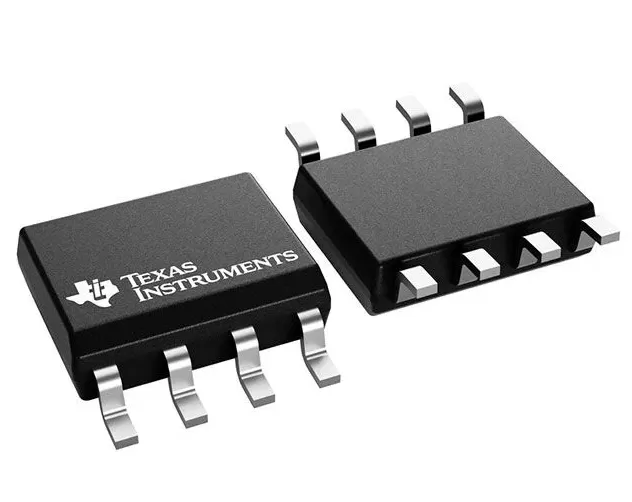

INA219AID
Brand: Texas Instruments
Texas Instruments INA219AID is a power management component designed for Industrial Automation and related applications. In stock at Superb Automation — request a quote for competitive pricing and fast delivery.
Product Specifications
INA219AID
Texas Instruments — Power Management & Signal Chain
Product Overview
The INA219AID from Texas Instruments is a power management / signal chain IC delivering high efficiency, precision regulation, and robust protection. Texas Instruments (TI) is a global leader in analog ICs, power management solutions, and embedded processors.
Superb Automation partners with leading brands including Qorvo, TI, ADI, XILINX, NVIDIA, Intel, ST, MACOM, Renesas, and Coilcraft to provide complete BOM and supply-chain solutions.
Key Features
- High-efficiency power conversion with low quiescent current
- Wide input voltage range with precision output regulation
- Integrated over-current, over-temperature, and short-circuit protection
- Small footprint packaging for space-constrained designs
- AEC-Q100 qualified options available for automotive applications
- Flexible sequencing and soft-start control
Key Specifications
| Input Voltage | V |
| Output Voltage | V |
| Output Current | A |
| Switching Frequency | kHz |
| Efficiency | % |
| Quiescent Current | µA |
| Topology | — |
| Package | — |
| Operating Temp | °C |
| Protection | — |
Applications
Industrial Automation
Automotive Electronics
Telecom Infrastructure
Server & Data Center Power
Medical Devices
Consumer Electronics
Request Quote — In Stock, 100% New & Original, Full Warranty
INA219AID: 12-bit current and power monitor with an I2C interface in a 8-pin SOIC
INA219AID is a digital current, voltage and power monitor with an I2C and SMBus interface in a SOIC body of 8 pins. This is the A grade of the INA219, which means 1 percent accuracy over temperature rather than the 0.5 percent of the B grade. It converts a shunt drop and a bus voltage with a 12 bit converter and reports current, voltage and power over I2C, on buses from 0 V to 26 V, from a 3 V to 5.5 V supply.
Order code and package
| Order code | INA219AID |
| Function | current, voltage and power monitor with I2C |
| Grade | A, 1 percent accuracy over temperature |
| Package | SOIC, 8 pins, 3.91 mm by 4.90 mm |
| Interface | I2C and SMBus compatible, 16 programmable addresses |
| Bus voltage range | 0 V to 26 V |
| Shunt full scale | 320 millivolts at the widest gain setting |
| Supply | 3 V to 5.5 V |
| Converter | 12 bit, with programmable averaging |
| Registers | shunt voltage, bus voltage, power, current, calibration |
| Temperature range | minus 40 to plus 125 C |
| Datasheet | SBOS448 revision G, December 2015 |
Electrical parameters that decide the application
| Accuracy | 1 percent maximum over temperature on the A grade |
| Bus full scale | 16 V or 32 V, selected in the configuration register |
| Shunt gain | divide by 1, 2, 4 or 8, giving full scale from 40 to 320 millivolts |
| Resolution | 12 bit on both channels, or 9 to 12 bit with averaging |
| Supply current | 1 milliamp maximum |
| Conversion time | up to 68 milliseconds between the shunt and bus samples in the slowest mode |
| Calibration | current and power registers are computed from a value the host writes |
| Addresses | 16, set by two pins and the general call |
| Package options | SOIC 8 and SOT-23 8 on the same die |
| Bus over range | the bus converter clips above its selected full scale, it does not saturate gracefully |
Points to check before this part goes on a BOM
The current and power registers are computed from a calibration value the host writes. Nothing in the part knows the shunt value, so a board that leaves the register at its default reads a number that is consistent and wrong.
The 320 millivolt shunt full scale sets the shunt, not the load. At 10 amps the largest usable shunt is 32 milliohms, and at 1 amp it is 320 milliohms; a shunt chosen for the fault current leaves the normal load in the bottom bits of a 12 bit conversion.
The shunt and the bus are converted at different moments. In the slowest averaging mode the two samples can be 68 milliseconds apart, so on a load that steps quickly the reported power is a product of two different instants.
The A grade is 1 percent over temperature and the B grade is 0.5 percent. Both grades are the same die with different test limits, so a project that needs the tighter number has to buy the B order code rather than calibrate the A part at one point.
The bus converter has two full scale settings, 16 V and 32 V, and it clips at the one selected. A 24 V rail needs the 32 V setting, and the resolution falls by half when the range doubles.
Sixteen addresses on a two wire bus sounds generous until a board carries four rails. The address pins are strapped, not programmable at run time, so the rail count sets the strapping before the board is signed off.
Where this order code fits
Server rails, telecom shelves and bench power supplies are the boards that use it, usually because the host already has an I2C bus and no spare analogue input. Boards comparing it with a neighbouring part start from our ADC DAC Cross Reference page, and boards replacing a part that has gone end of life start from the How to Verify a Drop in Replacement page.
Questions buyers ask
Does the part work without any register programming? It converts with defaults: 12 bit, 320 millivolt shunt full scale, 32 V bus full scale and continuous conversion. The current and power registers still need the calibration value to mean anything.
What decides the accuracy, the grade or the shunt? Both. The grade sets the part's own error, and the shunt tolerance and its temperature coefficient add to it directly, which is why a 0.5 percent shunt can dominate a B grade part.
SUPERB holds and sources this Texas Instruments line for production and repair demand, quoted against the exact ordering string with date codes, packing and country of origin stated on the offer. When a line is moving, the Supplier Quality Audit page sets out the checks that keep a substitute from failing on the bench.