MCU & Embedded Processors Sourcing
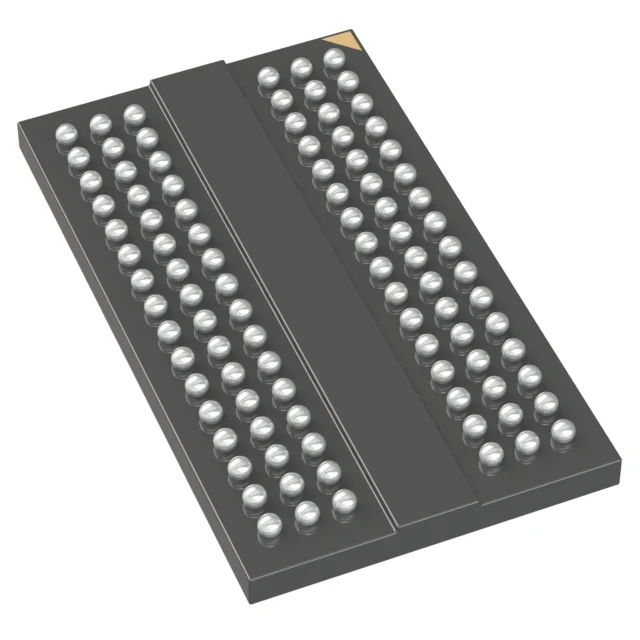
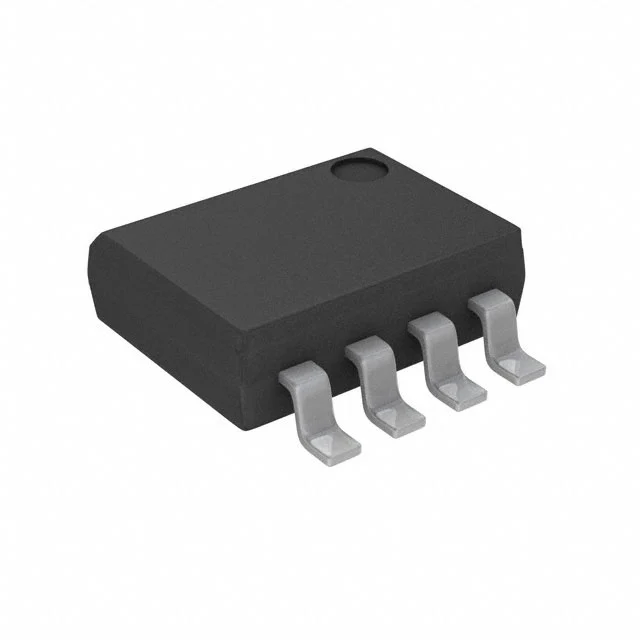

The STM32F103C8T6 is one of the world's most widely deployed ARM Cortex-M3 microcontrollers, part of STMicroelectronics' mainstream STM32F1 performance line. Running at 72 MHz with 64KB Flash, 20KB SRAM, dual 12-bit ADCs, CAN 2.0B, USB 2.0 Full-Speed, and up to 37 GPIOs in a compact LQFP-48 package, it powers everything from industrial motor controllers and IoT gateways to the famous "Blue Pill" development board. Extensive ecosystem support — STM32CubeIDE, HAL/LL libraries, Arduino core, and real-time OS compatibility — makes it the go-to MCU for rapid embedded development and volume production.
The STM32F103VET6 belongs to ST's STM32F1 Performance Line — the series that defined the ARM Cortex-M3 ecosystem in the maker, hobbyist, and professional drone communities. Its combination of 72 MHz processing, extensive communication peripherals, hardware PWM for motor control, and industrial temperature range makes it the natural choice for flight controllers spanning micro whoops to professional mapping UAVs.
With 512 KB Flash and 64 KB SRAM, the STM32F103VET6 comfortably runs ArduPilot ChibiOS builds with GPS waypoint navigation, terrain following, and camera gimbal control — plus Betaflight/iNav firmware with full OSD, logging, and telemetry. The LQFP-100 package with 80 GPIO provides ample I/O for multi-sensor drone architectures without external I/O expanders.
The STM32F103ZET6 belongs to ST's STM32F1 Performance Line — the series that defined the ARM Cortex-M3 ecosystem in the maker, hobbyist, and professional drone communities. Its combination of 72 MHz processing, extensive communication peripherals, hardware PWM for motor control, and industrial temperature range makes it the natural choice for flight controllers spanning micro whoops to professional mapping UAVs.
In the 144-pin LQFP package, the STM32F103ZET6 unleashes the full peripheral set of the STM32F103 architecture — 5 USARTs, 3 SPIs, 112 GPIO, and a 12-channel DMA controller. This makes it the processor of choice for complex ArduPilot autopilots integrating dual GPS (primary + redundant), airspeed sensors, CAN/DroneCAN peripherals, and multi-protocol telemetry on a single PCB.
The STM8S003F3P6 belongs to ST's STM8S Value Line — the most cost-aggressive 8-bit MCU family ST has ever produced. Designed to compete at sub-$0.30 price points in high volume, the S003 delivers genuine STM8 core performance with hardware PWM, multi-channel ADC, and UART/SPI/I²C communication — all in a tiny TSSOP-20 footprint that demands minimal PCB real estate.
In the drone ecosystem, the STM8S003F3P6 achieved legendary status as the default MCU for BLHeli_S ESCs. The BLHeli_S open-source ESC firmware was specifically written for the STM8S platform, leveraging the advanced 16-bit timer's complementary PWM outputs with automatic dead-time insertion to drive N-channel MOSFET half-bridges at up to 48 kHz PWM frequency. This enables ultra-smooth motor commutation with DShot, Multishot, and Oneshot protocols — making the STM8S003 the invisible engine behind every high-performance FPV racing drone's motor response. Beyond ESCs, it serves in BMS monitoring nodes (cell voltage ADC scanning, I²C communication to the main FC), PDB current-sense controllers, and addressable LED strip drivers.
In the drone ecosystem, the STM32H743VIT6 powers the Cube Purple, Pixhawk 6C (H743), Flywoo GOKU H743, Matek H743. With 2 MB dual-bank Flash, it runs ArduPilot's full EKF3 stack, PX4's uORB message bus, and Betaflight 4.4+ H7 unified targets simultaneously. The dual-bank architecture enables failsafe OTA firmware updates — critical for commercial UAV fleets. Its 82 GPIOs, 6× SPI, 4× I²C, and 8 UARTs connect dual IMUs, dual GPS, airspeed sensors, lidar rangefinders, and companion computers without pin-mux contention.
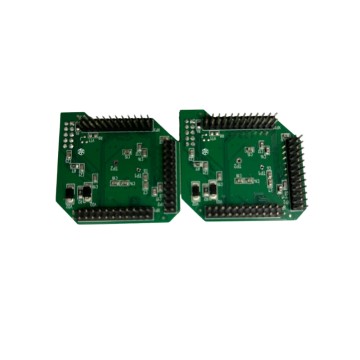
The STM32F103C8T6 belongs to ST's STM32F1 Performance Line — the series that defined the "Blue Pill" development board and became the most widely cloned ARM MCU in the maker, hobbyist, and drone communities. Its combination of 72 MHz Cortex-M3 processing, rich communication peripherals, hardware PWM for motor control, and compact 48-pin footprint makes it the natural choice for entry-level to mid-range multirotor flight controllers.
In the drone ecosystem, the STM32F103C8T6 is famous for running Betaflight — the dominant open-source flight controller firmware — on boards such as the Omnibus F3, SP Racing F3, Matek F405, and countless clone designs. The chip's dual 12-bit ADC enables simultaneous gyroscope and accelerometer sampling via SPI-attached IMUs (MPU6000/MPU6050/ICM-20602), while the advanced-control timer generates up to 6 channels of hardware PWM for BLHeli_S / BLHeli_32 ESCs. USB 2.0 Full Speed provides a direct PC connection for configuration via Betaflight Configurator without an external USB-UART bridge.
In the drone ecosystem, the STM32H723VGH6 is the High-end micro FCs, 550 MHz AIO, T-Motor H7 mini stacks. Betaflight 4.4+ H7 unified targets run at 8 kHz gyro / DShot 600 with RPM filtering, GPS Rescue 2.0, and HD OSD — all on a single MCU. With 80 GPIOs, 5× SPI, 5× I²C, 8 UARTs, and dual FD-CAN, it connects dual IMUs, ExpressLRS/Crossfire receivers, HDZero/Walksnail VTX, GPS, and SD-card blackbox simultaneously. It is the definitive F7 replacement for next-generation flight controller designs.
In the drone ecosystem, the STM32H743BIT6 powers the Large-format ArduPilot carrier boards, UAVCAN bridge nodes. With 2 MB dual-bank Flash, it runs ArduPilot's full EKF3 stack, PX4's uORB message bus, and Betaflight 4.4+ H7 unified targets simultaneously. The dual-bank architecture enables failsafe OTA firmware updates — critical for commercial UAV fleets. Its 168 GPIOs, 6× SPI, 4× I²C, and 8 UARTs connect dual IMUs, dual GPS, airspeed sensors, lidar rangefinders, and companion computers without pin-mux contention.
The STM32F103VET7 belongs to ST's STM32F1 Performance Line — the series that defined the ARM Cortex-M3 ecosystem in the maker, hobbyist, and professional drone communities. Its combination of 72 MHz processing, extensive communication peripherals, hardware PWM for motor control, and industrial temperature range makes it the natural choice for flight controllers spanning micro whoops to professional mapping UAVs.
With 512 KB Flash and 64 KB SRAM, the STM32F103VET7 comfortably runs ArduPilot ChibiOS builds with GPS waypoint navigation, terrain following, and camera gimbal control — plus Betaflight/iNav firmware with full OSD, logging, and telemetry. The LQFP-100 package with 80 GPIO provides ample I/O for multi-sensor drone architectures without external I/O expanders.

 English