A drop in replacement is supposed to be the easy answer to a shortage: same function, same footprint, order it and carry on. In practice the phrase is used far more loosely than the risk it carries. A part can drop into the socket and still fail in the field, because the parameters that were never compared are exactly the ones the circuit depends on.
This is the sequence used to verify a drop in replacement before it goes into a build, and the evidence that should exist when the verification is finished.
Why the socket test proves very little
Fitting and powering up shows that the pins line up and that nothing shorts. It does not show what happens at the temperature corners, what happens when the supply dips during start up, or what the part does with the timing edges that the original handled without comment. Devices are also screened in grades, so a replacement that is electrically similar in the commercial grade may be a different silicon in the industrial or military grade, or the other way around.
The usual failures are quiet ones. Input bias current shifts by an order of magnitude and the measurement drifts. Output settling changes and a loop becomes slow to lock. Latch up immunity or moisture sensitivity level changes, and the board that passed the bench test fails after reflow or after a season in the field. None of these are visible at the socket.
What to compare before the part goes in
| Item | How it is checked | What a bad result looks like |
|---|---|---|
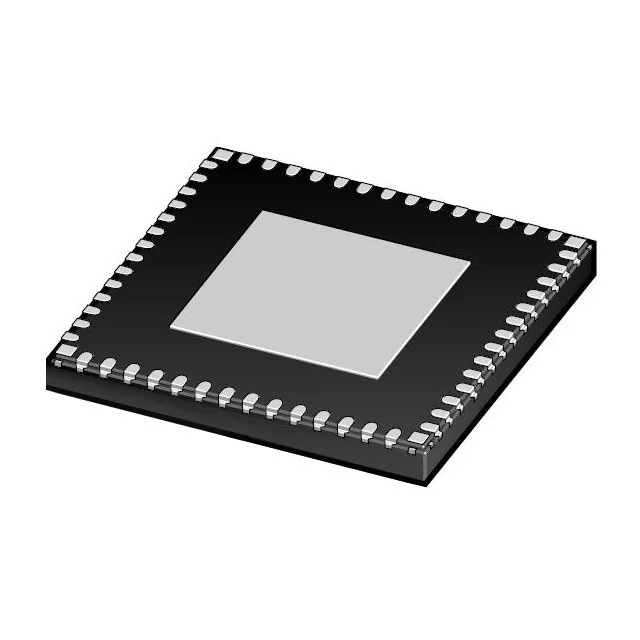
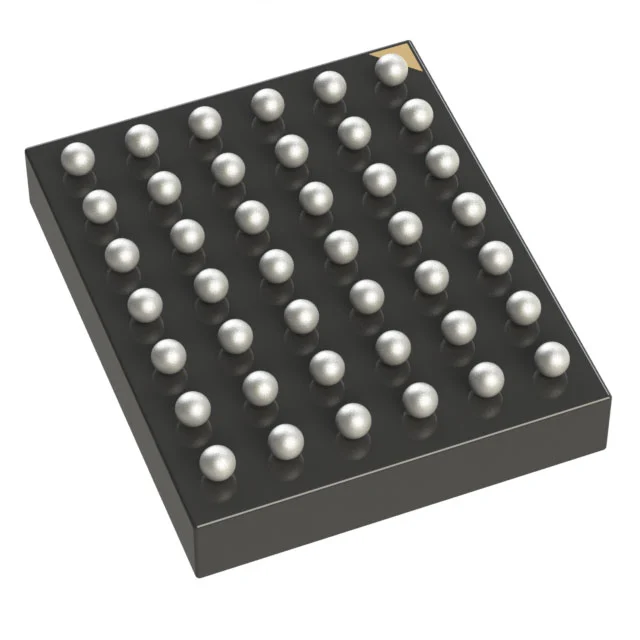
| Pinout and footprint | Drawing comparison against the original, plus a first article on the assembly | Same package, different pin function, or a pad that no longer reaches the land |
| Electrical limits | Parameter by parameter table including the corners the circuit relies on | Matched at room temperature, out of range at the temperature extremes |
| Timing and interface | Propagation, rise time, enable and power up sequence compared against the original | Works on the bench, marginal at the timing edges of the system |
| Thermal path | Dissipation, junction to case and case to ambient compared, then measured on the board | A smaller die in the same package running hotter than the original did |
| Process fit | Moisture sensitivity level, reflow profile and peak temperature compared | Damage during reflow that only appears after the second or third pass |
| Provenance | Reel counting by X-ray, package and marking inspection, records kept against the lot | Correct part number on a reel that does not match the marking on the device |
| Assembly behaviour | In circuit and functional test against the released test plan | The board passes and the finished unit does not hold its specification |
How SUPERB PCBA verifies a replacement
Send the original part number, the proposed replacement and the assembly it belongs to. The reply returns the comparison above with the differences that matter to your circuit marked, not a generic equivalence claim. Where the datasheet does not settle a point, the answer is written as a question back to you with the condition needed to close it, rather than as an assumption.
Verification is then carried out on hardware. First article inspection is run against the released data, with 3D SPI before reflow and 3D AOI after it, X-ray inspection in 2D and CT mode with voiding below 5 percent, and in circuit and functional test on fixtures approved by the customer, under IPC-A-610 Class 2 and Class 3, ISO 9001 and ISO 13485 for medical programmes. Where the replacement needs a small change to the board, the boards for the same build are supported from 500 MHz to 77 GHz with lines down to 0.05/0.05 mm and up to 68 layers, so the change can be held inside one order instead of restarting the programme.
SUPERB Assembly keeps the original and the replacement records together, including reel counting records, date codes, the reflow profile used and the test data from the verifying build, with a 730 day warranty on verified lots. SUPERB Tech holds one record set for the change, so when the next audit or the next revision arrives, the reason for the substitution and the evidence behind it are already in one file.
Background reading: second source qualification for drop in parts, verifying components and avoiding counterfeits, pin to pin cross reference, and sourcing obsolete components.
How much verification is enough
The depth should follow the consequence of failure. For a part inside a bench instrument, a parameter comparison and a functional test on the board is usually sufficient. For a part inside a medical device, a defence programme or a telecom line card, the same substitution needs the temperature corners, the reflow conditions and the documentation trail as well, because the failure will be found by an auditor or by a customer rather than by a technician.
A practical rule is to decide the verification level while the shortage is still being discussed. Once the material has landed and the build is waiting, the pressure to skip a step is at its highest, and the cost of a wrong substitution is at its largest.
Drop in replacement questions
Does a matching datasheet headline mean the part is equivalent?
No. Headline figures are usually matched at room temperature. The corners, the timing and the thermal path are where a replacement either holds or does not.
Who decides whether a replacement is acceptable?
Your engineering team decides. The comparison and the test data are supplied so that the decision can be made on evidence, and the substitution only enters the BOM after written approval from your side.
Can the original part number stay on the documentation?
Only where the programme allows it. In most cases the change is recorded with the original part, the replacement, the approval and the test data, so the build can be traced later.
What if the replacement fails verification?
The build stays on the original device where covered stock exists, or moves to a different alternative. A failed verification is a result, not a dead end, and it is cheaper than a field failure.
Next step
Send the original part number, the candidate replacement and the assembly it sits on. You get the comparison table with the differences marked, the verification steps needed for your product class, and the test evidence once the build has been run.