


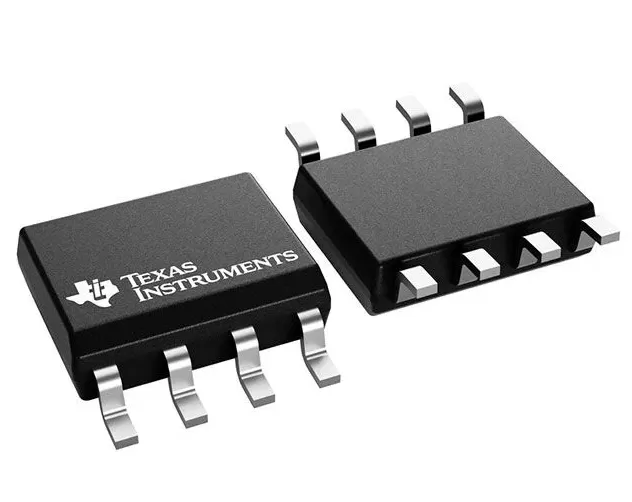

CD4067BM
Brand: Texas Instruments
Texas Instruments CD4067BM is a power management component designed for Industrial Automation and related applications. In stock at Superb Automation — request a quote for competitive pricing and fast delivery.
Product Specifications
CD4067BM
Texas Instruments — Power Management & Signal Chain
Product Overview
The CD4067BM from Texas Instruments is a power management / signal chain IC delivering high efficiency, precision regulation, and robust protection. Texas Instruments (TI) is a global leader in analog ICs, power management solutions, and embedded processors.
Superb Automation partners with leading brands including Qorvo, TI, ADI, XILINX, NVIDIA, Intel, ST, MACOM, Renesas, and Coilcraft to provide complete BOM and supply-chain solutions.
Key Features
- High-efficiency power conversion with low quiescent current
- Wide input voltage range with precision output regulation
- Integrated over-current, over-temperature, and short-circuit protection
- Small footprint packaging for space-constrained designs
- AEC-Q100 qualified options available for automotive applications
- Flexible sequencing and soft-start control
Key Specifications
| Input Voltage | V |
| Output Voltage | V |
| Output Current | A |
| Switching Frequency | kHz |
| Efficiency | % |
| Quiescent Current | µA |
| Topology | — |
| Package | — |
| Operating Temp | °C |
| Protection | — |
Applications
Industrial Automation
Automotive Electronics
Telecom Infrastructure
Server & Data Center Power
Medical Devices
Consumer Electronics
Request Quote — In Stock, 100% New & Original, Full Warranty
CD4067BM: the 16 channel multiplexer whose tube row is obsolete
The CD4067BM is the small outline tube entry in this catalogue for the CD4067B, a single 16 channel analogue multiplexer and demultiplexer with binary address decoding on chip. The vendor describes it as a 20 V, 16 to 1, single channel analogue multiplexer and marks the family ACTIVE. The parametric table gives one channel, a 16 to 1 configuration, single supply options of 3.3, 5, 12, 16 and 20 V, dual supply options of plus or minus 2.5, 5 and 10 V, a typical on resistance of 125 ohms, an on capacitance of 5 picofarads, a typical supply current of 0.04 microamps, a bandwidth of 14 MHz and a 10 milliamp continuous channel current.
The row is where the page has to be blunt. The package option addendum dated 26 September 2026 lists CD4067BM as Obsolete, in the 24-lead wide SOIC body, with a blank quantity and a Call TI instruction, while CD4067BM96 is Active at 2000 pieces on a large reel. The body is 159.65 square millimetres at 15.5 by 10.3 millimetres, the tube is 25 pieces, and the reel is the only published format for this die in the wide body.
The CD4067B rows as the vendor addendum publishes them
| Part class | Single 16 channel analogue multiplexer and demultiplexer |
| Vendor descriptor | 20 V, 16 to 1, single channel analogue multiplexer |
| Vendor document | SCHS052D, revised August 2024, CD4067B and CD4097B |
| Row on this page | CD4067BM, wide SOIC tube, Obsolete, quantity blank, Call TI |
| Live reel row | CD4067BM96, 2000 pieces on a large reel, Active |
| Second reel row | CD4067BM96.A, same quantity |
| Obsolete reel rows | CD4067BM96G4 and CD4067BPW |
| TSSOP reel row | CD4067BPWR, 2000 pieces, marking CM067B |
| Ceramic rows | CD4067BF, CD4067BF.A, CD4067BF3A, CD4067BF3A.A, 15 pieces |
| Package for this code | SOIC (DW), 24 leads, 159.65 square millimetres |
| Configuration | 16 to 1, one channel, binary address decoding on chip |
| On resistance | 125 ohms typical over a 15 V peak to peak signal range |
| Match between channels | 5 ohms typical at a 15 V supply |
| Channel leakage | Plus or minus 10 pA typical at a 10 V supply |
| Quiescent power | 0.2 microwatts typical |
| On capacitance | 5 picofarads typical |
| Bandwidth | 14 MHz |
| Supply | 3 V to 20 V single, plus or minus 3 V to plus or minus 10 V dual |
| Continuous current | 10 milliamps maximum through any channel |
| Input current | 1 microamp maximum at 18 V over temperature |
| Quiescent current | Tested at 20 V on every unit |
| Rating | 20 V high voltage type, catalogue |
Sixteen channels in one body and what that saves
A 16 to 1 multiplexer replaces two 8 to 1 parts and the logic that selects between them, and the binary decoding is on chip, so four address lines select one of sixteen channels. On a data acquisition card that scans sixteen thermocouples or sixteen strain gauges, that is one package instead of three, and it is the reason the part survives in instrumentation even though 24 pins in a wide body is a large footprint by modern standards.
The 5 picofarad on capacitance is the lowest in this family, which is what allows a 14 MHz bandwidth through a 125 ohm switch. The trade is that sixteen channels share one common pin, so the leakage of the selected channel is the only leakage that reaches the common node, but the capacitance of the common pin is the sum of the package and the board rather than the sum of sixteen channels.
The obsolete tube and what it does to small quantities
A blank quantity with a Call TI instruction means the vendor will not quote the part, and the row is effectively closed. For a tube of 25 that is a real loss, because the reel is 2000 pieces and the TSSOP alternative at 2000 has a different footprint. A customer who needs fifty pieces for a repair line is looking at a cut reel or at the ceramic body, which ships in a tube of 15 at a much higher price.
This is the point where the difference between an obsolete row and an obsolete part matters. The die is Active, the reel is Active, the ceramic body is Active, and only the tube format has closed. A purchasing system that stores the tube string will report the part as unavailable while the same die sits on a reel under a string it does not hold.
Reading the address lines and the inhibit pin
Four address pins select one of sixteen channels and an inhibit pin turns the selected channel off without changing the address. That is the whole interface, and it is why the part is easy to drive from any logic family: the digital inputs accept 3 V to 20 V regardless of the analogue supply. The inhibit pin is what allows several multiplexers to share a common bus, because all but one can be parked at high impedance.
The common pin is the one to watch on a scan. Sixteen channels share it, so the series resistance of the selected channel sits in the path, and the capacitance of the common node has to settle between channels before the converter samples the next one. A scan that steps at ten kilohertz through sixteen channels gives each channel 6.25 microseconds, which is enough to settle into a 1 megohm load with a 5 picofarad switch and not enough for a 100 kilohm load with a long cable attached.
The address decoding on chip also means the part can be driven from a counter directly, with no logic between the counter outputs and the address pins. A scanner built from a CD4060B divider and a CD4067B multiplexer is a two part data acquisition front end with no code, no clock configuration and no programmable part, which is a pattern that still appears in industrial instruments built in small quantities.
Where the wide body still wins
Twenty four leads in a wide SOIC at 159.65 square millimetres is a big part, and the board that takes it is usually a data acquisition card with room. The alternative is the same die in a TSSOP at 49.92 square millimetres, which is the smaller body and the one a dense card should take, at the cost of a 0.65 millimetre pitch. Both are 2000 piece reels, so the quantity question is identical and only the footprint differs.
The ceramic body at 15 pieces in a tube is the route for a wide temperature drawing or a military programme, and it is Active at a price that reflects the package rather than the die.
Sourcing a row that has closed
Two routes remain for the wide body: the 2000 piece reel through a distributor, or a cut reel from stock. The last time buy and LTB planning page sets out how a final order is sized for a product that will keep building for years, and the kitting service page explains how a cut reel is labelled and issued. For a customer whose board can take the thin body, the pin to pin cross reference page covers what the TSSOP row changes.
If the program is still open, the honest recommendation is the TSSOP row rather than the wide body, because the wide body has already closed one format and the trend in this catalogue runs one way.
What to send with an enquiry
Send the string, the number of channels actually scanned, the source impedance and the annual quantity. If the drawing names the tube row, say so, because that row is closed and the answer will name the reel or the thin body. If the product is a long life instrument, say that too, because the stock plan for a 16 channel multiplexer is the thing that keeps a repair line alive.