A last-time-buy usually starts with a product change notification that ends with a date six weeks away, after which the part is gone in the package you qualified. The decision is made under time pressure, against a forecast never written to cover five years. Buy too much and the cash sits on a shelf with a date code on it. Buy too little and the line stops in year three, when the only routes left are a broker and a price that no longer reflects the part.
Both failures come from the same place. The last-time buy is treated as a purchasing action, when it is a demand forecast with a storage plan attached. Quantity is only half of it; the other half is what the material has to survive before it is used.
Where last-time-buy planning goes wrong
The first mistake is buying to annual usage. Two thousand pieces a year for a seven year service life is not two thousand pieces, and it is not fourteen thousand either until attrition and pack quantity are in the same sum. The number that matters is lifetime demand plus losses, rounded to the way the part ships.
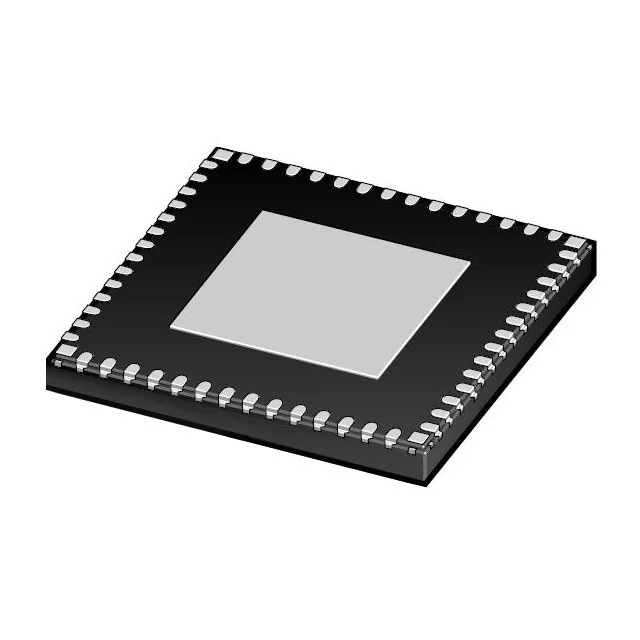
The second is ignoring attrition. SMT lines lose parts to feeder rejects, tombstoning, rework and test failures, and the loss rate is not the same for a 0402 resistor and a QFN transceiver. A buy that covers demand exactly will run short before the last build, and there is no second order.
The third is forgetting what the material is used for besides production. Samples, requalification builds and spares for field returns consume the same reel, and programs that leave them out find the gap when a customer returns a unit for repair.
The fourth is storage. A part with a two year floor life bought for a seven year program spends five years in a bag, and how it is stored decides whether it can still be assembled.
The fifth is having no bridge. An LTB is a purchase, not a plan. The plan says what happens at the last quarter: an approved substitute, a board revision, a last build of assemblies, or an end of program.
What belongs in the quantity
| Element | What it covers | What goes wrong when it is left out |
|---|---|---|
| Build forecast to end of service life | Every scheduled unit, by year | Buy sized to this year, short in year four |
| Attrition per part class | Feeder loss, rework, test fallout | Short before the final build |
| Engineering and requalification use | Samples, pilot builds, approval units | Production stock consumed by the lab |
| Field service and repair pool | Returns and warranty exchange | Repairs refused or done with a different part |
| Date code at receipt | Age already in the part before the buy | Stock expires earlier than the plan assumed |
| Storage condition | Dry pack, MSL, temperature, bake capacity | Parts unusable at the last build |
The four routes after an end-of-life notice
An LTB is one of four routes, and the cheapest one is decided by how stable the board revision is, not by unit price alone.
| Route | What it buys | Cost and risk profile | When it fits |
|---|---|---|---|
| Last-time buy of components | Stock against the lifetime build | Cash up front, storage and shelf life risk | Board is stable and the part is the only exposure |
| Last build of finished assemblies | Boards already assembled and tested | Higher cash, but no reflow risk later | Long service life, low annual volume |
| Approved substitute | Continuity without storage | Verification work, customer approval, documentation | A pin to pin part exists and the program accepts it |
| Board revision | A part that is still in production | Tooling, requalification, approval cycle | Volume justifies the change and time allows it |
The second route is the one most often missed: where volume is low and the program has a long tail, a tested assembly in a sealed bag only needs a functional check before shipment.
How SUPERB PCBA supports an LTB decision
The quantity basis is written on the quote. Material is quoted against the build quantity plus attrition plus test boards, and where only a full reel is available, the pack quantity is stated rather than absorbed.
On the material side, components are counted by X-ray on receipt, markings and date codes are compared with maker data, and parts that carry provenance risk are opened and checked. Aged stock is verified for solderability before release. Moisture sensitive parts are baked at 125 C to J-STD-033 and stored under ESD S20.20 in an SMT area held at ISO 8, 22 plus or minus 3 C and 45 to 65 percent relative humidity.
The build side carries the same evidence per lot: seven SMT lines placing down to 01005, 3D SPI on paste volume, 3D AOI plus DIP AOI, X-ray in 2D and CT to IPC-7095 with voiding below 5 percent, twelve zone reflow on SAC305 with nitrogen below 500 ppm, ICT and functional test, across seventeen process steps and ten QC stations under IPC-A-610 Class 2 and Class 3, ISO 9001, and ISO 13485 for medical programs. Verified lots carry a 730 day warranty, and a pin to pin change is made only with written approval.
Traceability is what makes a stored buy defensible: the lot on the board record still resolves to a date code when a customer returns a unit in year five. The wider process is on component obsolescence management, the substitution routes on obsolete RF part replacement, and the approval test for a replacement on how to verify a drop-in replacement.
Last-time-buy and LTB planning questions
How far ahead should the LTB quantity reach?
To the end of the service life, not the end of the contract. On defense and medical programs that is often five to ten years after the last shipment, and the forecast should name that date so the quantity can be defended.
Should we buy components or finished boards?
If the board revision is stable and volume is low, finished assemblies remove the shelf life risk from the parts and leave only a storage and functional check cost. If the program is still changing, components keep the flexibility and the parts remain available for a revision.
What do we do with material left when the program closes?
Age it, split it into scheduled, usable and out of window, and decide each group with an owner and a date. The method is on excess inventory management. Carrying it forward without a written decision is how the next program inherits a shelf it cannot use.
Can stored material still be assembled after several years?
Usually yes, if it was dry packed, kept inside its floor life and baked before use, with solderability checked on a sample. Parts from an open bag in a humid room are a test question, not an assumption.
Next step
Send the BOM with the end-of-life notice, the build forecast to the end of service life, and twelve months of usage. The reply gives a quantity basis per line, the storage each part needs, and a bridge plan for the date the stock reaches its last quarter.