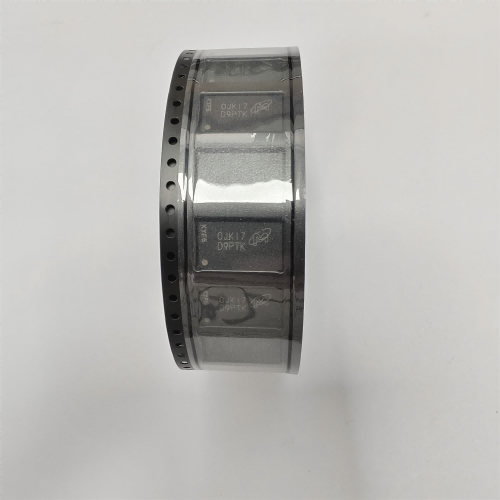
AD8646ARZ
Brand: Analog Devices
Analog Devices AD8646ARZ is a analog & mixed-signal component designed for Instrumentation and related applications. In stock at Superb Automation — request a quote for competitive pricing and fast delivery.
Product Specifications
AD8646ARZ
Analog Devices — Analog & Mixed-Signal ICs
Product Overview
The AD8646ARZ from Analog Devices is a high-performance analog / mixed-signal IC providing precision signal acquisition, conversion, and conditioning. Analog Devices (ADI) is a world leader in high-performance analog, mixed-signal, and DSP ICs for instrumentation, healthcare, automotive, and communications.
Superb Automation partners with leading brands including Qorvo, TI, ADI, XILINX, NVIDIA, Intel, ST, MACOM, Renesas, and Coilcraft to provide complete BOM and supply-chain solutions.
Key Features
- High-resolution data conversion with excellent SNR and THD
- Wide dynamic range and high linearity across operating conditions
- Integrated voltage reference with low temperature drift
- Flexible digital interface — SPI, I2C, or parallel options
- Industrial/automotive temperature range with guaranteed specs
- Low power consumption with power-down modes
Key Specifications
| Resolution | bits |
| Channels | — |
| Sample Rate | kSPS |
| Interface | — |
| Supply Voltage | V |
| Operating Temp | °C |
| Package | — |
| INL | LSB |
| SNR | dB |
| THD | dB |
Applications
Precision Instrumentation
Industrial Process Control
Medical Imaging & Diagnostics
Automotive Sensor Interfaces
Communications Infrastructure
Test & Measurement
Request Quote — In Stock, 100% New & Original, Full Warranty
AD8646ARZ: dual 24 MHz rail-to-rail amplifier in an 8-lead SOIC
The AD8646ARZ is the SOIC body version of the dual 24 MHz rail-to-rail amplifier. It has the same 2.5 mV maximum offset, 11 V/us slew, 8 nV/root Hz noise and 120 mA output as the MSOP part, in a package with 1.27 mm lead pitch that takes hand rework and a scope probe.
Published values
| Parameter | Value |
|---|---|
| Offset voltage | 0.6 mV typical, 2.5 mV maximum |
| Offset voltage drift | 1.8 uV/C typical, 7.5 uV/C maximum |
| Input bias current | 0.3 pA typical, 1 pA maximum |
| Supply current per amplifier | 1.5 mA typical, 2.0 mA maximum |
| Gain bandwidth | 24 MHz |
| Slew rate | 11 V/us |
| Settling time to 0.1 percent | 0.5 us |
| Voltage noise density | 8 nV/root Hz at 1 kHz |
| Channel separation | -115 dB at 10 kHz |
| Output swing at 1 mA | 4.98 V minimum high, 8.4 mV typical low |
| Short circuit output current | 120 mA |
| Phase margin | 74 degrees at 5 V |
| Supply range | 2.7 V to 5.5 V single supply |
| Also available as | AD8647 with shutdown in a 10-lead package, AD8648 quad |
2.5 mV of offset in a 24 MHz part
2.5 mV is not a precision offset and it is not meant to be. On a 1 V full scale signal it is 0.25 percent, and on a 5 V span it is 33 codes of a 16-bit converter, so this part belongs after a gain stage or in an alternating current path where a coupling capacitor removes the offset. Where the direct current accuracy matters, the AD8656 in the same package takes the offset to 250 uV for twice the supply current.
Drift of 7.5 uV/C maximum over 165 C is 1.2 mV, which is half the offset again. A 1.2 mV change on a 1 V signal is 0.12 percent, so an instrument that has to hold 0.05 percent over temperature needs either a trim at temperature or an auto-zero part.
Settling, capacitance and cable drive
A 0.5 us settling time to 0.1 percent on a 5 V supply is the number for a 1 MSPS converter driver, and the 74 degree phase margin is the number for stability. Above about 100 pF of load capacitance the phase margin falls and the output rings, so a cable or a large converter sampling capacitor needs 10 to 50 ohm of series resistance between the amplifier and the load.
The 120 mA short circuit current protects the part rather than describing its working point. At 5 V into 600 ohm the output delivers 8 mA and the swing stays within the 4.98 V and 8.4 mV figures in the table, which is what a video or a fast data line needs.
SOIC against MSOP on a real board
Both packages are the same die with the same electrical limits, and 10 mW per package is well inside the thermal capability of either. The SOIC wins where the board is reworked, where a probe has to land on an input pin, or where the creepage between the input pins matters on a high impedance node. The MSOP wins on area when the board is dense and the assembly is machine only.
Because the two are interchangeable electrically, a build can change package without requalifying the analog chain. That is worth writing on the drawing so a second source does not arrive as a different amplifier.
When an order code in this family cannot be found, the ADC and DAC cross reference lists what else does the same job, the pin to pin cross reference covers what to check before a part is dropped into an existing board, and vendor consolidation is the route we take on a live shortage.
Two questions buyers ask
Can the AD8646ARZ drive a 16-bit converter directly? It can drive one, but the 2.5 mV offset is 33 codes at 16 bits, so the converter resolution is wasted unless the offset is removed. Use it before the converter in a gain stage or with a coupling capacitor, and use a 250 uV part where the direct current accuracy matters.
Why is the SOIC version sometimes the cheaper one? Package and reel economics. The die is identical, so the SOIC is often the lower cost line and the obvious choice on a board with room.