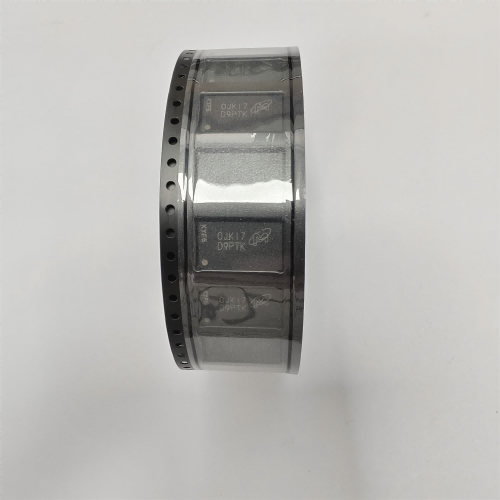
AD8034ARZ-REEL7
Brand: Analog Devices
Analog Devices AD8034ARZ-REEL7 is a analog & mixed-signal component designed for Precision Instrumentation and related applications. In stock at Superb Automation — request a quote for competitive pricing and fast delivery.
Product Specifications
AD8034ARZ-REEL7
Analog Devices — Analog & Mixed-Signal ICs
Product Overview
The AD8034ARZ-REEL7 from Analog Devices is a high-performance analog / mixed-signal IC providing precision signal acquisition, conversion, and conditioning. Analog Devices (ADI) is a world leader in high-performance analog, mixed-signal, and DSP ICs for instrumentation, healthcare, automotive, and communications.
Superb Automation partners with leading brands including Qorvo, TI, ADI, XILINX, NVIDIA, Intel, ST, MACOM, Renesas, and Coilcraft to provide complete BOM and supply-chain solutions.
Key Features
- High-resolution data conversion with excellent SNR and THD
- Wide dynamic range and high linearity across operating conditions
- Integrated voltage reference with low temperature drift
- Flexible digital interface — SPI, I2C, or parallel options
- Industrial/automotive temperature range with guaranteed specs
- Low power consumption with power-down modes
Key Specifications
| Resolution | bits |
| Channels | — |
| Sample Rate | kSPS |
| Interface | — |
| Supply Voltage | V |
| Operating Temp | °C |
| Package | — |
| INL | LSB |
| SNR | dB |
| THD | dB |
Applications
Precision Instrumentation
Industrial Process Control
Medical Imaging & Diagnostics
Automotive Sensor Interfaces
Communications Infrastructure
Test & Measurement
AD8034ARZ-REEL7: 80 MHz for 3.3 milliamps per amplifier
The AD8034 is the dual member of the FastFET family: a FET input stage with 1 pA of typical bias current, 80 MHz of bandwidth at a gain of 1, 80 V per microsecond of slew rate and 11 nV per root hertz of voltage noise, drawing 3.3 mA per amplifier. It runs from 5 V to 24 V on a single supply and swings to the rails, and the dual comes in an eight lead small outline package or an eight lead SOT-23. It is the lower power, lower bandwidth alternative to the single AD8065 in the same family, and the choice between them is decided by noise and distortion rather than by current per megahertz.
What the vendor page states
| Parameter | Value |
|---|---|
| Channels | two |
| Bandwidth | 80 MHz at minus 3 dB, gain of 1 |
| Slew rate | 80 V per microsecond at a gain of 2 |
| Input bias current | 1 pA typical |
| Voltage noise | 11 nV per root hertz at 100 kHz |
| Current noise | 0.6 fA per root hertz at 100 kHz |
| Offset voltage | 1 mV typical |
| Common mode rejection | 100 dB |
| Supply range | 5 V to 24 V, single supply, rail to rail output |
| Supply current | 3.3 mA per amplifier typical |
| Package and grade | 8 lead small outline and 8 lead SOT-23 |
Current per megahertz, and why it is not the whole story
Eighty megahertz for 3.3 mA is 24.2 MHz per milliamp, against 22.7 for the single AD8065, so the two are almost identical in that ratio and the dual is the more useful package when two channels are needed. What differs is noise and distortion: 11 nV per root hertz against 7, and no spurious free dynamic range figure of the same class on this page. A front end that needs the last few decibels of dynamic range pays for the faster part; a pair of buffers or filters does not.
The same full power bandwidth arithmetic
At 80 V per microsecond a 2 V peak to peak sine tops out at 12.7 MHz, a 1 V peak to peak sine at 25.5 MHz and a 5 V peak to peak sine at 5.1 MHz. So the 80 MHz figure is a small signal figure in exactly the same way as the 145 MHz figure on the single version is, and a buyer who needs full scale swing above 13 MHz is looking at the wrong part in the family.
Eleven nanovolts is small against one millivolt
Eleven nanovolts over 100 kHz is 3.48 microvolts, and over 1 MHz it is 11 microvolts. The typical offset of 1 mV is 287 times the noise over 100 kHz, so for a DC application the offset and its drift dominate and the noise is irrelevant. The noise only matters when the signal is in the microvolt region, which is the photodiode and current sense case where the 1 pA bias current also matters: 1 pA into 10 Mohm is 10 microvolts, comparable with the noise over 1 MHz.
Two channels in an eight lead SOT-23
Putting both amplifiers in an eight lead SOT-23 puts a complete two stage high impedance front end in a package a few millimetres across, which is what makes the part attractive in a sensor head rather than on a board. The cost is thermal: 6.6 mA for both amplifiers is 33 mW at 5 V but 158 mW at 24 V, and in a package that small the copper under the pins is the only heatsink there is. A 24 V supply and both channels loaded is the configuration to check before committing.
Before the order goes out
The single version in the same family is the AD8033 in an eight lead small outline or a SC70 package, so a two channel position cannot be filled by two singles without changing the pad. The amplifier cross reference lists the FastFET alternatives by bandwidth, noise and channel count, the BOM shortage recovery page is where to start when the eight lead SOT-23 is short, and the analog and mixed signal category page holds the rest of the amplifier range.
Request Quote — In Stock, 100% New & Original, Full Warranty