


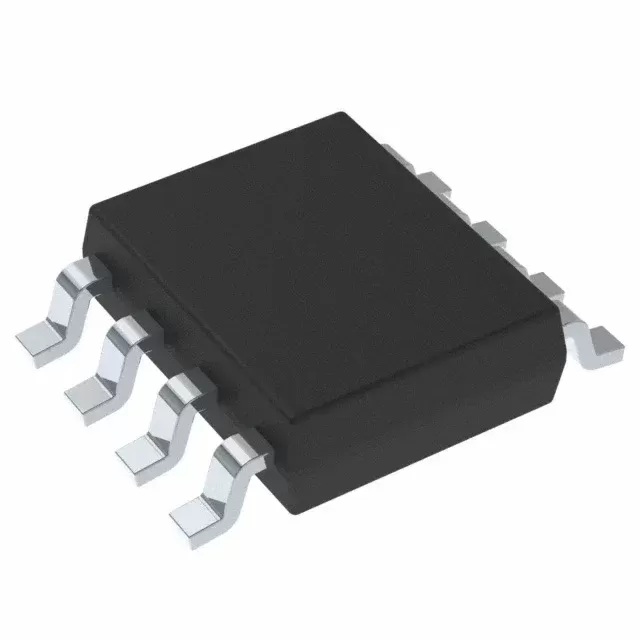

LM239AQDRG4Q1
Brand: Texas Instruments
Texas Instruments LM239AQDRG4Q1 is a power management component designed for Industrial Automation and related applications. In stock at Superb Automation — request a quote for competitive pricing and fast delivery.
Product Specifications
LM239AQDRG4Q1
Texas Instruments — Power Management & Signal Chain
Product Overview
The LM239AQDRG4Q1 from Texas Instruments is a power management / signal chain IC delivering high efficiency, precision regulation, and robust protection. Texas Instruments (TI) is a global leader in analog ICs, power management solutions, and embedded processors.
Superb Automation partners with leading brands including Qorvo, TI, ADI, XILINX, NVIDIA, Intel, ST, MACOM, Renesas, and Coilcraft to provide complete BOM and supply-chain solutions.
Key Features
- High-efficiency power conversion with low quiescent current
- Wide input voltage range with precision output regulation
- Integrated over-current, over-temperature, and short-circuit protection
- Small footprint packaging for space-constrained designs
- AEC-Q100 qualified options available for automotive applications
- Flexible sequencing and soft-start control
Key Specifications
| Input Voltage | V |
| Output Voltage | V |
| Output Current | A |
| Switching Frequency | kHz |
| Efficiency | % |
| Quiescent Current | µA |
| Topology | — |
| Package | — |
| Operating Temp | °C |
| Protection | — |
Applications
Industrial Automation
Automotive Electronics
Telecom Infrastructure
Server & Data Center Power
Medical Devices
Consumer Electronics
Request Quote — In Stock, 100% New & Original, Full Warranty
LM239AQDRG4Q1: the automotive quad comparator, 2500 pieces on a 330 millimetre reel
LM239AQDRG4Q1 is the automotive qualified revision of the quad differential comparator in the fourteen pin small outline body, qualified for automotive applications and published from minus 40 to plus 125 degrees. The string is long because it carries four separate declarations: the A grade offset sort, the SOIC body, the tape and reel carrier, and the automotive qualification.
This is the code that a tier one supplier puts on a production purchase order and the code a broker is asked to match when a line is short. The two questions that come back are always the same. Is the reel the right one, and does the part survive the ambient the drawing claims. Both have hard answers in the vendor document, and one of them is less comfortable than the datasheet headline suggests.
The string, decoded
LM is the family, 239 is the quad comparator with the minus 40 to plus 125 automotive window, A is the tighter offset sort, Q marks the automotive qualification, D is the fourteen pin small outline body, R is the reel, G4 is the green material declaration, and Q1 repeats the automotive qualification in the suffix position the automotive addendum uses. The top side marking is LM239AQ1, not the full string, which is what a receiving inspector actually sees under the microscope.
| Orderable code | LM239AQDRG4Q1 |
| Comparators per body | 4, independent |
| Body | SOIC, 14 pins |
| Carrier | large tape and reel, 2500 pieces |
| Reel diameter | 330 millimetres |
| Tape width | 16.4 millimetres |
| 6.5 by 9.0 millimetres, 2.1 millimetres deep | |
| Pitch | 8 millimetres |
| Temperature window | minus 40 to plus 125 degrees |
| Maximum operating junction | 136 degrees |
| Junction to ambient, D body | 86 degrees per watt |
| Part marking | LM239AQ1 |
| ESD, human body model | exceeds 1000 volts per MIL-STD-883 method 3015 |
| ESD, machine model | exceeds 100 volts with 200 picofarads and zero ohms |
| ESD, charged device model | exceeds 2000 volts |
| Document | SCLS513B, first issued July 2003 |
The thermal row that limits the ambient claim
A 125 degree ambient rating reads like a licence to put the part anywhere. The same document prints a maximum operating junction temperature of 136 degrees and a junction to ambient resistance of 86 degrees per watt for the fourteen pin small outline body. The difference between the two numbers is 11 degrees, and 11 degrees divided by 86 degrees per watt is 128 milliwatts.
That is the whole power budget at full ambient. With a 5 volt pull up of 1 kilo ohm on one output, the sink current is 5 milliamps and the dissipation is 25 milliwatts per output that is low. Four outputs low at once is 100 milliwatts, which fits, and a 470 ohm pull up on four outputs is 210 milliwatts, which does not. The detail is easy to miss because the ambient row is on the first page and the junction row is in the absolute maximum table.
| Input offset voltage at 25 degrees | 1 millivolt typical, 2.5 maximum |
| Input offset voltage over the window | 5.5 millivolts maximum |
| Input offset current at 25 degrees | 50 nanoamps maximum |
| Input bias current at 25 degrees | 25 nanoamps typical, 250 maximum |
| Input bias current over the window | 400 nanoamps maximum |
| Common mode range at 25 degrees | ground to 1.5 volts below the positive rail |
| Large signal gain | 50 volts per millivolt minimum, 200 typical |
| Output low voltage at 4 milliamps | 150 millivolts typical, 400 maximum |
| Output low voltage over the window | 700 millivolts maximum |
| Output leakage at 30 volts | 50 nanoamps typical, 1 microamp maximum |
| Output sink current at 1.5 volts | 6 milliamps minimum |
| Supply current, four comparators | 0.8 milliamps typical, 2 maximum |
| Supply voltage | 2 to 36 volts |
What the automotive qualification adds, and what it does not
The qualification adds a controlled change process, a production part approval route and a document set that a customer audit can read. It does not add a different electrical table: the offset, bias, gain and output rows on this page are the same numbers as the enhanced product string, which is a useful cross check when a programme is deciding between a commercial part with screening and an automotive part with paperwork.
The three ESD rows are worth keeping in the file. One thousand volts on the human body model is a modest figure for a comparator of this age, well under the 2000 volts that the newer B versions of the family carry, and it means the handling procedure on the line matters. A bench that runs the part through a hand fed tray without wrist straps will see more returns than a bench that treats it as a 500 volt device.
Printed circuit handling is the other half. The 16.4 millimetre tape and the 6.5 by 9.0 millimetre pocket are the standard fourteen pin SOIC carrier, so the feeder setup is shared with the rest of the board and no special nozzle is needed. The G4 declaration is the green material code, and the addendum prints both the plain LM239AQDRQ1 string and the G4 string as active rows on the same 2500 piece reel.
Where this part is bought
The realistic buying pattern for an automotive comparator is a scheduled call off against a twelve month forecast, with reels released as the line consumes them rather than all at once. Two things then decide whether the schedule holds: whether the reel is a full 2500 pieces or a broker's part reel, and whether the date code is inside the window the customer's control plan allows.
Our date code management page sets out how we record and report the code on a reel, and the incoming inspection plan page covers what is measured on receipt rather than taken on trust. For a part with three separate ESD ratings and a part marking that does not match the order string, both records have to exist before the reel reaches a feeder.
The production approval side has its own page. The PPAP submission checklist lists the documents a tier one customer asks for on an automotive line item, and it is the list to work from when a part is being introduced rather than merely replenished.
The reel, the tape and the line
A 330 millimetre reel of a fourteen pin small outline part is light enough to hang on a feeder without a support arm, and the 16.4 millimetre tape matches the pocket that the rest of the fourteen pin parts use. Two practical rules follow from that. The reel is a single lot, so the date code on the label covers every board built from it, and a splice made from a second reel breaks that property unless the splice is recorded.
On a scheduled call off the reels are usually released one or two at a time against a forecast. That keeps the stock current and keeps the date code inside the window a control plan allows, and it costs a little more per piece than a full year buy. For a part at this price the difference is small and the traceability gain is large, which is why the automotive line item is almost always bought this way.
If a partial reel comes back from the line, the count has to be recorded against the same label rather than a new one. A second label on the same reel is how two date codes end up on one board, and that is a question no traceability report can answer after the fact.
Questions that come with this code
Is the reel always 2500 pieces? The automotive document states the body is only available taped and reeled, with standard quantities of 2500 per reel, and the addendum prints the same figure for both the plain and the G4 rows. A part reel of 800 pieces is a repack and should be declared as one.
Does the G4 change the part? No. It is the material declaration for the same body, finish and window, and the two rows sit beside each other in the addendum.
Why does the marking say LM239AQ1 when the order says LM239AQDRG4Q1? The marking is the short form and it is the same on every carrier of this body, so receiving inspection has to compare against the marking column rather than the order string.
Is the part still active? The addendum attached to the current revision prints both the plain and the G4 rows as active production, and that is the status to quote against a purchase order.