


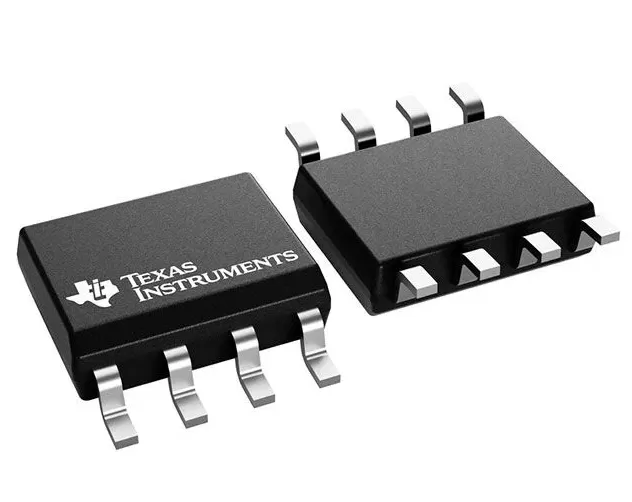

DRV8840PWPR
Brand: Texas Instruments
Texas Instruments DRV8840PWPR is a power management component designed for Industrial Automation and related applications. In stock at Superb Automation — request a quote for competitive pricing and fast delivery.
Product Specifications
DRV8840PWPR
Texas Instruments — Power Management & Signal Chain
Product Overview
The DRV8840PWPR from Texas Instruments is a power management / signal chain IC delivering high efficiency, precision regulation, and robust protection. Texas Instruments (TI) is a global leader in analog ICs, power management solutions, and embedded processors.
Superb Automation partners with leading brands including Qorvo, TI, ADI, XILINX, NVIDIA, Intel, ST, MACOM, Renesas, and Coilcraft to provide complete BOM and supply-chain solutions.
Key Features
- High-efficiency power conversion with low quiescent current
- Wide input voltage range with precision output regulation
- Integrated over-current, over-temperature, and short-circuit protection
- Small footprint packaging for space-constrained designs
- AEC-Q100 qualified options available for automotive applications
- Flexible sequencing and soft-start control
Key Specifications
| Input Voltage | V |
| Output Voltage | V |
| Output Current | A |
| Switching Frequency | kHz |
| Efficiency | % |
| Quiescent Current | µA |
| Topology | — |
| Package | — |
| Operating Temp | °C |
| Protection | — |
Applications
Industrial Automation
Automotive Electronics
Telecom Infrastructure
Server & Data Center Power
Medical Devices
Consumer Electronics
Request Quote — In Stock, 100% New & Original, Full Warranty
DRV8840PWPR: the 5 A single bridge with five bit current control
The DRV8840PWPR is a single H-bridge motor driver in a 28 pin HTSSOP, supplied 2000 pieces on a large tape and reel. The vendor carries the part as ACTIVE and lists an operating supply of 8.2 to 45 V, a peak drive current of 5 A and a continuous current of 3.5 A at 24 V and 25 degrees with proper heatsinking, a five bit current control that gives 32 current levels, an on resistance of 0.1 ohm per field effect transistor at 25 degrees, a built in 3.3 V reference output, a parallel digital control interface, and protection against overcurrent, thermal shutdown and undervoltage with a fault pin.
The five bit current control is the feature that makes this a single axis driver rather than a switch. Thirty two levels set by five pins means a controller can ramp a motor or hold a torque without a pulse width modulated signal or a sense amplifier of its own, and the reference output means the levels are ratiometric to something the controller can also read. For a printer or an office machine axis this replaces a current loop in software.
The DRV8840PWPR rows as the addendum publishes them
| Part class | Single H-bridge motor driver with current control |
| Vendor status | ACTIVE, production data |
| Supply range | 8.2 V to 45 V |
| Peak drive current | 5 A at 24 V, 25 degrees |
| Continuous current | 3.5 A at 24 V, 25 degrees with heatsinking |
| Current control | Five bits, 32 levels |
| On resistance, high side | 0.1 ohm at 25 degrees, 0.13 typical and 0.16 maximum at 85 degrees |
| On resistance, low side | 0.1 ohm at 25 degrees, 0.13 typical and 0.16 maximum at 85 degrees |
| Reference output | 3.3 V |
| Interface | Parallel digital, enable, phase, fault |
| Internal chopping frequency | 50 kHz |
| Current sense blanking | 3.75 microseconds |
| Rise time | 30 nanoseconds typical, 200 maximum |
| Fall time | 30 nanoseconds typical, 200 maximum |
| Off state leakage | 40 microamps |
| Input current | 40 microamps |
| Internal pull up | 130 kilohms |
| Internal pull down | 80 kilohms |
| Protection | Overcurrent, thermal shutdown, undervoltage lockout |
| Body | HTSSOP, 28 pins, 9.70 by 4.40 millimetres |
| Reel row | DRV8840PWPR, 2000 pieces, large tape and reel |
| G4 reel row | DRV8840PWPRG4, 2000 pieces, green material |
| Marking | DRV8840 on the body |
| Moisture level | Level 3 at 260 degrees, 168 hour floor life |
| Temperature | Minus 40 to plus 85 degrees |
There is no tube row on this part, only reels, which is unusual in a family where most members still carry one. A repair or a pilot build that expects 90 pieces in a tube has to be served from a cut reel, and a cut reel is a distributor service rather than a vendor packing. That is worth knowing before a small quantity is quoted as a small quantity.
What the electrical table fixes
The 0.1 ohm per device at 25 degrees becomes 0.16 ohm maximum at 85 degrees, and the bridge has two devices in the path, so at 3.5 A the dissipation is 3.5 squared times 0.32, which is 3.9 W at the hot end and 2.45 W at the cold end. That is why the 5 A figure needs a heatsink and a short duty cycle, and why the continuous rating is 3.5 A rather than 5 A. A customer who reads the 5 A and quotes it as a continuous rating has quoted a peak.
The five bit current control divides the range into 32 levels, and the step size at the top is about 3 per cent of the full scale. That is coarse compared with a pulse width modulated loop and adequate for a mechanism that needs torque steps rather than a precise current. The 50 kHz internal chopping frequency is above the audible band and low enough that the ripple in a small inductor is significant, so the inductor value and the current control resolution have to be chosen together.
The 3.75 microsecond blanking time is the delay after a switching edge during which the current sense is ignored. A short circuit that develops inside that window is not seen until the next cycle, which is why the overcurrent protection has a second, faster path. A customer who is protecting a mechanism from a hard stall should not rely on the current control alone, because the control loop is slower than the fault.
Where the body fits on a board
The 28 pin HTSSOP at 9.70 by 4.40 millimetres is narrow for a 3.9 W dissipation, and the exposed pad is the only path out. A board that places the part away from a plane and relies on the leads will run the die far above the ambient and will trip the thermal shutdown on a load that the current control says is acceptable. The pad needs vias to an inner plane, not to a top layer pour with no return.
The five current control pins and the enable and phase pins are all static in operation, so they can be driven from a controller with a low pin count and no special timing. That is the advantage over a pulse width modulated interface, which needs a timer per axis. A machine with four axes can use four of these parts and four sets of five pins, or an external port expander, and the control loop is entirely in hardware. A printer axis that reverses direction frequently spends more time in the current control loop than at full speed, and the 32 levels are what keep the reversal smooth.
What the documents do not publish
The page gives a peak and a continuous current at one ambient and one supply, and no derating curve for other ambients. It gives no safe operating area and no thermal resistance in the summary, so a thermal calculation has to start from the full document. It also gives no current control accuracy figure for the 32 levels, which is the number that decides whether the torque steps are usable.
The document does not print the internal reference tolerance on the product page, only that it is 3.3 V. A ratio metric current control depends on that reference and on the sense resistor, so a customer who uses the internal reference for both the control and the measurement has a tolerance stack that is not visible from the feature list.
Second source and long term availability
A 45 V single bridge with five bit current control is a narrower class than a plain H-bridge and the crosses are fewer. The control interface and the current levels differ between vendors, so a cross is a board and software change. The pin to pin cross reference page sets out what we compare, and the component obsolescence management page covers the watch.
Only reel rows exist for this part, at 2000 pieces, with a green material variant. There is no tube and no small reel, so the packing question has one answer. A programme that needs a long supply should ask for a written statement and should watch the green variant, because a material change is often the first sign that a line is being consolidated.
What to send with an enquiry
Send the exact string, the quantity and the date. State the supply voltage, the continuous current and the duty cycle, because the 5 A figure is a peak and the continuous rating depends on the heatsinking. Send the pin count of the controller too, since five pins per axis is the budget this part spends. State whether the internal reference is used for the current control or an external one.
Say whether a small quantity is needed for a pilot, because there is no tube row and the answer will be a cut reel. The BOM scrubbing page explains how we reconcile a line like this against the build before a schedule is confirmed.