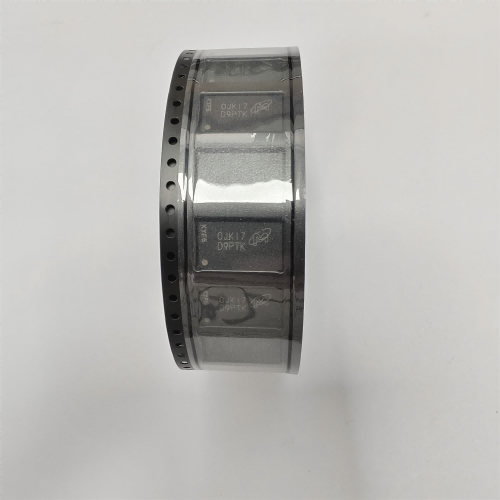
OP296GSZ
Brand: Analog Devices
Analog Devices OP296GSZ is a analog & mixed-signal component designed for Instrumentation and related applications. In stock at Superb Automation — request a quote for competitive pricing and fast delivery.
Product Specifications
OP296GSZ
Analog Devices — Analog & Mixed-Signal ICs
Product Overview
The OP296GSZ from Analog Devices is a high-performance analog / mixed-signal IC providing precision signal acquisition, conversion, and conditioning. Analog Devices (ADI) is a world leader in high-performance analog, mixed-signal, and DSP ICs for instrumentation, healthcare, automotive, and communications.
Superb Automation partners with leading brands including Qorvo, TI, ADI, XILINX, NVIDIA, Intel, ST, MACOM, Renesas, and Coilcraft to provide complete BOM and supply-chain solutions.
Key Features
- High-resolution data conversion with excellent SNR and THD
- Wide dynamic range and high linearity across operating conditions
- Integrated voltage reference with low temperature drift
- Flexible digital interface — SPI, I2C, or parallel options
- Industrial/automotive temperature range with guaranteed specs
- Low power consumption with power-down modes
Key Specifications
| Resolution | bits |
| Channels | — |
| Sample Rate | kSPS |
| Interface | — |
| Supply Voltage | V |
| Operating Temp | °C |
| Package | — |
| INL | LSB |
| SNR | dB |
| THD | dB |
Applications
Precision Instrumentation
Industrial Process Control
Medical Imaging & Diagnostics
Automotive Sensor Interfaces
Communications Infrastructure
Test & Measurement
Request Quote — In Stock, 100% New & Original, Full Warranty
OP296GSZ: rail-to-rail on both ends, on 60 microamps a channel
The OP296GSZ is the dual member of the OP196 family, a CBCMOS amplifier with rail-to-rail input and rail-to-rail output, a 3 V to 12 V single supply range and 60 microamps per amplifier. It is the part to reach for when a signal has to be sensed at either supply rail and the budget is microamps rather than milliamps.
Published values
| Parameter | Value |
|---|---|
| Channels | two, in 8 lead narrow body SOIC or TSSOP |
| Supply range | 3 V to 12 V single supply |
| Input range | rail to rail |
| Output range | rail to rail |
| Gain bandwidth | 450 kHz in the feature list |
| Offset voltage | 300 microvolts maximum |
| Open loop gain | 500 V per mV |
| Voltage noise | 26 nV per root hertz |
| Supply current | 60 microamps per amplifier |
| Capacitive load | 200 pF without oscillation |
The 12 V ceiling is a real limit
Twelve volts is the top of the supply window. A plus and minus 15 V analogue section, a 24 V industrial loop and a 48 V telecom rail are all outside the part, and no amount of external level shifting changes that. Where the rail is 12 V or below, the rail-to-rail input removes the level shift that a conventional bipolar amplifier would need.
On a 12 V rail the input common mode reaches both ends, so a high side current sense resistor and a ground referenced thermocouple land on the same order code. That is the useful part of this device, and it is also why the family is quoted for battery monitoring and portable instrumentation rather than for wide swing audio.
Reading 300 microvolts against a converter
300 microvolts maximum offset is 3.9 least significant bits of a 16 bit converter on a 5 V range, where one bit is 76 microvolts. It is 0.15 bit of a 12 bit converter on the same range. The part therefore belongs in front of a 12 bit converter used for monitoring, and it needs a trim or an auto zero stage in front of a 16 bit measurement.
26 nanovolts per root hertz over a 10 kHz band is 2.6 microvolts, well under the offset. Noise is not the limit here; offset and the 450 kHz bandwidth are.
Current, gain and the load it can carry
60 microamps per amplifier is 120 microamps for the dual, which is one of the few ways to keep an always on sensor path alive on a coin cell. The 500 V per mV open loop gain is what allows a gain of 100 stage to hold its output, and the 200 pF capacitive load rating is the practical ceiling before a series resistor is needed.
The 450 kHz gain bandwidth product in the feature list should be read with the specifications table, which gives the figure under a stated load. At a gain of 50 the closed loop bandwidth is single digit kilohertz, so a fast comparator function does not belong on this part.
Choosing between this and its neighbours
For a board that has to keep running while a reel runs out, the amplifier cross reference is where the family alternatives sit, the pin to pin cross reference is the check list before a substitute goes in, and BOM shortage recovery is how a gap is covered without a new line item.
Two questions buyers ask
Does the OP296 include the supply rails in its input range? Yes. The OP196 family is specified for rail-to-rail input and output swing, which is the reason it is offered for high side sensing. The input stage does not show phase reversal when the input passes the rail, which the data sheet states explicitly.
What happens above a 12 V supply? The part is outside its rating. A 15 V or 24 V rail needs the OP295 or OP484 family, which carry a 36 V window, or a different topology entirely. Running a 12 V part on 15 V is a return, not a margin question.