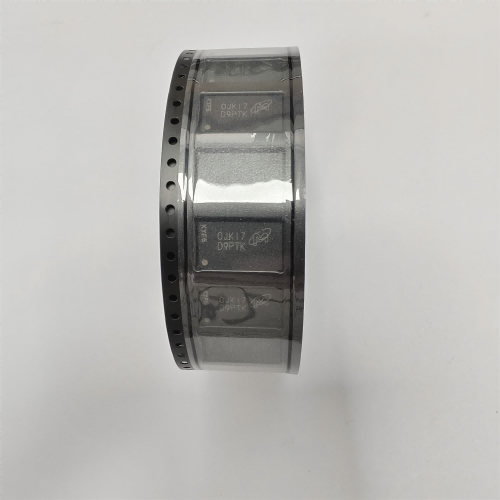
AD790JRZ-REEL7
Brand: Analog Devices
Analog Devices AD790JRZ-REEL7 is a analog & mixed-signal component designed for Precision Instrumentation and related applications. In stock at Superb Automation — request a quote for competitive pricing and fast delivery.
Product Specifications
AD790JRZ-REEL7
Analog Devices — Analog & Mixed-Signal ICs
Product Overview
The AD790JRZ-REEL7 from Analog Devices is a high-performance analog / mixed-signal IC providing precision signal acquisition, conversion, and conditioning. Analog Devices (ADI) is a world leader in high-performance analog, mixed-signal, and DSP ICs for instrumentation, healthcare, automotive, and communications.
Superb Automation partners with leading brands including Qorvo, TI, ADI, XILINX, NVIDIA, Intel, ST, MACOM, Renesas, and Coilcraft to provide complete BOM and supply-chain solutions.
Key Features
- High-resolution data conversion with excellent SNR and THD
- Wide dynamic range and high linearity across operating conditions
- Integrated voltage reference with low temperature drift
- Flexible digital interface — SPI, I2C, or parallel options
- Industrial/automotive temperature range with guaranteed specs
- Low power consumption with power-down modes
Key Specifications
| Resolution | bits |
| Channels | — |
| Sample Rate | kSPS |
| Interface | — |
| Supply Voltage | V |
| Operating Temp | °C |
| Package | — |
| INL | LSB |
| SNR | dB |
| THD | dB |
Applications
Precision Instrumentation
Industrial Process Control
Medical Imaging & Diagnostics
Automotive Sensor Interfaces
Communications Infrastructure
Test & Measurement
AD790JRZ-REEL7: 45 ns, 250 microvolts, and 500 microvolts of hysteresis that decides the noise
The AD790JRZ-REEL7 is a fast precision comparator from Analog Devices that has stayed in catalogues for decades because it does two things at once: a 45 ns maximum propagation delay and a 250 microvolt maximum input offset, with TTL or CMOS compatible output and an onboard latch. It runs from a single 5 V supply or from plus or minus 15 V, and dissipates 60 mW.
What the vendor publishes
| Parameter | Value |
|---|---|
| Propagation delay | 45 ns maximum |
| Offset | 250 microvolts maximum |
| Hysteresis | 500 microvolts maximum |
| Differential input | 15 V maximum |
| Output | CMOS or TTL compatible |
| Supply | single 5 V or dual plus or minus 15 V |
| Power | 60 mW |
| Latch | onboard |
| Package | 8 pin plastic and hermetic cerdip, tape and reel to EIA-481A |
45 ns read three ways
Forty five nanoseconds is a 22.2 MHz repetition rate if the input is driven hard, which is the number to compare with the event rate, not with the signal bandwidth. It is also an aperture: an input slewing at 1 V per microsecond moves 45 mV during the delay, so on a slow ramp the delay itself is not the error, the comparator threshold crossing is. And 250 microvolts against a 5 V logic threshold is 50 parts per million, which is the figure that decides whether the part can resolve a small difference on a large common mode.
Hysteresis is the feature, not the defect
Five hundred microvolts of hysteresis is twice the offset. On a slow crossing with a noisy input that is exactly what keeps the output from chattering, and on a precision threshold detector it is 500 microvolts of uncertainty that has to sit inside the system window. The two uses want opposite things, which is why the number belongs in the requirement before the part is chosen rather than after: a zero hysteresis comparator on a slow ramp with 1 mV of noise will produce a burst of edges at every crossing.
Supply, latch and the 15 V input limit
Sixty milliwatts is 12 mA from a 5 V rail, or 2 mA from plus or minus 15 V, which makes the dual supply the lower current arrangement for the same power. The 15 V differential input limit is half of a plus or minus 15 V span, so a comparator used to watch a 24 V rail needs an input divider rather than a direct connection. The latch holds the output state on command, which is how a fast comparator is used to capture a single event without a flip flop behind it.
Two questions buyers ask
Is this a pin compatible replacement for an LM311 class comparator? Not pin compatible, but it is the part that gets chosen when the LM311 class is too slow or too loose on offset. The pinout and the output stage have to be checked against the drawing, which is what the cross reference pages are for.
What does the latch pin do if the board does not use it? It has to be tied to the state that keeps the comparator transparent, as published in the data sheet. Floating it is the usual cause of a first article that works on the bench and latches in the cabinet.
SUPERB quotes the AD790JRZ-REEL7 against this row and confirms the package and the reel before shipment. Comparator and amplifier alternatives are compared under amplifier cross reference, a part at end of life is covered by the obsolete part cross reference hub, and the category index is analog and mixed signal ICs.
Request Quote — In Stock, 100% New & Original, Full Warranty