


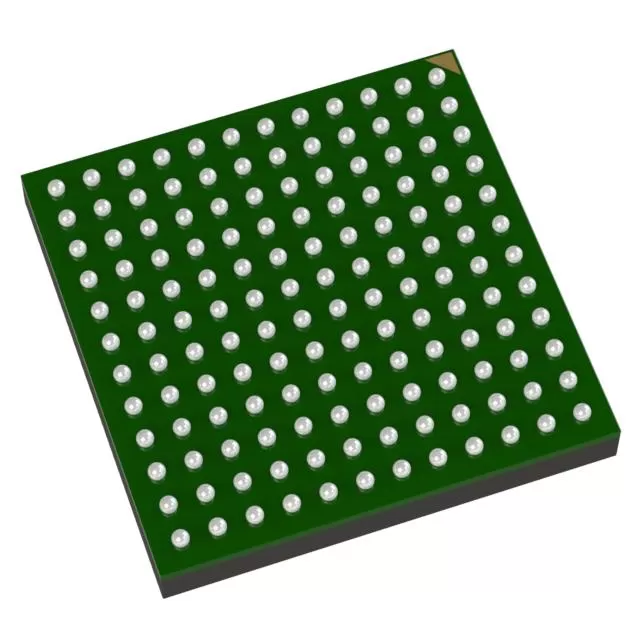

MAX15006BASA+T
Brand: Analog Devices
Analog Devices MAX15006BASA+T is a analog & mixed-signal component designed for Precision Instrumentation and related applications. In stock at Superb Automation — request a quote for competitive pricing and fast delivery.
Product Specifications
MAX15006BASA+T
Analog Devices — Analog & Mixed-Signal ICs
Product Overview
The MAX15006BASA+T from Analog Devices is a high-performance analog / mixed-signal IC providing precision signal acquisition, conversion, and conditioning. Analog Devices (ADI) is a world leader in high-performance analog, mixed-signal, and DSP ICs for instrumentation, healthcare, automotive, and communications.
Superb Automation partners with leading brands including Qorvo, TI, ADI, XILINX, NVIDIA, Intel, ST, MACOM, Renesas, and Coilcraft to provide complete BOM and supply-chain solutions.
Key Features
- High-resolution data conversion with excellent SNR and THD
- Wide dynamic range and high linearity across operating conditions
- Integrated voltage reference with low temperature drift
- Flexible digital interface — SPI, I2C, or parallel options
- Industrial/automotive temperature range with guaranteed specs
- Low power consumption with power-down modes
Key Specifications
| Resolution | bits |
| Channels | — |
| Sample Rate | kSPS |
| Interface | — |
| Supply Voltage | V |
| Operating Temp | °C |
| Package | — |
| INL | LSB |
| SNR | dB |
| THD | dB |
Applications
Precision Instrumentation
Industrial Process Control
Medical Imaging & Diagnostics
Automotive Sensor Interfaces
Communications Infrastructure
Test & Measurement
MAX15006BASA+T: A 40 V, 50 mA Regulator That Dissipates More Than It Delivers
The MAX15006BASA+T is a 40 V linear regulator with a guaranteed 50 mA output, a 10 uA quiescent current at no load and 90 uA at full load, a 300 mV dropout for the B option, and stable operation with a 2.2 uF output capacitor. The input range is 4 V to 40 V, it operates through cold crank, withstands a 45 V load dump, and provides thermal and short circuit protection over minus 40 to plus 125 degrees C. The preset output options are 3.3 V and 5 V, with an adjustable member of the family covering 1.8 V to 10 V. The order code reads B for the 3.3 V option, ASA for the 8-lead SO and +T for tape and reel. The Analog Devices page carries a not recommended for new builds status on the family.
Efficiency is the number to start from
Fifty milliamps at 3.3 V is 165 mW delivered. From a 40 V input the regulator drops 36.7 V at 50 mA, which is 1.835 W dissipated to deliver that 165 mW, an efficiency of 8.2 percent. The dissipation is 11.1 times the output power, and no 8-lead SO package removes 1.8 W at a 125 degree ambient without a copper area that the package itself does not provide. From a 12 V input the loss is 0.435 W and the efficiency 27.5 percent, and from 4 V it is 0.035 W. The input voltage, not the output current, decides whether this part is usable.
| Input range | 4 V to 40 V, 45 V load dump withstand |
| Output | 3.3 V preset on the B option, 50 mA guaranteed |
| Dropout | 300 mV on the B option |
| Quiescent current | 10 uA no load, 90 uA at full load, 0.4 mW at 40 V |
| Dissipation 40 V to 3.3 V at 50 mA | 1.835 W, 8.2 percent efficiency |
| Dissipation 12 V to 3.3 V at 50 mA | 0.435 W, 27.5 percent efficiency |
| Output capacitor | 2.2 uF, stable |
| Package | 8-lead SO, also a 3 by 3 mm 6-pin TDFN |
Where a 40 V linear regulator is still the right choice
A linear regulator makes sense at a 40 V input only when the load is small and intermittent, or when the drop is small. Ten microamps of quiescent current at 40 V is 0.4 mW, and 87.6 mAh over a year, which is why this family is used in always-on automotive modules that wake a larger converter: the regulator keeps a watchdog or a CAN transceiver alive at microamps, and the 40 V rating covers the load dump while the 1.8 W case never occurs because the 50 mA is only drawn for milliseconds. Reading the current rating as a continuous figure at the top of the input range is the mistake this part invites.
The 45 V load dump withstand is a transient rating, 5 V above the continuous 40 V maximum. A board that sees repeated load dumps needs a clamp ahead of the regulator rather than reliance on the withstand figure, and the cold crank behaviour is what allows the output to hold through a start event where the input falls toward 4 V.
Two questions buyers ask
Can it supply 50 mA continuously from a 24 V rail?
At 24 V the loss is 1.035 W at full load, so the answer depends on the copper under the package and the ambient rather than on the current rating. The 50 mA is an electrical limit; the thermal limit is lower and has to be calculated for the actual board.
Is the adjustable version the same part?
The C option is the adjustable member, covering 1.8 V to 10 V with an external divider. The preset 3.3 V B option has the divider inside, so the two are not interchangeable on a fixed board.
Cold crank is the case the part was built for
A 4 V minimum input with operation through cold crank means the regulator keeps its output alive while a starter pulls the battery down, which is why the family is used for always-on modules in automotive harnesses. At 4 V the drop to 3.3 V is 0.7 V and the loss at 50 mA is 0.035 W, a small fraction of what the same current costs from 40 V. The 45 V load dump is a transient rating 5 V above the continuous maximum, so a harness that sees repeated dumps needs a clamp ahead of the regulator rather than reliance on the withstand number.
Quiescent current at full load is 90 uA, which at 40 V is 3.6 mW on top of the 1.835 W the pass element dissipates. The 10 uA no-load figure is the one that matters for a module that sleeps: 0.4 mW at 40 V is what keeps a watchdog or a transceiver alive without draining the battery, and it is the reason a linear regulator rather than a switching one is used at that current, where a switcher's own quiescent draw would be comparable.
Ordering and supply
The MAX15006BASA+T is the 3.3 V option in the 8-lead SO, tape and reel. With the not recommended for new builds status on the family, a quotation should say whether it supports an existing board or a new one, because the lifetime answer differs.
We hold and source this family for existing boards and for repair quantities, and we flag the status on every quotation. Start from the family page for analog mixed signal ICs, check a proposed alternative against the power management cross reference, and if the line is already down send the shortage list through BOM shortage recovery so the substitute is checked against the real board.
Request Quote — In Stock, 100% New & Original, Full Warranty