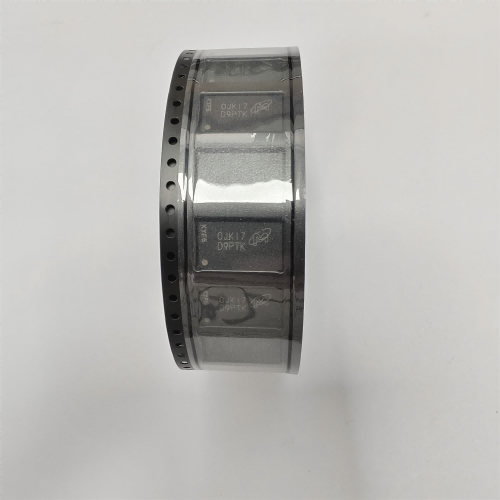
LTM4625EY#PBF
Brand: Analog Devices
Analog Devices LTM4625EY#PBF is a analog & mixed-signal component designed for Precision Instrumentation and related applications. In stock at Superb Automation — request a quote for competitive pricing and fast delivery.
Product Specifications
LTM4625EY#PBF
Analog Devices — Analog & Mixed-Signal ICs
Product Overview
The LTM4625EY#PBF from Analog Devices is a high-performance analog / mixed-signal IC providing precision signal acquisition, conversion, and conditioning. Analog Devices (ADI) is a world leader in high-performance analog, mixed-signal, and DSP ICs for instrumentation, healthcare, automotive, and communications.
Superb Automation partners with leading brands including Qorvo, TI, ADI, XILINX, NVIDIA, Intel, ST, MACOM, Renesas, and Coilcraft to provide complete BOM and supply-chain solutions.
Key Features
- High-resolution data conversion with excellent SNR and THD
- Wide dynamic range and high linearity across operating conditions
- Integrated voltage reference with low temperature drift
- Flexible digital interface — SPI, I2C, or parallel options
- Industrial/automotive temperature range with guaranteed specs
- Low power consumption with power-down modes
Key Specifications
| Resolution | bits |
| Channels | — |
| Sample Rate | kSPS |
| Interface | — |
| Supply Voltage | V |
| Operating Temp | °C |
| Package | — |
| INL | LSB |
| SNR | dB |
| THD | dB |
Applications
Precision Instrumentation
Industrial Process Control
Medical Imaging & Diagnostics
Automotive Sensor Interfaces
Communications Infrastructure
Test & Measurement
LTM4625EY#PBF: 5 A in a 6.25 mm body, BGA, E grade
What this order code is
LTM4625EY#PBF is the 5 A step-down module in a 6.25 mm by 6.25 mm by 5.01 mm ball grid array, E grade, RoHS finish. The controller, the power FETs, the inductor and the support parts are all inside, and the vendor states the complete solution fits in under one square centimetre on a single sided board or 0.5 square centimetres on a double sided one.
Input is 4 V to 20 V, and 2.375 V to 20 V when an external bias supply is available, which is the detail that lets this module run from a 3.3 V or 2.5 V intermediate bus instead of only from 12 V. Output is 0.6 V to 5.5 V at 5 A, set by a single resistor, with plus or minus 1.5 percent total DC error.
Parameters as published
| Item | Value |
|---|---|
| Output current | 5 A continuous |
| Input voltage range | 4 V to 20 V, 2.375 V with an external bias |
| Output voltage range | 0.6 V to 5.5 V, one external resistor |
| Total DC output error | plus or minus 1.5 percent |
| Control | current mode, fast transient response |
| Synchronisation | external frequency synchronisation |
| Parallel operation | multiphase with multiple modules |
| Sequencing | output voltage tracking |
| Light load | selectable discontinuous mode |
| Status | power good indicator |
| Protection | overvoltage, overcurrent, overtemperature |
| Body | 6.25 mm by 6.25 mm by 5.01 mm BGA |
| Area | 39 square millimetres |
| Grade | E |
Numbers that decide the application
Five amps from 39 square millimetres is 12.8 A per square centimetre, which is the highest current density on this page and the reason the part exists. At 1.2 V and 5 A the output is 6 W; at an assumed 85 percent the input is 7.06 W, or 0.59 A from 12 V, and 1.06 W leaves the body, which is 2.71 W per square centimetre of module footprint. The same current at 5 V delivers 25 W and, at an assumed 88 percent, dissipates 3.41 W, so a 5 V rail at 5 A in this body is a thermal question rather than a current question.
The 2.375 V input floor with an external bias is the most useful line in the table. It means the module can be fed from a 3.3 V rail or a 2.5 V rail and still produce 1.2 V or 1.8 V, which is a two stage architecture where the intermediate bus does the large step and this module does the last one. Without the bias supply the floor is 4 V, which rules out a 3.3 V bus entirely.
The 5.01 mm height is taller than the 4.32 mm land grid modules of the larger families, so the smallest footprint here is not the lowest profile. A card with a hard height limit has to trade the 39 square millimetre area against the 0.7 mm of extra height, and that trade is decided by the enclosure rather than by the electrical table.
Where it fits and where it does not
It fits a point of load on a dense card, a 12 V to 1.2 V rail at 5 A, a 3.3 V intermediate bus with an external bias, a DDR or transceiver rail that needs a small body, and any line where the 0.5 square centimetre double sided figure is the reason the card fits. It does not fit a load above 5 A, a rail above 5.5 V, an input above 20 V, a 3.3 V bus without the bias supply, or a height limited card where 5.01 mm is too tall.
Supply and second source questions
The bias supply requirement is the attribute that gets lost in a cross reference: a substitute with the same 5 A rating and the same footprint but a 4 V input floor cannot replace this part on a 3.3 V bus. The second attribute is the body height. Regulators that share these rails are compared on the power management cross reference page.
Sourcing notes and next step
We quote the EY code with the package and grade stated and we will flag when a proposed equivalent lacks the external bias input. Send the line items and required date through the BOM shortage recovery page and we will answer with availability. The wider module range is on the analog and mixed signal IC page.
Request Quote — In Stock, 100% New & Original, Full Warranty