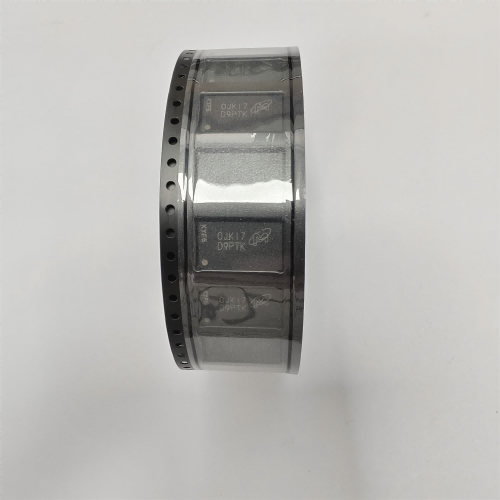
AD5160BRJZ10-RL7
Brand: Analog Devices
Analog Devices AD5160BRJZ10-RL7 is a analog & mixed-signal component designed for Precision Instrumentation and related applications. In stock at Superb Automation — request a quote for competitive pricing and fast delivery.
Product Specifications
AD5160BRJZ10-RL7
Analog Devices — Analog & Mixed-Signal ICs
Product Overview
The AD5160BRJZ10-RL7 from Analog Devices is a high-performance analog / mixed-signal IC providing precision signal acquisition, conversion, and conditioning. Analog Devices (ADI) is a world leader in high-performance analog, mixed-signal, and DSP ICs for instrumentation, healthcare, automotive, and communications.
Superb Automation partners with leading brands including Qorvo, TI, ADI, XILINX, NVIDIA, Intel, ST, MACOM, Renesas, and Coilcraft to provide complete BOM and supply-chain solutions.
Key Features
- High-resolution data conversion with excellent SNR and THD
- Wide dynamic range and high linearity across operating conditions
- Integrated voltage reference with low temperature drift
- Flexible digital interface — SPI, I2C, or parallel options
- Industrial/automotive temperature range with guaranteed specs
- Low power consumption with power-down modes
Key Specifications
| Resolution | bits |
| Channels | — |
| Sample Rate | kSPS |
| Interface | — |
| Supply Voltage | V |
| Operating Temp | °C |
| Package | — |
| INL | LSB |
| SNR | dB |
| THD | dB |
Applications
Precision Instrumentation
Industrial Process Control
Medical Imaging & Diagnostics
Automotive Sensor Interfaces
Communications Infrastructure
Test & Measurement
AD5160BRJZ10-RL7: two hundred and fifty six steps of 39 ohms, and 45 ppm of drift
The AD5160 is a 256 position digital potentiometer in a 2.9 by 3 mm SOT23-8, controlled over a serial peripheral interface, with an end to end resistance of 10 kohm in this suffix. It replaces a mechanical trimmer with a solid state element that powers up at midscale, draws 8 microamps from a 2.7 V to 5.5 V supply, and holds a 45 ppm per degree temperature coefficient. The wiper to end resistance moves linearly with the code written into the latch, so it can be used as a two terminal variable resistor or as a three terminal divider.
What the vendor page states
| Parameter | Value |
|---|---|
| Positions | 256, wiper set by a serial interface |
| End to end resistance | 5 kohm, 10 kohm, 50 kohm, 100 kohm by suffix |
| Supply | 2.7 V to 5.5 V single supply |
| Supply current | 8 microamps |
| Temperature coefficient | 45 ppm per degree |
| Power on state | midscale preset |
| Package | SOT23-8, 2.9 by 3 mm |
| Temperature range | minus 40 C to plus 125 C |
Thirty nine ohms per step, against a temperature term of forty five ohms per hundred degrees
Ten kilo-ohms over 255 steps is 39.2 ohm per step. The same element moves 45 ohm for every 100 C of temperature change, which is 1.15 steps, and across the full minus 40 to plus 125 C span it moves 74 ohm, or 1.9 steps. That comparison is the one a buyer needs before choosing this part over a fixed resistor pair: the digital setting is precise, the analog element under it is not, and a loop that trims once at room temperature and then runs hot will sit two codes away from where it was set. The 5 kohm version has the same 1.9 step drift, because both the step size and the drift scale with the end to end value.
Eight microamps and forty microwatts
Eight microamps at 5 V is 40 microwatts, which is the whole standing consumption of the adjustment. That is what makes the part usable in a battery instrument that stays powered for years, and it is also the reason there is no continuous feedback inside: the wiper is a switch, not a servo, and the code has to be rewritten after a supply glitch. The midscale power on preset is the default that makes a glitch recoverable, but the code the system had before the glitch is not restored, so a system that needs its last setting has to store it in the controller.
The two terminal case is not the three terminal case
Used as a variable resistor, wiper to one end, the resistance is the code fraction of the element plus the wiper resistance, and the wiper resistance is not zero, so the bottom of the range flattens out. Used as a divider, both ends driven, the wiper resistance drops out of the ratio and only the element's linearity matters. A circuit that trims a gain by putting the element in the feedback path is in the first case and one that trims a reference is in the second, and the accuracy claims differ between them. Neither case tolerates a voltage outside the supply rails on any terminal, which is the other reason a divider across a rail is safer than a rheostat in a feedback loop.
Before the order goes out
The four resistance values share one die and one pinout, so a bill of materials that mixes a 10 kohm line with a 50 kohm line will populate the wrong element without any visible difference on the board. The converter cross reference lists the digital to analog alternatives where a real converter is a better fit than a trimmed resistor, the obsolete part hub tracks the older trimmers this part replaces, and the analog and mixed signal category page holds the rest of the data converter family.
Request Quote — In Stock, 100% New & Original, Full Warranty