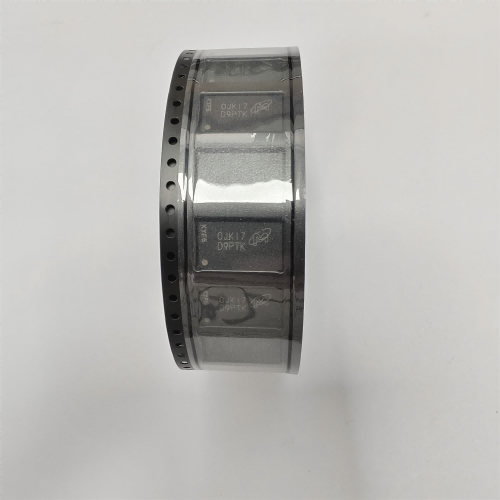
LTC6804IG-2#3ZZTRPBF
Brand: Analog Devices
Analog Devices LTC6804IG-2#3ZZTRPBF is a analog & mixed-signal component designed for Precision Instrumentation and related applications. In stock at Superb Automation — request a quote for competitive pricing and fast delivery.
Product Specifications
LTC6804IG-2#3ZZTRPBF
Analog Devices — Analog & Mixed-Signal ICs
Product Overview
The LTC6804IG-2#3ZZTRPBF from Analog Devices is a high-performance analog / mixed-signal IC providing precision signal acquisition, conversion, and conditioning. Analog Devices (ADI) is a world leader in high-performance analog, mixed-signal, and DSP ICs for instrumentation, healthcare, automotive, and communications.
Superb Automation partners with leading brands including Qorvo, TI, ADI, XILINX, NVIDIA, Intel, ST, MACOM, Renesas, and Coilcraft to provide complete BOM and supply-chain solutions.
Key Features
- High-resolution data conversion with excellent SNR and THD
- Wide dynamic range and high linearity across operating conditions
- Integrated voltage reference with low temperature drift
- Flexible digital interface — SPI, I2C, or parallel options
- Industrial/automotive temperature range with guaranteed specs
- Low power consumption with power-down modes
Key Specifications
| Resolution | bits |
| Channels | — |
| Sample Rate | kSPS |
| Interface | — |
| Supply Voltage | V |
| Operating Temp | °C |
| Package | — |
| INL | LSB |
| SNR | dB |
| THD | dB |
Applications
Precision Instrumentation
Industrial Process Control
Medical Imaging & Diagnostics
Automotive Sensor Interfaces
Communications Infrastructure
Test & Measurement
LTC6804IG-2#3ZZTRPBF: Twelve Cells, 1.2 mV, and a Vendor Status That Says Replace Me
The LTC6804IG-2#3ZZTRPBF is a third generation multicell battery stack monitor that measures up to 12 series connected cells with a maximum total measurement error of 1.2 mV over a 0 V to 5 V cell range. All 12 cells are captured in 290 us by a 16 bit delta sigma converter with a programmable third order noise filter, devices stack to monitor hundreds of cells, and communication goes over isoSPI at 1 Mbps on a single twisted pair up to 100 m with low emissions and low susceptibility. Each cell has passive balancing with a programmable timer, there are five general purpose inputs that can be digital or analog and can act as an I2C or SPI master, sleep current is 4 uA, and the package is a 48-lead SSOP. The -2 suffix connects multiple devices in parallel to the host with individual addressing, while the -1 daisy chains them on one host connection. The vendor lists this part as not recommended for new designs.
That last sentence is the most important one on the page for a buyer. The part is a working, available, well specified monitor, and the vendor's own catalogue now points new work elsewhere. A product that has this part on it is not broken; a product choosing a monitor today should be asking what replaces it.
1.2 mV on a 3.3 V cell is 364 ppm, which is 16 codes at 16 bits
A total measurement error of 1.2 mV on a 3.3 V nominal cell is 364 ppm, or 0.0364 percent. Sixteen bits over a 5 V range is 76.3 uV per code, so 1.2 mV is 16 codes. The word length is 16 bits and the accuracy is 16 codes, which is the honest way to read the pair: a system that needs state of charge to 1 percent has plenty of margin, and a system that needs to resolve 1 mV per cell in a 12 cell string needs to think about the measurement chain rather than the converter resolution.
290 us for 12 cells is 24.2 us per cell, and that is the acquisition rate of the whole string. A 96 cell pack takes eight devices and about 2.3 ms for a full scan if the reads are sequential, which sets the loop rate of the balancing algorithm. The programmable filter trades that rate for noise, and the lower rates are where the 1.2 mV figure is achieved.
isoSPI over 100 m of twisted pair at 1 Mbps
The isolated interface is what makes a high voltage pack practical. One twisted pair carries 1 Mbps over 100 m with transformer isolation at each node, so the wiring harness is two wires per device instead of a bundle of parallel signals, and the RF immunity is stated as a property of the part rather than left to board practice. A 100 m run at 1 Mbps is 100 us of flight time at 1 ns per metre of propagation in the pair, which is a tenth of a bit at that rate; the limit on cable length is the transformer and the attenuation rather than the timing.
Sleep current of 4 uA is 35 mAh over a year, small next to the self discharge of the cells it monitors. Passive balancing dissipates the energy of the highest cell in a resistor, which is why balancing current and the thermal path in the pack are a mechanical decision as much as an electrical one.
| Function | Twelve channel multicell battery stack monitor, third generation |
| Cells | Up to 12 in series per device, stackable to hundreds |
| Measurement error | 1.2 mV maximum total, 364 ppm on a 3.3 V cell, 16 codes at 16 bits |
| Cell range | 0 V to 5 V, covers most chemistries |
| Acquisition | 290 us for all 12 cells, 24.2 us per cell |
| Converter | 16 bit delta sigma, programmable third order noise filter |
| Interface | isoSPI at 1 Mbps on one twisted pair up to 100 m |
| Addressing | -2 suffix, parallel connection with individual addressing |
| Extras | Passive balancing, five general purpose inputs, 4 uA sleep |
| Package and status | 48-lead SSOP, not recommended for new designs |
Two questions buyers ask
Is this part still buyable?
Yes. Not recommended for new designs is a vendor life cycle statement, not a discontinuation, and the part remains in the catalogue with a list price. The practical question for a buyer is the quantity and the date, because parts in that state can move to last time buy with short notice, and a lifetime buy has to be sized against the production plan rather than against a year of demand.
What is the difference between the -1 and the -2?
The -1 daisy chains devices on one host connection, the -2 connects them in parallel with individual addressing. The -1 reduces the harness for a long string, the -2 gives the host a direct path to each device and survives a single break in the chain differently. The choice is a system topology decision.
Ordering and supply
The IG-2 suffix is the 48-lead SSOP body on the industrial grade with parallel addressing, 3ZZ is the packing and lead free marking, and TRPBF completes the order code. Seven part models exist across the two topologies and grades, and because the vendor status is not recommended for new designs, the sourcing plan for this line should carry stock rather than depend on weekly replenishment.
We source this family for production and for repair, including lifetime buy quantities. Start at the analog mixed signal ICs family page, and where a monitor is being second sourced on a released board, the recovery sequence in BOM shortage recovery and the pin comparison in pin to pin cross reference are the two places to start.
LTC6804IG-2#3ZZTRPBF: a 10 microsecond filter, 15 codes of error and 0.54 W in the balancing path
A twelve cell monitor is specified by its measurement error, and that error is only reachable if the input filter is sized against the converter's acquisition time and the balancing current is kept out of the measurement window. Both are board level decisions that are made once and then live for the product's life. This block puts numbers on the filter, on the error budget across a twelve cell stack, and on the heat a passive balancing path puts into the board.
The input filter is a settling time, not just a noise filter
One hundred ohms and one hundred nanofarads give a 10 microsecond time constant and a 15.9 kHz corner. That is a good filter for a cell tap and it means the measurement needs about five time constants, 50 microseconds, to settle after the balancing switch opens. A system that samples immediately after balancing therefore reads the filter's transient rather than the cell, which shows up as a small random error that moves with the balancing duty cycle. The one microamp of input current through the 100 ohm series resistor is 100 microvolts of drop, which is worth quoting next to the 1.2 mV error figure because it is the same order.
1.2 mV on a 3.6 V cell is 333 parts per million, or 15 codes
The published error is 1.2 mV, which is 333 ppm of a nominal cell and, on a converter with a 5 V span and 16 bits, about 15 codes. Across twelve cells a 43.2 V pack therefore carries an uncertainty that a state of charge estimate has to absorb, and the arithmetic that matters is whether the weakest cell is being measured accurately enough to protect. A pack that balances on a 20 mV threshold can live with 1.2 mV; a pack that balances on a 5 mV threshold cannot, and that is a specification decision rather than a vendor one.
The balancing resistor is the hottest thing on the board
A passive balance at 150 mA from a 3.6 V cell dissipates 0.54 W in the external switch and resistor. Twelve of them in a stack, with a duty cycle that keeps the average low, is still a heat source inside a sealed enclosure, and the resistors have to be placed away from the cell taps and the reference pins. The other half of the decision is the current: a 150 mA balance takes hours on a large cell, and a product that promises a one hour balance has to use a larger current, more heat, and a different topology.
| Item | Figure | What it decides |
|---|---|---|
| 100 ohm and 100 nF | 10 us, 15.9 kHz | 50 us settling after a balance pulse |
| Input current through 100 ohm | 100 uV | Comparable with the 1.2 mV error |
| 1.2 mV on 3.6 V | 333 ppm, 15 codes | Smallest balance threshold that is honest |
| 150 mA at 3.6 V | 0.54 W | Heat inside a sealed enclosure |
The monitoring family and its isolated interface options are compared on ADI part second source, the replacement checks for a part whose vendor status has changed are on obsolete part cross reference hub, and the passives around the cell taps are on one stop BOM sourcing.
Request Quote — In Stock, 100% New & Original, Full Warranty