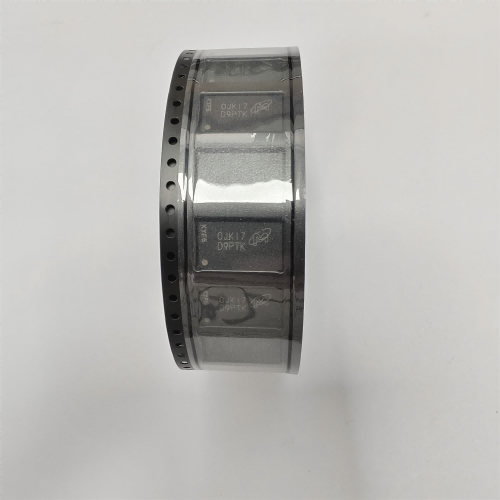
AD8275ARMZ-RL
Brand: Analog Devices
Analog Devices AD8275ARMZ-RL is a analog & mixed-signal component designed for Precision Instrumentation and related applications. In stock at Superb Automation — request a quote for competitive pricing and fast delivery.
Product Specifications
AD8275ARMZ-RL
Analog Devices — Analog & Mixed-Signal ICs
Product Overview
The AD8275ARMZ-RL from Analog Devices is a high-performance analog / mixed-signal IC providing precision signal acquisition, conversion, and conditioning. Analog Devices (ADI) is a world leader in high-performance analog, mixed-signal, and DSP ICs for instrumentation, healthcare, automotive, and communications.
Superb Automation partners with leading brands including Qorvo, TI, ADI, XILINX, NVIDIA, Intel, ST, MACOM, Renesas, and Coilcraft to provide complete BOM and supply-chain solutions.
Key Features
- High-resolution data conversion with excellent SNR and THD
- Wide dynamic range and high linearity across operating conditions
- Integrated voltage reference with low temperature drift
- Flexible digital interface — SPI, I2C, or parallel options
- Industrial/automotive temperature range with guaranteed specs
- Low power consumption with power-down modes
Key Specifications
| Resolution | bits |
| Channels | — |
| Sample Rate | kSPS |
| Interface | — |
| Supply Voltage | V |
| Operating Temp | °C |
| Package | — |
| INL | LSB |
| SNR | dB |
| THD | dB |
Applications
Precision Instrumentation
Industrial Process Control
Medical Imaging & Diagnostics
Automotive Sensor Interfaces
Communications Infrastructure
Test & Measurement
AD8275ARMZ-RL: the fixed 0.2 gain that brings a 10 V industrial signal into a 4 V converter
The AD8275ARMZ-RL is an Analog Devices difference amplifier with a gain of 0.2 set by internal laser trimmed resistors. It exists for one job: taking a plus or minus 10 V signal from a sensor, a loop powered transmitter or a test rack and putting it inside the single ended range a 4 V or 5 V SAR converter accepts. The reel suffix is tape and reel in the 8-lead MSOP.
What the vendor publishes
| Parameter | Value |
|---|---|
| Gain | 0.2, internal resistors |
| Input to output | plus or minus 10 V translated to +4 V |
| Supply | +3.3 V to +15 V |
| Common mode rejection | 80 dB |
| Gain drift | 1 ppm per degree C, maximum |
| Offset drift | 2.5 microvolt per degree C |
| Settling | 450 ns to 0.001 percent |
| Input overvoltage | +40 V to -35 V at a 5 V supply |
| Output swing | rail to rail |
| Package | 8-lead MSOP |
| Temperature | -40 to +85 C |
Where a 4.096 V reference puts the signal
A plus or minus 10 V input at a gain of 0.2 becomes plus or minus 2 V. With the reference at 4.096 V the output moves between 0.048 V and 4.048 V, which is the whole span of a 16-bit converter running from that reference. One LSB is 62.5 microvolts.
That number is the ruler for every error term. Offset drift of 2.5 microvolts per degree C over the -40 to +85 C range is 312.5 microvolts, five LSB. Over a 25 to 85 C working range it is 150 microvolts, 2.4 LSB. Gain drift of 1 ppm per degree C over that 60 C span is 120 microvolts at a 2 V output, just under two LSB. Both fit inside a 16-bit budget without a system calibration, provided the reference itself is better than about 1 ppm per degree C and is not the part that eats the accuracy.
Common mode rejection of 80 dB is the third term and the one that surprises people. A 10 V common mode difference divided by 10,000 is 1 mV at the input, 200 microvolts at the output, 3.2 LSB. One or two volts of ground difference between a sensor 20 m away and the rack is a 0.3 to 0.6 LSB shift, which is workable. Ten volts is not, and the fix is twisted pair with a driven shield, not a more expensive amplifier.
The overvoltage window is a number, not a promise
The input survives +40 V to -35 V with a 5 V supply. That covers a 24 V loop miswired onto an input and the kick from a relay opening on an inductive load. It does not cover a 48 V rail or a lightning transient. The series resistor in front of the input still has work to do, and its value matters twice: it limits the fault current and it adds a time constant with the input capacitance.
Settling of 450 ns to 0.001 percent is a ceiling of about 2.2 MSPS if settling were the only limit. At 1 MSPS the settling uses 45 percent of the conversion period, which leaves room for the sample and hold and for the multiplexer to settle after a channel step. In a scanned front end the channel step, not this amplifier, is usually the limit.
Two questions buyers ask
Can the same part take a plus or minus 5 V signal? It can, and the converter then uses half its range, so one bit is lost. If the system only ever sees plus or minus 5 V, a gain near 0.4 would use the full scale, and this part does not offer that gain. The family carries other fixed gains, and the choice is made on the sensor span.
How do I know the reel is not a relabelled part? Ask for the date code, the reel label and a photo of the reel before it ships, and check the MSOP marking against the data sheet. On a 62.5 microvolt LSB a part that is not what the label says shows up as gain error on the first bench test, long after the reel has been paid for.
SUPERB quotes the AD8275ARMZ-RL against the row above and confirms the date code before shipment. For a part that has gone end of life, obsolete part cross reference lists what has to match before a substitute is proposed. The converter behind it is compared under ADC DAC cross reference, and stock sits in the analog and mixed signal ICs index.
Request Quote — In Stock, 100% New & Original, Full Warranty