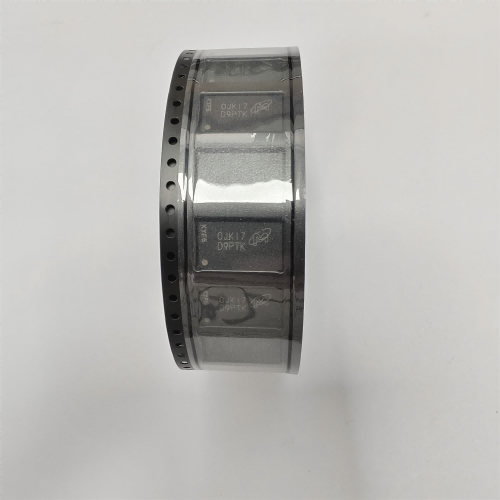
LTC3615IUF#PBF
Brand: Analog Devices
Analog Devices LTC3615IUF#PBF is a analog & mixed-signal component designed for Precision Instrumentation and related applications. In stock at Superb Automation — request a quote for competitive pricing and fast delivery.
Product Specifications
LTC3615IUF#PBF
Analog Devices — Analog & Mixed-Signal ICs
Product Overview
The LTC3615IUF#PBF from Analog Devices is a high-performance analog / mixed-signal IC providing precision signal acquisition, conversion, and conditioning. Analog Devices (ADI) is a world leader in high-performance analog, mixed-signal, and DSP ICs for instrumentation, healthcare, automotive, and communications.
Superb Automation partners with leading brands including Qorvo, TI, ADI, XILINX, NVIDIA, Intel, ST, MACOM, Renesas, and Coilcraft to provide complete BOM and supply-chain solutions.
Key Features
- High-resolution data conversion with excellent SNR and THD
- Wide dynamic range and high linearity across operating conditions
- Integrated voltage reference with low temperature drift
- Flexible digital interface — SPI, I2C, or parallel options
- Industrial/automotive temperature range with guaranteed specs
- Low power consumption with power-down modes
Key Specifications
| Resolution | bits |
| Channels | — |
| Sample Rate | kSPS |
| Interface | — |
| Supply Voltage | V |
| Operating Temp | °C |
| Package | — |
| INL | LSB |
| SNR | dB |
| THD | dB |
Applications
Precision Instrumentation
Industrial Process Control
Medical Imaging & Diagnostics
Automotive Sensor Interfaces
Communications Infrastructure
Test & Measurement
LTC3615IUF#PBF industrial dual rail with lead free finish
The LTC3615IUF#PBF is the industrial letter of the dual 3 A synchronous step down regulator in the 4 mm by 4 mm QFN, with the lead free finish called out by the PBF suffix. The electrical function is the dual 3 A family function: 2.25 V to 5.5 V input, up to 4 MHz, plus or minus 1 percent accuracy, a 0.6 V minimum output, 130 uA in Burst Mode, zero in shutdown, and phase options of 0, 90 or 180 degrees. The two suffixes are the part of this line worth understanding, because they are the part a buyer is most likely to have substituted.
What the two suffixes say
The I letter is the temperature grade. The PBF suffix is the lead free finish, which on a modern board is the normal requirement rather than a preference: a tin lead finish is a different reflow profile and a different compliance file. If the board is qualified with PBF, a non PBF part is a process change even though the die is identical. Both suffixes live in the same data sheet, so the difference only appears in the ordering information and on the reel.
One part, two rails, or one six amp rail
| Configuration | Output | Duty | Ripple at 4 MHz, 1 uH |
|---|---|---|---|
| Two rails, 3.3 V to 1.2 V, 3 A each | 7.2 W total | 36.4 percent | 0.191 A per channel, 6.4 percent |
| One rail, 3.3 V to 1.2 V, 6 A | 7.2 W | 36.4 percent | 0.191 A per channel, split load |
| DDR termination, plus and minus 1.5 A | 4.95 W at 3.3 V | 66.0 percent from 5 V | source and sink both |
The single 6 A output is made by tying the two channels to one feedback divider and running them 180 degrees apart. The current does not share perfectly by itself, because the two channels have separate current sense and separate error amplifiers, so the sharing depends on the loop matching and on the resistance of the two paths. A board that runs 6 A through one output should measure the split at full load rather than assume it is even.
Tracking, soft start and the sequencing question
A fixed internal soft start plus a programmable external one lets the two rails come up in a controlled order, and the tracking capability lets one rail follow the other so a processor's core and its input output rails rise together. That matters on parts where a rail must never be above another during power up. Both features are set by external components, so the timing is a board decision and can be changed without changing the order code.
Standby and the shutdown state
130 uA in Burst Mode is 1.14 Ah over a year at 3.7 V, and shutdown is 1 uA or less, which is 8.76 mAh over a year. The difference between those two numbers is the difference between a product that lasts a month in standby and one that lasts a year, and it is decided by whether the enable pin is actually pulled low rather than by the regulator.
Lead free finish and the reflow profile
The PBF suffix is not cosmetic. A lead free finish runs a reflow profile that peaks some 25 to 30 degrees higher than a tin lead profile, and the whole board is reflowed at that profile whether or not the part needs it. A board qualified with the lead free part and then populated with a tin lead part is a board whose process file no longer matches its bill of materials, which is an audit finding before it is an electrical one. On a product with a compliance file the finish also has to appear in the declaration, and a substitution changes the declaration.
None of that shows up in an electrical test, which is exactly why it belongs in the purchasing controls rather than in the incoming inspection.
Questions that come up on this part
Does the PBF change the electrical behaviour? No. The die is the same and the electrical limits are the same. The difference is the finish and the process window.
Can a non PBF part be used on a lead free board? Only with a process that supports both, and only if the compliance file allows it. On a modern assembly line the answer is normally no.
How even is the current split in the 6 A configuration? It depends on the matching of the two loops and the resistance of the two paths, and it has to be measured at full load. A 60/40 split at 6 A still leaves one channel at 3.6 A, which is above its rating.
Does the part need external compensation? It offers internal or external compensation, so the board chooses. External compensation is the option when the output capacitor is outside the range the internal network expects.
Sourcing notes and next step
Quote the full code with both suffixes, then check the phase option against the board. Our drop in replacement page covers the verification steps, the pin to pin cross reference page covers the footprint question, and the analog and mixed signal category holds the rest of the regulator family.
Request Quote — In Stock, 100% New & Original, Full Warranty