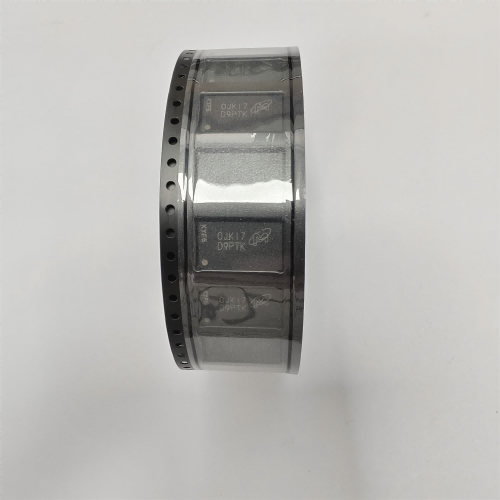
LT3091IDE#TRPBF
Brand: Analog Devices
Analog Devices LT3091IDE#TRPBF is a analog & mixed-signal component designed for Precision Instrumentation and related applications. In stock at Superb Automation — request a quote for competitive pricing and fast delivery.
Product Specifications
LT3091IDE#TRPBF
Analog Devices — Analog & Mixed-Signal ICs
Product Overview
The LT3091IDE#TRPBF from Analog Devices is a high-performance analog / mixed-signal IC providing precision signal acquisition, conversion, and conditioning. Analog Devices (ADI) is a world leader in high-performance analog, mixed-signal, and DSP ICs for instrumentation, healthcare, automotive, and communications.
Superb Automation partners with leading brands including Qorvo, TI, ADI, XILINX, NVIDIA, Intel, ST, MACOM, Renesas, and Coilcraft to provide complete BOM and supply-chain solutions.
Key Features
- High-resolution data conversion with excellent SNR and THD
- Wide dynamic range and high linearity across operating conditions
- Integrated voltage reference with low temperature drift
- Flexible digital interface — SPI, I2C, or parallel options
- Industrial/automotive temperature range with guaranteed specs
- Low power consumption with power-down modes
Key Specifications
| Resolution | bits |
| Channels | — |
| Sample Rate | kSPS |
| Interface | — |
| Supply Voltage | V |
| Operating Temp | °C |
| Package | — |
| INL | LSB |
| SNR | dB |
| THD | dB |
Applications
Precision Instrumentation
Industrial Process Control
Medical Imaging & Diagnostics
Automotive Sensor Interfaces
Communications Infrastructure
Test & Measurement
Request Quote — In Stock, 100% New & Original, Full Warranty
LT3091IDE#TRPBF: a 1.5 A negative regulator in a 14-lead DFN
The LT3091IDE#TRPBF is a 1.5 A low dropout negative linear regulator in the 14-lead 4 mm by 3 mm DFN, industrial grade, tape and reel. Input range is 1.5 V to 36 V, output spans 0 V to 32 V and stays rail to rail, a single resistor on the SET pin programs the voltage from a 50 uA reference with 1 percent initial accuracy, and dropout is 300 mV typical at full current. Output noise is 18 uV RMS across 10 Hz to 100 kHz, load regulation is 1.2 mV from 1 mA to 1.5 A, and the part is stable with a 10 uF output capacitor, ceramic or tantalum.
Published values
| Parameter | Value |
|---|---|
| Input voltage | 1.5 V to 36 V |
| Output voltage | 0 V to 32 V, one resistor on SET |
| Output current | 1.5 A |
| Dropout voltage | 300 mV typical |
| Output noise | 18 uV RMS, 10 Hz to 100 kHz |
| SET pin current | 50 uA, 1 percent initial accuracy |
| Load regulation | 1.2 mV from 1 mA to 1.5 A |
| Quiescent current | 1.2 mA, below 1 uA in shutdown |
| Output capacitor | 10 uF minimum, ceramic or tantalum |
| Package and grade | 14-lead 4 mm by 3 mm DFN, -40 C to 125 C |
The current limit is a resistor, not a fixed number
Most negative regulators carry a fixed internal current limit and leave the user to size the upstream supply around it. The LT3091 brings the limit out, so one resistor sets the point at which the part stops delivering, and the same pin pair supports a current monitor that either sources 0.25 mA per amp or sinks 0.5 mA per amp depending on how it is wired. That combination is useful in two situations that come up in industrial builds: a rail that feeds a connector where a short must be limited well below the regulator maximum, and a rack supply where the load current has to be reported to a controller without adding a shunt. Buyers should note that the monitor is a current output, so the scaling resistor sits on the receiving end.
Why a negative rail at 1.5 A is a different problem
At 1.5 A the copper and the thermal path carry as much of the decision as the electrical table. The DFN's exposed pad is the only route for the heat, and the pad is connected to the negative input on this family, so the copper shape under the part is a live node. On a four layer board with two ounces of copper the part can hold a watt or more with a junction rise of 30 to 40 C, which leaves room at 125 C ambient only if the enclosure is cool. At 36 V in and a low output the dissipation is the product that decides whether the board works, and the usual answer is to drop the input with a switching stage first and let the linear part clean the residue.
Three terminal floating use
The data sheet describes the device as configurable as a three terminal floating regulator, which means the same part can sit above ground and regulate a difference rather than a rail referred to ground. That is how negative rails are often built in instrument front ends and how a floating supply is made for a bridge or a high side driver. The SET pin reference is what makes the arrangement practical, since the output is set by a resistor to the negative rail and the part does not care where that rail sits. For a buyer, floating configurations are where a substitute part most often fails, because a device with a ground referred reference cannot be wired the same way.
Grade, packing and substitutes
The DE suffix marks the 14-lead DFN, and the grade letter in front of it sets the temperature window: E and I cover -40 C to 125 C, H covers -40 C to 150 C, and MP covers -55 C to 150 C. TR is tape and reel. TSSOP, TO-220 and DD-Pak versions of the same device exist for builds that need through hole or a larger thermal mass, and moving between bodies keeps the electrical table. Our power management cross reference lists those bodies against the codes, the second source notes for ADI parts set out the checks for a negative rail substitute, and the one stop BOM sourcing page covers buying several of these rails together.