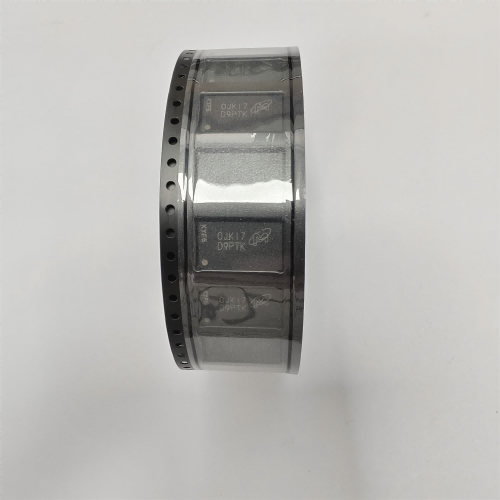
LT3042HMSE#TRPBF
Brand: Analog Devices
Analog Devices LT3042HMSE#TRPBF is a analog & mixed-signal component designed for Precision Instrumentation and related applications. In stock at Superb Automation — request a quote for competitive pricing and fast delivery.
Product Specifications
LT3042HMSE#TRPBF
Analog Devices — Analog & Mixed-Signal ICs
Product Overview
The LT3042HMSE#TRPBF from Analog Devices is a high-performance analog / mixed-signal IC providing precision signal acquisition, conversion, and conditioning. Analog Devices (ADI) is a world leader in high-performance analog, mixed-signal, and DSP ICs for instrumentation, healthcare, automotive, and communications.
Superb Automation partners with leading brands including Qorvo, TI, ADI, XILINX, NVIDIA, Intel, ST, MACOM, Renesas, and Coilcraft to provide complete BOM and supply-chain solutions.
Key Features
- High-resolution data conversion with excellent SNR and THD
- Wide dynamic range and high linearity across operating conditions
- Integrated voltage reference with low temperature drift
- Flexible digital interface — SPI, I2C, or parallel options
- Industrial/automotive temperature range with guaranteed specs
- Low power consumption with power-down modes
Key Specifications
| Resolution | bits |
| Channels | — |
| Sample Rate | kSPS |
| Interface | — |
| Supply Voltage | V |
| Operating Temp | °C |
| Package | — |
| INL | LSB |
| SNR | dB |
| THD | dB |
Applications
Precision Instrumentation
Industrial Process Control
Medical Imaging & Diagnostics
Automotive Sensor Interfaces
Communications Infrastructure
Test & Measurement
LT3042HMSE#TRPBF: the high temperature 200 mA regulator in the leaded MSOP
What this order code is
LT3042HMSE#TRPBF is the 200 mA LT3042 in the 10-lead MSOP with exposed pad, H temperature code, tape and reel. The published electrical behaviour is the family behaviour: 0.8 uV RMS of noise from 10 Hz to 100 kHz, 2 nV per root hertz at 10 kHz, 79 dB of supply rejection at 1 MHz, 350 mV of dropout at 200 mA, 1.8 V to 20 V input, 0 V to 15 V output, 100 uA SET current of plus or minus 1 percent, 2 mA quiescent current, a 4.7 uF minimum ceramic output capacitor, reverse battery and reverse current protection, and AEC-Q100 qualification.
Two fields make this code different from the more common E grade DFN. H is the high temperature code, whose ambient and junction limits are in the ordering table, and MSE is the leaded MSOP body, which can be inspected and reworked by ordinary means. Together they describe a part bought for a hot assembly that also has to be serviceable, which is a common combination in industrial and automotive control hardware and an uncommon one in consumer boards.
Parameters as published
| Item | Value |
|---|---|
| Output current | 200 mA |
| Input voltage range | 1.8 V to 20 V |
| Output voltage range | 0 V to 15 V, set by one resistor |
| Dropout at 200 mA | 350 mV typical |
| RMS noise, 10 Hz to 100 kHz | 0.8 uV |
| Supply rejection at 1 MHz | 79 dB |
| SET pin current | 100 uA, plus or minus 1 percent |
| Quiescent current | 2 mA, below 1 uA in shutdown |
| Minimum output capacitor | 4.7 uF ceramic |
| Temperature code | H, limits in the ordering table |
| Body | 10-lead MSOP with exposed pad |
| Automotive qualification | AEC-Q100 |
Numbers that decide the application
At 200 mA this regulator drops 350 mV, which is 1.75 ohm, so the input floor is 3.65 V for a 3.3 V output. Dissipation is 0.34 W from 5 V, 0.30 W from 3.3 V to 1.8 V and 1.74 W from 12 V. In an MSOP at a hot ambient the last figure is out of reach and the first is the one to size the copper for: the exposed pad is the only path, it needs vias into a plane, and the junction rise has to be computed at the ambient the enclosure actually reaches, not at the 25 C of a bench test. The H letter re-grades the die for that ambient; it does not lower the 1.75 ohm.
The noise and rejection figures are properties of the die and are unaffected by the letter or the body: 0.8 uV is 0.0105 of a 16 bit code at 5 V and 0.17 of a 20 bit one, while 79 dB at 1 MHz turns 1 V of ripple into 112 uV and 100 mV into 12.6 uV. What the temperature does affect is the SET resistor and the output capacitor: a resistor with a 100 ppm per degree C coefficient contributes 0.33 percent over a 33 degree swing, which is 11 mV on 3.3 V, and a class 2 ceramic output capacitor loses a large part of its 4.7 uF near its rated temperature, which moves the loop and the transient the board was built around.
The transient is worth stating in absolute terms: 200 mA for 1 us on 4.7 uF is 42.6 mV, so a load that steps faster than the loop responds sees that step whatever the regulator does. On a hot board where the capacitor has derated to half its value, the same step is 85 mV, and that is the number the downstream converter or RF block actually sees.
Where it fits and where it does not
It fits an industrial controller in a hot cabinet, an automotive body or powertrain module that has to be reworkable, a sealed RF enclosure and any line where the ambient is above the standard code's guarantee. It does not fit a load above 200 mA in one body, a 12 V input without a plane, an output capacitor below 4.7 uF at the operating temperature, or a 3.3 V to 3.3 V rail.
Supply and second source questions
Temperature code and body are two independent fields, and both have to match on a repeat order: an E grade MSOP and an H grade MSOP are the same footprint and different guarantees. Substitutes that quote 0.8 uV without stating the SET network and the output capacitor are quoting a condition, not a part. The regulators that hold the same footprint and their published grades are compared on the power management cross reference page.
Sourcing notes and next step
We confirm both the temperature letter and the body on every line before a reel is booked. Send the line items, quantities and required date through the BOM shortage recovery page and we will answer with availability. The wider regulator list sits on the analog and mixed signal IC page.
Request Quote — In Stock, 100% New & Original, Full Warranty