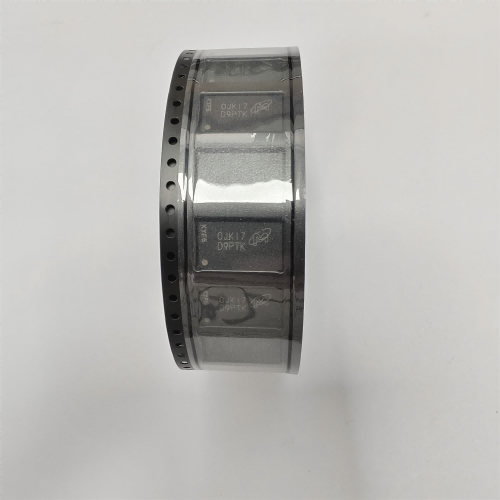
ADP160AUJZ-3
Brand: Analog Devices
Analog Devices ADP160AUJZ-3 is a analog & mixed-signal component designed for Instrumentation and related applications. In stock at Superb Automation — request a quote for competitive pricing and fast delivery.
Product Specifications
ADP160AUJZ-3
Analog Devices — Analog & Mixed-Signal ICs
Product Overview
The ADP160AUJZ-3 from Analog Devices is a high-performance analog / mixed-signal IC providing precision signal acquisition, conversion, and conditioning. Analog Devices (ADI) is a world leader in high-performance analog, mixed-signal, and DSP ICs for instrumentation, healthcare, automotive, and communications.
Superb Automation partners with leading brands including Qorvo, TI, ADI, XILINX, NVIDIA, Intel, ST, MACOM, Renesas, and Coilcraft to provide complete BOM and supply-chain solutions.
Key Features
- High-resolution data conversion with excellent SNR and THD
- Wide dynamic range and high linearity across operating conditions
- Integrated voltage reference with low temperature drift
- Flexible digital interface — SPI, I2C, or parallel options
- Industrial/automotive temperature range with guaranteed specs
- Low power consumption with power-down modes
Key Specifications
| Resolution | bits |
| Channels | — |
| Sample Rate | kSPS |
| Interface | — |
| Supply Voltage | V |
| Operating Temp | °C |
| Package | — |
| INL | LSB |
| SNR | dB |
| THD | dB |
Applications
Precision Instrumentation
Industrial Process Control
Medical Imaging & Diagnostics
Automotive Sensor Interfaces
Communications Infrastructure
Test & Measurement
Request Quote — In Stock, 100% New & Original, Full Warranty
ADP160AUJZ-3: 560 nA of quiescent current in a 150 mA LDO, and the trade behind it
The ADP160AUJZ-3 is a fixed output member of the ADP160/ADP161/ADP162/ADP163 family, a 150 mA CMOS regulator that works from 2.2 V to 5.5 V and holds 560 nA of quiescent current at no load, rising to 860 nA at 1 uA of load. Those figures are low enough that the regulator is no longer the dominant drain on a coin cell product, which is the whole reason the part exists. The cost of that number is bandwidth, and it is visible in the dropout and transient figures.
Published values
| Parameter | Value |
|---|---|
| Maximum output current | 150 mA |
| Input voltage range | 2.2 V to 5.5 V |
| Quiescent current, 0 A load | 560 nA |
| Quiescent current, 1 uA load | 860 nA |
| Shutdown current | Below 50 nA typical |
| Dropout at 150 mA | 195 mV |
| Initial accuracy | 1% |
| Accuracy over line, load, temperature | 3.5% |
| Fixed output options | 15 values from 1.2 V to 4.2 V |
| PSRR | 72 dB at 100 Hz |
| Output discharge | Fitted on ADP160, absent on ADP162 |
| Packages | 5-lead TSOT, 4-ball WLCSP 0.5 mm pitch |
The quiescent current is the product, so read both numbers
560 nA at no load is only part of the story. At 1 uA of load the part takes 860 nA, which means the regulator overhead is comparable to the load itself in a sleep state. For a product that spends 99 percent of its life at a few microamps, the total is what has to be calculated: load current plus ground current, not load current alone. A 3.5 percent accuracy window over line, load and temperature is the other side of the same coin, and it is wider than a general purpose LDO because the bias current that would tighten it is exactly what has been removed.
PSRR is quoted at 100 Hz, not at 100 kHz. That tells you where the part is useful: cleaning up a slow supply or a battery rail, not rejecting a switching regulator ripple.
Dropout and the discharge option
195 mV at 150 mA means a 3.0 V rail needs at least 3.2 V of input to stay in regulation, which rules out a direct feed from a 3.0 V lithium cell near the end of discharge. The ADP160 includes an output discharge resistor that pulls the rail down when the enable pin goes low; the ADP162 is the same part without it. On a board where the rail feeds a converter that must not see a floating supply during power down, the discharge version is the one to order, and this difference is invisible in the family name.
Selecting a substitute without losing the sleep current
Any replacement has to be compared on the loaded quiescent current, not only the zero load figure, and on the shutdown current. A part that quotes 500 nA at no load but 4 uA at 10 uA of load will double the sleep drain of the product. The second check is the discharge behaviour, because a substitute without the internal discharge resistor changes what happens on the rail at shutdown and can hold a converter in an undefined state until the bulk capacitor drains.
Buyers usually arrive at the obsolete part cross reference hub to find the family alternatives, then use vendor consolidation to confirm a substitute before it is fitted; OEM procurement is the routine for a part that has already stopped shipping.
Two questions buyers ask
Is the ADP160 pin compatible with the ADP162? They share the package and the pinout in the 5-lead TSOT, and the difference is the output discharge function. That makes them interchangeable on many boards, but the shutdown behaviour has to be checked before the swap is signed off.
How long can this part hold a rail up after the enable pin goes low? That depends on the load and the output capacitor, not on the regulator alone. With the discharge version the rail falls quickly on purpose, so a circuit that needs a controlled decay should not use it.