


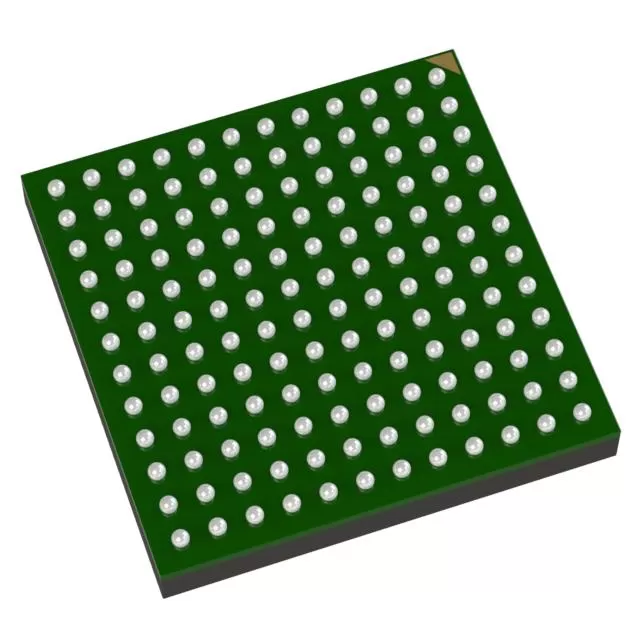

ADM1276-3ACPZ-RL
Brand: Analog Devices
Analog Devices ADM1276-3ACPZ-RL is a analog & mixed-signal component designed for Precision Instrumentation and related applications. In stock at Superb Automation — request a quote for competitive pricing and fast delivery.
Product Specifications
ADM1276-3ACPZ-RL
Analog Devices — Analog & Mixed-Signal ICs
Product Overview
The ADM1276-3ACPZ-RL from Analog Devices is a high-performance analog / mixed-signal IC providing precision signal acquisition, conversion, and conditioning. Analog Devices (ADI) is a world leader in high-performance analog, mixed-signal, and DSP ICs for instrumentation, healthcare, automotive, and communications.
Superb Automation partners with leading brands including Qorvo, TI, ADI, XILINX, NVIDIA, Intel, ST, MACOM, Renesas, and Coilcraft to provide complete BOM and supply-chain solutions.
Key Features
- High-resolution data conversion with excellent SNR and THD
- Wide dynamic range and high linearity across operating conditions
- Integrated voltage reference with low temperature drift
- Flexible digital interface — SPI, I2C, or parallel options
- Industrial/automotive temperature range with guaranteed specs
- Low power consumption with power-down modes
Key Specifications
| Resolution | bits |
| Channels | — |
| Sample Rate | kSPS |
| Interface | — |
| Supply Voltage | V |
| Operating Temp | °C |
| Package | — |
| INL | LSB |
| SNR | dB |
| THD | dB |
Applications
Precision Instrumentation
Industrial Process Control
Medical Imaging & Diagnostics
Automotive Sensor Interfaces
Communications Infrastructure
Test & Measurement
ADM1276-3ACPZ-RL: Hot Swap Control With a PMBus Window Into the Load
What this part is
The ADM1276 is a hot swap controller for a 2 V to 20 V supply rail that also measures what the load is drawing. A sense resistor in the power path feeds an internal current sense amplifier, the amplifier drives the gate of an external N channel FET through a charge pump, and a 12 bit converter digitises the sense voltage and the input or output voltage for readback over a PMBus interface. Inserting a board into a live backplane and knowing afterwards what it drew is the whole point of the part.
The current limit is set by a resistor divider from the internal reference into the ISET pin, over a 5 mV to 25 mV range, with a 20 mV default. A timer capacitor sets how long the FET may stay in current limit, a foldback resistor lowers the limit as the voltage across the FET rises to keep the part inside its safe operating area, and the LATCH pin chooses between automatic retry and latch off after a fault. The vendor now lists the part as last time buy.
Published figures that matter to a buyer
| Supply range controlled | 2 V to 20 V |
| Short circuit response | 370 ns |
| Current limit range | 5 mV to 25 mV across the sense resistor, 20 mV default |
| Current sense accuracy | plus or minus 1 percent |
| ADC | 12 bit for current and for input or output voltage |
| Interface | PMBus, up to four selectable addresses |
| Gate drive | charge pumped, for multiple external N channel FETs |
| Fast pull down | 1500 mA on the gate during a fault |
| Protection features | overvoltage, undervoltage, programmable current limit timer, foldback |
| Fault response | automatic retry or latch off, set by the LATCH pin |
| Package | 20 lead LFCSP |
| Lifecycle status | last time buy at the vendor |
Where the headline numbers stop
The current limit is a voltage, not a current, so the sense resistor decides the number. At the 20 mV default a 1 mOhm resistor gives a 20 A limit, a 2 mOhm resistor gives 10 A, and the usable adjustment range of 5 mV to 25 mV is a 5 to 1 spread. The 12 bit converter on the 25 mV full scale resolves 6.1 uV, which is 6.1 mA through a 1 mOhm resistor, so the readback resolution is set by the resistor in exactly the same way as the limit.
The 370 ns short circuit response is the number that protects the FET, and it works with the 1500 mA gate pull down rather than alone. A 20 A fault at 12 V is 240 W in the FET, and 370 ns of that is 89 uJ, which most devices survive if the gate actually turns off in that time. The foldback network is what handles the longer overload, because it lowers the current limit as the drain source voltage rises, holding the FET inside its safe operating area instead of at a constant power that the package cannot take.
Applications where it fits
- Telecommunication and datacom equipment where line cards are inserted into a live backplane and the inrush has to be controlled.
- Server and storage shelves where the power drawn by each slot is metered over a bus.
- Central office equipment with a 48 V distribution that is regulated down to a 12 V card rail before the hot swap stage.
- Any chassis where a faulted card has to be isolated without taking the backplane down.
Two questions buyers ask
What does the last time buy status mean for a build? The part is no longer being produced, so the supply is whatever is in the channel and in distributor stock. A production board should either secure a lifetime quantity now or qualify a replacement, and the replacement will not be a drop in because the PMBus command set and the sense scheme differ between hot swap families.
Does the -3 suffix fix the fault behaviour? The vendor describes the LATCH pin as configurable for automatic retry or latch off, and the ordering guide distinguishes the order codes on that basis. A buyer should confirm which of the two behaviours the suffix on the BOM represents before committing to a lifetime quantity, because retry and latch off are very different choices in a redundant supply.
Sourcing notes and next step
The ADM1276-3ACPZ-RL is the 20 lead LFCSP on a 13 inch reel and it is last time buy at the vendor, so availability is a stock question rather than a lead time question. The analog and mixed signal IC family page lists the power management line, the obsolete part cross reference hub sets out how a lifetime buy and a replacement qualification are run in parallel, and the power management cross reference page covers the substitution route once a replacement has been chosen.
Request Quote — In Stock, 100% New & Original, Full Warranty