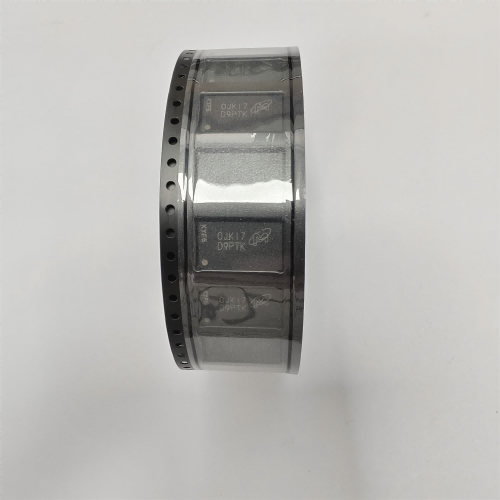
ADCMP361YRJZ-REEL7
Brand: Analog Devices
Analog Devices ADCMP361YRJZ-REEL7 is a analog & mixed-signal component designed for Precision Instrumentation and related applications. In stock at Superb Automation — request a quote for competitive pricing and fast delivery.
Product Specifications
ADCMP361YRJZ-REEL7
Analog Devices — Analog & Mixed-Signal ICs
Product Overview
The ADCMP361YRJZ-REEL7 from Analog Devices is a high-performance analog / mixed-signal IC providing precision signal acquisition, conversion, and conditioning. Analog Devices (ADI) is a world leader in high-performance analog, mixed-signal, and DSP ICs for instrumentation, healthcare, automotive, and communications.
Superb Automation partners with leading brands including Qorvo, TI, ADI, XILINX, NVIDIA, Intel, ST, MACOM, Renesas, and Coilcraft to provide complete BOM and supply-chain solutions.
Key Features
- High-resolution data conversion with excellent SNR and THD
- Wide dynamic range and high linearity across operating conditions
- Integrated voltage reference with low temperature drift
- Flexible digital interface — SPI, I2C, or parallel options
- Industrial/automotive temperature range with guaranteed specs
- Low power consumption with power-down modes
Key Specifications
| Resolution | bits |
| Channels | — |
| Sample Rate | kSPS |
| Interface | — |
| Supply Voltage | V |
| Operating Temp | °C |
| Package | — |
| INL | LSB |
| SNR | dB |
| THD | dB |
Applications
Precision Instrumentation
Industrial Process Control
Medical Imaging & Diagnostics
Automotive Sensor Interfaces
Communications Infrastructure
Test & Measurement
ADCMP361YRJZ-REEL7: a comparator with a 400 mV reference and dual polarity outputs
What this order code is
ADCMP361YRJZ-REEL7 is a single comparator with an internal 400 mV reference and two open drain outputs, one inverting and one non inverting, in a 5-lead SOT-23. The reference is trimmed to plus or minus 0.275 percent, the supply range is 1.7 V to 5.5 V, and the quiescent current is 6.5 microamps typical, which makes it a monitor for a battery or a low voltage rail that has to be watched for years. There is 9.3 mV of typical hysteresis inside the comparator, so a slow moving input does not produce a burst of transitions at the threshold.
The two outputs allow the same device to be used as an inverting or a non inverting detector without adding a transistor, and they can be pulled to any voltage up to 5.5 V independent of the supply, so a 1.8 V logic input can be driven from a comparator that runs on a 5 V rail. Each output sinks more than 5 mA over temperature, which is enough to drive an optocoupler or a small relay coil through a transistor. The input common mode range includes ground.
Parameters as published
| Item | Value |
|---|---|
| Reference | 400 mV, plus or minus 0.275 percent |
| Supply range | 1.7 V to 5.5 V |
| Quiescent current | 6.5 microamps typical |
| Hysteresis | 9.3 mV typical |
| Input bias current | plus or minus 5 nA maximum |
| Input range | includes ground |
| Outputs | two open drain, opposite polarity |
| Output pull up voltage | up to 5.5 V independent of the supply |
| Output sink current | over 5 mA |
| Body | 5-lead SOT-23 |
Numbers that decide the application
The reference tolerance is the place to start. Plus or minus 0.275 percent of 400 mV is plus or minus 1.1 mV, which is tight for a comparator reference and is the reason the part can monitor a rail directly rather than through a divider with a worse tolerance. The hysteresis of 9.3 mV is 2.3 percent of the threshold, which is a large fraction: a detector that has to resolve 5 mV of margin is below the hysteresis band and will not see it, so this part detects a rail that has moved by tens of millivolts and not one that has moved by two.
Monitoring a higher rail means a divider, and the divider becomes the accuracy limit. To compare a 3.3 V rail against 400 mV the divider ratio is 8.25 to 1, so a 1 percent divider tolerance is 33 mV at the rail against 1.1 mV from the reference and a 5 nA bias current through a 1 Mohm divider is 5 mV at the divider output, 125 mV at the rail. A precision divider pair costs more than the comparator and is where the money goes on a real board.
The 6.5 microamp current is 57 milliamp hours over a year, which is a third of a small coin cell, so the part is suited to a monitor that runs continuously rather than to a load switch that has to last ten years on the same cell. The 1.7 V supply floor is what allows it to watch a single lithium cell down to its end of discharge, and the ability to pull the outputs to 5.5 V independent of the supply means the interface does not have to match the rail being monitored.
Where it fits and where it does not
It fits lithium ion and coin cell monitoring, threshold detection, relay and optoisolator driving, industrial control interlocks and handheld instruments. It does not fit a detector that needs to resolve a few millivolts of margin because of the 9.3 mV hysteresis, a precision window monitor without a matched divider, or a system that needs a push pull output into a fast digital input.
Supply and second source questions
The questions we get are about the hysteresis, the divider and the output pull up, and about whether a comparator with an internal reference from another vendor has the same threshold polarity on each output. The two open drain outputs are opposite polarity in this part and that assignment is not standardised. The supervisory and comparator parts we hold are listed on the power management cross reference page.
Sourcing notes and next step
We quote this code against the bill of materials and check the body and the packing, and we ask what rail is being monitored so the divider and the hysteresis are checked against the margin the system needs. Where the exact code is short we will name the supervisory parts in the same class rather than substitute a comparator without a reference. Send the line items, quantities and required date through the BOM shortage recovery page, and for battery powered products that also need the regulator and the fuel gauge, the component lead time page lists the parts we can hold on schedule.
Request Quote — In Stock, 100% New & Original, Full Warranty