ADA4077-4ARZ-R7
Brand: Analog Devices
Analog Devices ADA4077-4ARZ-R7 is a analog & mixed-signal component designed for Instrumentation and related applications. In stock at Superb Automation — request a quote for competitive pricing and fast delivery.
Product Specifications
ADA4077-4ARZ-R7
Analog Devices — Analog & Mixed-Signal ICs
Product Overview
The ADA4077-4ARZ-R7 from Analog Devices is a high-performance analog / mixed-signal IC providing precision signal acquisition, conversion, and conditioning. Analog Devices (ADI) is a world leader in high-performance analog, mixed-signal, and DSP ICs for instrumentation, healthcare, automotive, and communications.
Superb Automation partners with leading brands including Qorvo, TI, ADI, XILINX, NVIDIA, Intel, ST, MACOM, Renesas, and Coilcraft to provide complete BOM and supply-chain solutions.
Key Features
- High-resolution data conversion with excellent SNR and THD
- Wide dynamic range and high linearity across operating conditions
- Integrated voltage reference with low temperature drift
- Flexible digital interface — SPI, I2C, or parallel options
- Industrial/automotive temperature range with guaranteed specs
- Low power consumption with power-down modes
Key Specifications
| Resolution | bits |
| Channels | — |
| Sample Rate | kSPS |
| Interface | — |
| Supply Voltage | V |
| Operating Temp | °C |
| Package | — |
| INL | LSB |
| SNR | dB |
| THD | dB |
Applications
Precision Instrumentation
Industrial Process Control
Medical Imaging & Diagnostics
Automotive Sensor Interfaces
Communications Infrastructure
Test & Measurement
Request Quote — In Stock, 100% New & Original, Full Warranty
ADA4077-4ARZ-R7: the quad A grade code and its looser drift window
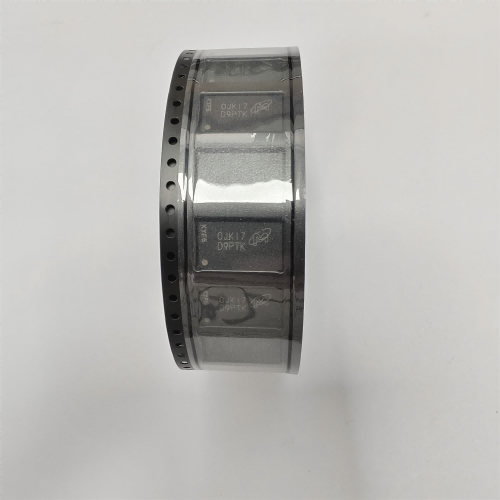
The ADA4077-4ARZ-R7 is the four channel member of the family in a 14-lead SOIC, A grade, supplied on reel. The published offset is the same 50 microvolts maximum as the single and dual codes, but the drift window is not: the quad is published at 0.75 microvolts per degree C against 0.55 on the 8-lead codes. Buyers who substitute a quad for two duals to save board area inherit that difference, and it is the first thing to put in front of the customer before a change is approved.
Published values
| Parameter | Value |
|---|---|
| Channels | 4 |
| Package | 14-lead SOIC (R-14), also offered in 14-lead TSSOP |
| Offset voltage, A grade quad | 50 uV maximum at 25 C |
| Offset voltage drift, A grade quad | 0.75 uV/C maximum |
| Input bias current | 1 nA maximum at 25 C |
| Voltage noise density | 6.9 nV/root Hz typical at 1 kHz |
| CMRR, PSRR, open loop gain | 120 dB minimum each |
| Gain bandwidth product | 3.9 MHz typical at 5 V supply |
| Supply current | 400 uA per amplifier typical, 650 uA per amplifier maximum |
| Absolute maximum supply | 36 V |
| Operating temperature | -40 C to +125 C |
| Moisture sensitivity | MSL1 rated |
| Packing suffix | -R7 marks the reel option on this family |
The quad grade is not the dual grade
Three numbers move when the channel count moves from two to four. The offset stays at 50 microvolts, the drift goes from 0.55 to 0.75 microvolts per degree C, and the drift over the published 165 kelvin span goes from 90.75 to 123.75 microvolts. That is 36 percent more drift for the same quoted offset, and it is invisible in a comparison table that only lists the room temperature figure.
For a channel calibrated at room temperature and used indoors, none of this matters. For a channel that has to hold its accuracy from minus 40 to plus 125, the quad code spends a third of its error budget on something the dual code does not, and a specification written against the dual number will fail on the quad.
Four channels on a 14-lead footprint
The 14-lead SOIC is not a stretched 8-lead package: the pin order changes between the single, dual and quad members of this family, so a board that replaces two 8-lead duals with one 14-lead quad needs a new footprint and new routing, not a pin for pin swap. The compensation and the supply decoupling also move to different pins, which is where most of the rework time goes on a substitution of this kind.
Four amplifiers in one package at 650 microamps maximum each is 2.6 milliamps and, on a 15 volt rail, 39 milliwatts in a 14-lead SOIC. That is still below the point where the package sets the temperature rise, but it is high enough that the decoupling has to be per package and not per channel.
What the reel suffix changes on a line item
The -R7 suffix marks the reel option on this family, and the reel quantity is stated in the order guide of the current document rather than in the part number. Before a purchase order is created it is worth confirming which packing the customer's line actually consumes: a reel fed line will not accept tubes, and a small build that consumes 200 pieces should not be quoted a full reel.
The same logic applies to the grading: the quad A grade is one code, the equivalent B grade is another, and mixing them in one line item produces a delivery that fails the customer's incoming inspection even though the parts work.
Sourcing notes for this family: the ADI second source page holds the cross references, how to verify a drop in replacement is the pre substitution check, and vendor consolidation is what we use when the part on the drawing is not on the shelf.
Two questions buyers ask
Can a quad replace two duals without a specification change? No. The drift window moves from 0.55 to 0.75 microvolts per degree C, so a specification written against the dual number is 36 percent tighter than what the quad code promises across the 165 kelvin span.
Is the 14-lead quad pin compatible with the 8-lead dual? No. The pin order changes between the members of this family, so the swap needs a new footprint, and the supply and decoupling pins move with it.