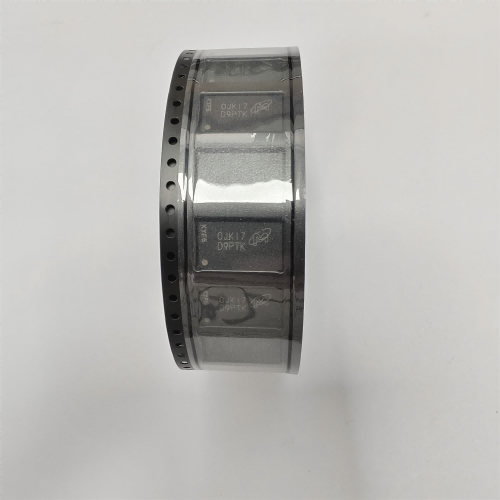
ADA4077-2ARZ-R7
Brand: Analog Devices
Analog Devices ADA4077-2ARZ-R7 is a analog & mixed-signal component designed for Precision Instrumentation and related applications. In stock at Superb Automation — request a quote for competitive pricing and fast delivery.
Product Specifications
ADA4077-2ARZ-R7
Analog Devices — Analog & Mixed-Signal ICs
Product Overview
The ADA4077-2ARZ-R7 from Analog Devices is a high-performance analog / mixed-signal IC providing precision signal acquisition, conversion, and conditioning. Analog Devices (ADI) is a world leader in high-performance analog, mixed-signal, and DSP ICs for instrumentation, healthcare, automotive, and communications.
Superb Automation partners with leading brands including Qorvo, TI, ADI, XILINX, NVIDIA, Intel, ST, MACOM, Renesas, and Coilcraft to provide complete BOM and supply-chain solutions.
Key Features
- High-resolution data conversion with excellent SNR and THD
- Wide dynamic range and high linearity across operating conditions
- Integrated voltage reference with low temperature drift
- Flexible digital interface — SPI, I2C, or parallel options
- Industrial/automotive temperature range with guaranteed specs
- Low power consumption with power-down modes
Key Specifications
| Resolution | bits |
| Channels | — |
| Sample Rate | kSPS |
| Interface | — |
| Supply Voltage | V |
| Operating Temp | °C |
| Package | — |
| INL | LSB |
| SNR | dB |
| THD | dB |
Applications
Precision Instrumentation
Industrial Process Control
Medical Imaging & Diagnostics
Automotive Sensor Interfaces
Communications Infrastructure
Test & Measurement
ADA4077-2ARZ-R7: at 16 bit the drift, not the offset, is what the calibration interval has to cover
The ADA4077-2ARZ-R7 is a dual precision operational amplifier with 4 MHz of gain bandwidth and 6.9 nanovolts per root hertz of voltage noise at 1 kHz. The order code carries the grade: ARZ is the A grade in an 8 lead SOIC, specified at 50 microvolts maximum offset and 0.55 microvolts per degree C maximum drift. The B grade in the same body is 25 microvolts and 0.25 microvolts per degree C, for roughly twice the price. Reading which grade a running assembly was built with is the first thing to settle before any second source conversation, because the two parts are interchangeable on the board and not interchangeable in a calibration table.
The part is stable with capacitive loads above 1,000 pF without external compensation and carries an MSL1 moisture rating, which matters at the assembly stage more than on the datasheet: an MSL1 part can go through reflow without a bake step.
What the vendor page states
| Parameter | Value |
|---|---|
| Channels | 2, plus single and quad members in the family |
| Gain bandwidth | 4 MHz |
| Voltage noise | 6.9 nanovolts per root hertz typical at 1 kHz |
| Offset, A grade | 50 microvolts maximum at 25 C |
| Offset, B grade | 25 microvolts maximum at 25 C |
| Drift, A grade | 0.55 microvolts per degree C maximum |
| Drift, B grade | 0.25 microvolts per degree C maximum |
| Input bias current | 1 nA maximum at 25 C |
| Capacitive load | stable above 1,000 pF without external compensation |
| Temperature range | minus 40 to plus 125 C |
| Moisture level | MSL1 |
The numbers that matter on a 16 bit range
On a 16 bit converter with a 5 V span one code is 76.3 microvolts. The A grade offset of 50 microvolts is 0.66 of a code, and its drift over the full 165 degree span is 90.75 microvolts, or 1.19 codes. The B grade halves both to 0.33 and 0.54 codes. In other words the room temperature offset of the A grade is smaller than the drift it will accumulate, so a single point calibration at 25 C leaves the drift as the dominant error at the temperature extremes. A circuit that needs the last bit at 85 C is buying the B grade for the drift, not for the offset, and the price difference should be justified on that basis rather than on the accuracy headline.
Where the 4 MHz goes
At a closed loop gain of 100 the usable bandwidth is 40 kHz, and at a gain of 10 it is 400 kHz. A thermocouple or strain gauge front end that needs 10 Hz of signal bandwidth has enormous margin; a multiplexed data acquisition front end that has to settle inside a few microseconds does not. The noise figure follows the same bandwidth: 6.9 nanovolts per root hertz integrates to 0.69 microvolts rms over 10 kHz and 2.18 microvolts rms over 100 kHz, so widening the filter by a decade costs a factor of 2.4 in noise and nothing in offset.
Bias current against source impedance
One nanoamp of bias current is negligible across a 10 k source resistor, 1 mV across 1 M and 10 mV across 10 M. Below about 1 M the offset and drift dominate and this amplifier is the right choice; above 10 M the bias current takes over and a JFET input part becomes the better answer. The border is set by the temperature: the 1 nA maximum is a 25 C figure, and leakage doubles roughly every 10 degrees, so a front end that sits at 85 C sees a very different current from the one measured on the bench.
The amplifier and converter line is indexed on the Analog and mixed-signal ICs page, and the sourcing routes for precision instrument builds are under amplifier cross reference and BOM shortage recovery.
ADA4077-2ARZ-R7: the A grade drift is larger than the A grade offset
The vendor gives 50 uV maximum offset at 25 C for the A grade in the 8-lead SOIC body and 0.55 uV per degree C maximum drift for the same grade and body, while the B grade is 25 uV and 0.25 uV per degree C. Over the 165 degrees of the extended industrial range the A grade drift accumulates to 90.8 uV, which is nearly twice its own offset limit, so the part that is bought for 50 uV is only a 50 uV part near room temperature. That is the arithmetic a calibration interval has to be built on.
| Item | Published value | Arithmetic or consequence |
|---|---|---|
| Offset, A grade | 50 uV maximum at 25 C | 0.65 LSB of a 16 bit converter on 5 V |
| Drift, A grade | 0.55 uV per degree C maximum | 90.8 uV over 165 degrees, larger than the offset |
| Offset, B grade | 25 uV maximum, 0.25 uV per degree C | 41.3 uV over 165 degrees, so drift stays under offset |
| Bias current | 1 nA maximum at 25 C | 1 mV into 1 Mohm, 20 times the offset |
| Noise | 6.9 nV per root hertz typical at 1 kHz | 2.18 uV over a 100 kHz band, 0.03 LSB |
| Capacitive load | Stable above 1000 pF with no external parts | A cable or a filter capacitor does not need a series resistor |
| Moisture | MSL1 rated | No bake before reflow, which matters on a long assembly line |
Drift over the band decides which grade is worth buying
At 0.55 uV per degree C the A grade moves 27.5 uV over a 50 degree excursion, so an instrument that is calibrated at 25 C and used in a 20 to 70 C room is 27.5 uV away from its calibration point before anything else drifts. The B grade halves that for a higher unit price, and the crossover is a simple calculation: if the offset dominates the error budget the A grade is enough, and if the drift dominates the B grade is cheaper than an oven or a recalibration procedure.
One nanoamp of bias crosses the offset at one megohm
A bias current of 1 nA produces 1 uV through 1 kohm and 1 mV through 1 Mohm, so the source impedance decides whether this amplifier is a precision part or an average one. The same part is stable into 1000 pF without external compensation, which is unusual for a precision bipolar amplifier and is the reason it appears in filter and cable driving positions where the alternative would need a series resistor.
Buying this order code
The A and B grades are separate order codes and the drift difference is not visible in a distributor description, so the grade belongs on the purchase order. The precision amplifier family is on the analog line card, grade questions are worked through the drop in page, and the AQEC enhanced product for defence programs is covered on the lead time page.
Request Quote — In Stock, 100% New & Original, Full Warranty