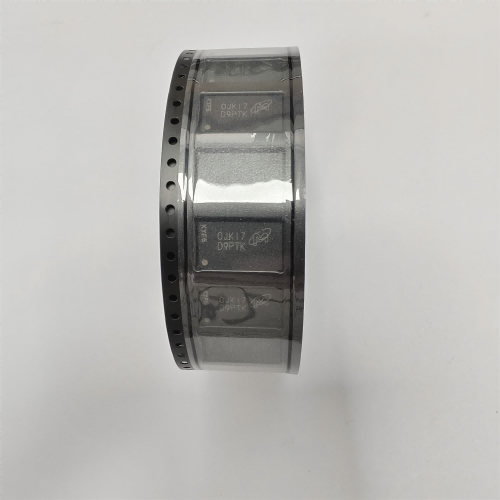
AD8602ARZ
Brand: Analog Devices
Analog Devices AD8602ARZ is a analog & mixed-signal component designed for Instrumentation and related applications. In stock at Superb Automation — request a quote for competitive pricing and fast delivery.
Product Specifications
AD8602ARZ
Analog Devices — Analog & Mixed-Signal ICs
Product Overview
The AD8602ARZ from Analog Devices is a high-performance analog / mixed-signal IC providing precision signal acquisition, conversion, and conditioning. Analog Devices (ADI) is a world leader in high-performance analog, mixed-signal, and DSP ICs for instrumentation, healthcare, automotive, and communications.
Superb Automation partners with leading brands including Qorvo, TI, ADI, XILINX, NVIDIA, Intel, ST, MACOM, Renesas, and Coilcraft to provide complete BOM and supply-chain solutions.
Key Features
- High-resolution data conversion with excellent SNR and THD
- Wide dynamic range and high linearity across operating conditions
- Integrated voltage reference with low temperature drift
- Flexible digital interface — SPI, I2C, or parallel options
- Industrial/automotive temperature range with guaranteed specs
- Low power consumption with power-down modes
Key Specifications
| Resolution | bits |
| Channels | — |
| Sample Rate | kSPS |
| Interface | — |
| Supply Voltage | V |
| Operating Temp | °C |
| Package | — |
| INL | LSB |
| SNR | dB |
| THD | dB |
Applications
Precision Instrumentation
Industrial Process Control
Medical Imaging & Diagnostics
Automotive Sensor Interfaces
Communications Infrastructure
Test & Measurement
Request Quote — In Stock, 100% New & Original, Full Warranty
AD8602ARZ: dual 8 MHz rail-to-rail amplifier in SOIC-8
The AD8602ARZ is the 8-lead SOIC_N version of the 8.4 MHz CMOS dual, with a 500 uV maximum offset at 25 C, 33 nV/root Hz of noise and 750 uA per amplifier. The electrical behaviour matches the MSOP package, so the choice between the two is a board question, and the reason to hold this one in stock is that the SOIC footprint is what most existing boards and most second source requests ask for.
Published values
| Parameter | Value |
|---|---|
| Offset voltage, A grade | 80 uV typical, 500 uV maximum at 25 C, 1300 uV maximum over temperature |
| Offset voltage drift | 2 uV/C typical |
| Input bias current | 0.2 pA typical, 60 pA maximum |
| Supply current per amplifier | 750 uA typical, 1.2 mA maximum at 5 V |
| Gain bandwidth | 8.4 MHz at 5 V |
| Slew rate | 6 V/us at 5 V |
| Voltage noise density | 33 nV/root Hz at 1 kHz |
| Open loop gain | 30 V/mV minimum, 100 V/mV typical |
| Settling to 0.01% | under 1 us at 5 V |
| Thermal resistance, SOIC-8 | 120 C/W junction to ambient |
| Input capacitance | 2 pF differential, 8 pF common mode |
| Supply range | 2.7 V to 5.5 V single supply |
Open loop gain is the term that bites in a high gain stage
Thirty volts per millivolt is a factor of 30,000, or 90 dB, and it is a minimum rather than a typical. At a closed loop gain of 100 that leaves 0.33 percent of gain error, which is 13 codes at 12 bits, before the resistor tolerance is counted. At a gain of 10 the error falls to 0.03 percent and the part is comfortable. Where a channel needs a gain of 100 or more with an accuracy better than a percent, a part with 120 dB of open loop gain is the correct choice and the offset is not the deciding term.
A second source sits in the same socket, not the same circuit
Replacing a general purpose dual with this part in an existing board usually improves bandwidth and noise and sometimes breaks the loop, because the new part is five times faster and the compensation or the feedback capacitor was chosen for the slower one. The check list is short: does the stage still settle, is the phase margin at the load capacitance still positive, and does the increased input capacitance of the CMOS input matter at the source impedance in use.
Supply and reference interaction
The 120 dB class CMRR of a good bipolar input is not what this part offers; the published figure is 74 dB minimum at 5 V. A 100 mV shift on the supply therefore moves the input offset by around 20 uV, and a reference that is derived from the same rail moves the full scale by the same 100 mV. Ratio the converter to the same reference and the two errors cancel, which is why these parts are usually found next to a ratiometric bridge rather than an absolute one.
Stock and substitution
The family is available in SOIC, MSOP and TSSOP bodies, and the three are electrically the same die, so a line that runs short of one package can often be kept running with an adapter on the other. That is a production answer rather than an engineering answer, and it is worth writing into the approved vendor list before the shortage arrives.
Two pages worth reading before a purchase order goes out are BOM shortage recovery and one stop BOM sourcing; the first lists what else fits the socket, the second is the test sequence for a drop in, and the obsolete part cross reference hub covers the case where the shortage is already on the line.
Two questions buyers ask
Is the AD8602ARZ the same die as the AD8602ARMZ? Yes, and the electrical specifications are identical. Only the package and the thermal resistance differ, 120 C/W for the SOIC against 142 C/W for the MSOP.
What is the input common mode range? The full supply range, 0 V to 5 V on a 5 V rail, at the cost of a larger offset when the input is outside the 0 V to 1.3 V window at 3 V.