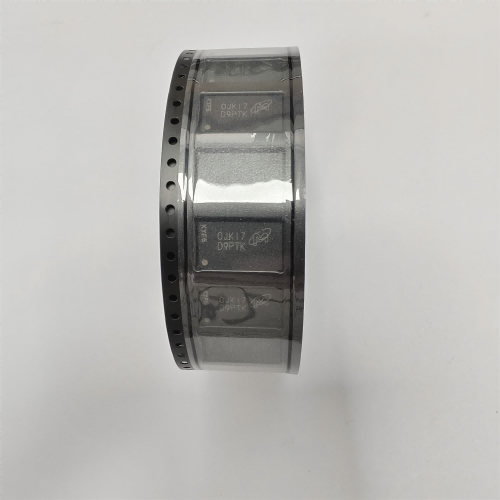
AD5428YRUZ-REEL7
Brand: Analog Devices
Analog Devices AD5428YRUZ-REEL7 is a analog & mixed-signal component designed for Precision Instrumentation and related applications. In stock at Superb Automation — request a quote for competitive pricing and fast delivery.
Product Specifications
AD5428YRUZ-REEL7
Analog Devices — Analog & Mixed-Signal ICs
Product Overview
The AD5428YRUZ-REEL7 from Analog Devices is a high-performance analog / mixed-signal IC providing precision signal acquisition, conversion, and conditioning. Analog Devices (ADI) is a world leader in high-performance analog, mixed-signal, and DSP ICs for instrumentation, healthcare, automotive, and communications.
Superb Automation partners with leading brands including Qorvo, TI, ADI, XILINX, NVIDIA, Intel, ST, MACOM, Renesas, and Coilcraft to provide complete BOM and supply-chain solutions.
Key Features
- High-resolution data conversion with excellent SNR and THD
- Wide dynamic range and high linearity across operating conditions
- Integrated voltage reference with low temperature drift
- Flexible digital interface — SPI, I2C, or parallel options
- Industrial/automotive temperature range with guaranteed specs
- Low power consumption with power-down modes
Key Specifications
| Resolution | bits |
| Channels | — |
| Sample Rate | kSPS |
| Interface | — |
| Supply Voltage | V |
| Operating Temp | °C |
| Package | — |
| INL | LSB |
| SNR | dB |
| THD | dB |
Applications
Precision Instrumentation
Industrial Process Control
Medical Imaging & Diagnostics
Automotive Sensor Interfaces
Communications Infrastructure
Test & Measurement
AD5428YRUZ-REEL7: a dual 8 bit multiplying converter with a 10 MHz reference bandwidth
What this order code is
AD5428YRUZ-REEL7 is a dual channel, 8 bit, current output digital to analog converter that multiplies: the output current is the product of the digital code and the current that flows in the reference input, so the same part can attenuate, amplify or modulate an analogue signal rather than only produce a fixed level. The reference input accepts plus and minus 10 V, the multiplying bandwidth is 10 MHz, the update rate is 21.3 megasamples per second, the supply is 2.5 V to 5.5 V, and the part is a direct upgrade for the AD7528 socket.
The two channels are independent, the part is guaranteed monotonic, and the integral nonlinearity is plus or minus 0.25 least significant bits at 8 bits. The digital interface has a readback function that returns the contents of the register through the data pins, so a controller can confirm the code it wrote. On power up the registers and the latches are cleared to zero and both outputs are at zero scale. The supply current is 0.5 microamps typical, which is a conversion current rather than a quiescent class figure, and the part is specified over minus 40 C to plus 125 C in a 20-lead TSSOP.
Parameters as published
| Item | Value |
|---|---|
| Resolution | 8 bits per channel |
| Channels | two, independent |
| Integral nonlinearity | plus or minus 0.25 LSB |
| Multiplying bandwidth | 10 MHz |
| Reference input range | plus and minus 10 V |
| Update rate | 21.3 megasamples per second |
| Supply range | 2.5 V to 5.5 V |
| Multiplication | four quadrant |
| Monotonicity | guaranteed |
| Readback | through the data pins |
| Power on state | registers cleared, outputs at zero scale |
| Socket upgrade | AD7528 |
| Body | 20-lead TSSOP |
| Temperature range | minus 40 C to plus 125 C |
Numbers that decide the application
Eight bits with a 10 V reference is 39.1 mV per least significant bit, so this is not a precision level setting part; it is a signal processing part. What it does well is multiply, and the 10 MHz multiplying bandwidth means the reference input can carry a waveform up to 10 MHz and the output will follow the product of that waveform and the code. A four quadrant multiplier built this way converts a single ended signal to a variable gain stage without a second amplifier, which is why the part appears in programmable gain circuits, modulators and waveform generators.
The 21.3 megasamples per second update rate is a 47 nanosecond write cycle, which is fast for an 8 bit converter and slow compared with the multiplying bandwidth. The two figures describe different things: the code can be changed 21.3 million times a second, and the reference can carry a signal to 10 MHz, so a channel that wants to modulate a 10 MHz carrier with a code stream is limited by the code rate and not by the multiplier. The readback path removes the need for a shadow register in firmware, because the part itself can be asked what it holds.
The four quadrant multiplication is the feature that distinguishes this family from a fixed reference converter. With a plus and minus 10 V reference the output current changes sign with the reference, so the part works as an attenuator that passes through zero rather than clipping at zero, which is what a programmable gain amplifier in a control loop needs. The 0.5 microamp supply current is the current at zero code and it rises with the reference current, so the current budget has to be taken at the code and the reference the application actually uses.
Where it fits and where it does not
It fits programmable gain and attenuation, waveform generation, analogue processing, multiplying and modulation circuits and instrumentation where a signal has to be scaled by a digital word. It does not fit a 12 or 16 bit level setting application, a single supply circuit that cannot tolerate a current output, or an application that needs an internal reference, since the reference is external and sets the full scale current.
Supply and second source questions
The questions we get are about the reference, the output amplifier and the readback timing, and about whether the newer members of the family in the same footprint are pin compatible at a higher resolution. The AD5440 and AD5447 are 10 and 12 bit members of the same family in a 24-lead body, so they are not drop in replacements for the 20-lead 8 bit part. The multiplying converters we hold are listed on the converter cross reference page.
Sourcing notes and next step
We quote this code against the bill of materials and check the body, the packing and the temperature grade, and we confirm the reference arrangement on the line because the full scale current is set by the reference and not by the part. Where the exact code is short we will name the family members that share the die and the ones that only share a name. Send the line items, quantities and required date through the BOM shortage recovery page, and for analogue processing boards that also need the operational amplifier at the current output, the amplifier cross reference page lists the parts we keep alongside it.
Request Quote — In Stock, 100% New & Original, Full Warranty