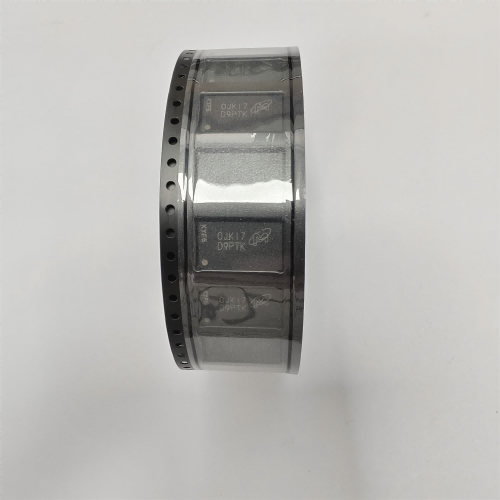
AD2S1210BSTZ
Brand: Analog Devices
Analog Devices AD2S1210BSTZ is a analog & mixed-signal component designed for Instrumentation and related applications. In stock at Superb Automation — request a quote for competitive pricing and fast delivery.
Product Specifications
AD2S1210BSTZ
Analog Devices — Analog & Mixed-Signal ICs
Product Overview
The AD2S1210BSTZ from Analog Devices is a high-performance analog / mixed-signal IC providing precision signal acquisition, conversion, and conditioning. Analog Devices (ADI) is a world leader in high-performance analog, mixed-signal, and DSP ICs for instrumentation, healthcare, automotive, and communications.
Superb Automation partners with leading brands including Qorvo, TI, ADI, XILINX, NVIDIA, Intel, ST, MACOM, Renesas, and Coilcraft to provide complete BOM and supply-chain solutions.
Key Features
- High-resolution data conversion with excellent SNR and THD
- Wide dynamic range and high linearity across operating conditions
- Integrated voltage reference with low temperature drift
- Flexible digital interface — SPI, I2C, or parallel options
- Industrial/automotive temperature range with guaranteed specs
- Low power consumption with power-down modes
Key Specifications
| Resolution | bits |
| Channels | — |
| Sample Rate | kSPS |
| Interface | — |
| Supply Voltage | V |
| Operating Temp | °C |
| Package | — |
| INL | LSB |
| SNR | dB |
| THD | dB |
Applications
Precision Instrumentation
Industrial Process Control
Medical Imaging & Diagnostics
Automotive Sensor Interfaces
Communications Infrastructure
Test & Measurement
Request Quote — In Stock, 100% New & Original, Full Warranty
AD2S1210BSTZ: the B grade resolver to digital converter
The AD2S1210BSTZ is the B grade of the AD2S1210 resolver to digital converter in a 48-lead LQFP. The family publishes 2.5 arc minutes plus one least significant bit of angular accuracy on the B and D grades, a 3125 revolution per second maximum tracking rate at 10 bit resolution, and a selectable 10, 12, 14 or 16 bit output. The B grade is the accuracy grade, and the published temperature range for it is minus 40 to plus 125 degrees C.
Published values
| Parameter | Value |
|---|---|
| Function | monolithic resolver to digital converter |
| Resolution | 10, 12, 14 or 16 bit, set by register |
| Angular accuracy, B grade | 2.5 arc minutes plus 1 LSB |
| Maximum tracking rate | 3125 rps at 10 bit with a 10.24 MHz clock |
| Outputs | absolute position and velocity, parallel and serial ports |
| Supply | 5 V, with a 2.3 V to 5.25 V logic interface |
| Package | 48-lead LQFP (ST-48) |
| Temperature range, B grade | -40 C to +125 C |
| On board oscillator | programmable sinusoidal excitation |
| Fault detection | programmable thresholds, system fault outputs |
| Other | incremental encoder emulation, differential inputs |
Resolution is not accuracy, and the two differ by a factor of seven
At 16 bit the least significant bit of a full revolution is 0.33 arc minutes, and the B grade publishes 2.5 arc minutes of accuracy, which is 7.59 least significant bits. A customer who reads 16 bit and expects 16 bit of angle will be disappointed by the same converter that meets its published specification. The honest way to quote it is 2.5 arc minutes of absolute accuracy, with 16 bit of resolution on top.
At 12 bit the least significant bit is 5.27 arc minutes, which is wider than the accuracy specification. Above 12 bit the converter's error dominates; below 12 bit the quantisation dominates. That crossover is where the resolution choice should be made for a given motor.
The 3125 revolution per second figure has conditions attached
The maximum tracking rate of 3125 revolutions per second is published at 10 bit resolution with a 10.24 megahertz clock, and 3125 revolutions per second is 1,125,000 degrees per second. The tracking loop has to keep up with that rate, which means the excitation frequency, the loop bandwidth and the clock all interact: at the same clock, asking for 16 bit halves the rate the loop can follow.
For a servo application the usable tracking rate is normally well below the maximum because the mechanical resonance of the resolver and the excitation frequency set the limit first. Quoting 3125 revolutions per second into a specification for a 3000 rpm motor is technically true and practically irrelevant: 3000 rpm is 50 revolutions per second.
Why the B grade costs more than the C grade
The A and C grades publish a looser angular accuracy than the B and D grades, and the A grade also publishes a narrower temperature range of minus 40 to plus 85 degrees C. The B grade combines the tight angle with the full 165 kelvin span, which is the combination a machine tool or a radar positioner needs and the reason it is the grade that gets written into those products.
For a fan or pump commutation loop the C grade is usually enough: the angle error is averaged out by the control loop and the temperature span is met. Putting a B grade into that application is paying for accuracy the loop does not use.
Sourcing notes for this family: the ADI second source page holds the cross references, defense grade components is the pre substitution check, and how to verify a drop in replacement is what we use when the part on the drawing is not on the shelf.
Two questions buyers ask
Does 16 bit resolution mean 16 bit accuracy? No. The 16 bit least significant bit is 0.33 arc minutes and the B grade accuracy is 2.5 arc minutes, which is 7.59 LSB. Accuracy and resolution have to be quoted separately.
Is the C grade an electrical drop in for the B grade? The pinout and the function are the same, the angular accuracy is looser, and the A grade additionally stops at 85 degrees C. The C grade reaches 125 degrees C but not the B grade's accuracy.