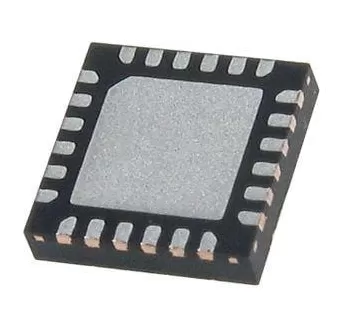
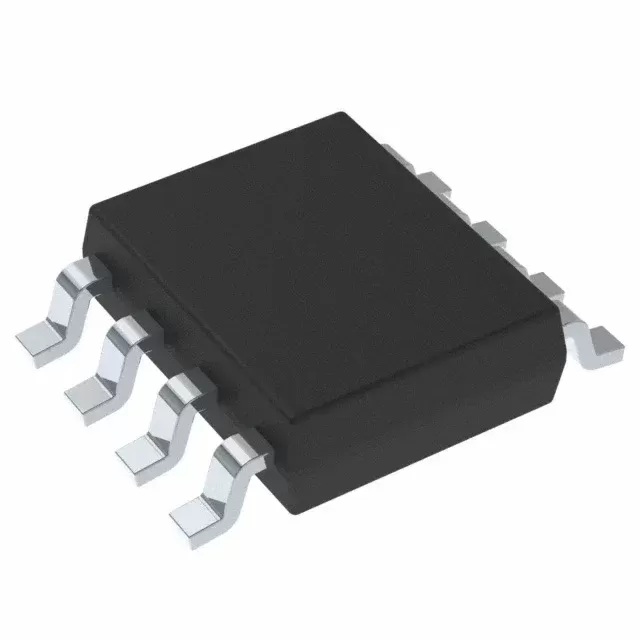
TPS92612QDBVRQ1
Brand: Texas Instruments
Texas Instruments TPS92612QDBVRQ1 is a power management component designed for AI Servers & Low-Altitude Economy (Drone and UAV) and related applications. In stock at Superb Automation — request a quote for competitive pricing and fast delivery.
Product Specifications
TPS92612QDBVRQ1
Texas Instruments — Power Management & Signal Chain
Product Overview
The TPS92612QDBVRQ1 from Texas Instruments is a power management / signal chain IC delivering high efficiency, precision regulation, and robust protection. Texas Instruments (TI) is a global leader in analog ICs, power management solutions, and embedded processors.
Superb Automation partners with leading brands including Qorvo, TI, ADI, XILINX, NVIDIA, Intel, ST, MACOM, Renesas, and Coilcraft to provide complete BOM and supply-chain solutions.
Key Features
- High-efficiency power conversion with low quiescent current
- Wide input voltage range with precision output regulation
- Integrated over-current, over-temperature, and short-circuit protection
- Small footprint packaging for space-constrained designs
- AEC-Q100 qualified options available for automotive applications
- Flexible sequencing and soft-start control
Key Specifications
| Input Voltage | V |
| Output Voltage | V |
| Output Current | A |
| Switching Frequency | kHz |
| Efficiency | % |
| Quiescent Current | µA |
| Topology | — |
| Package | — |
| Operating Temp | °C |
| Protection | — |
Applications
Industrial Automation
Automotive Electronics
Telecom Infrastructure
Server & Data Center Power
Medical Devices
Consumer Electronics
Request Quote — In Stock, 100% New & Original, Full Warranty
TPS92612QDBVRQ1: single channel linear LED driver, 150 mA, 4.5 V to 40 V
TPS92612QDBVRQ1 is a single channel high side linear LED driver rated 150 mA from a supply up to 40 V in a SOT-23 body of 5 pins. It regulates the current through one LED string by holding a fixed voltage across an external sense resistor, so the current is set by a resistor rather than by a binning code. Brightness comes from the duty cycle on the input pin, and the low dropout figures make it usable where the supply is only a few hundred millivolt above the string voltage.
Order code and package
| TPS92612DBVR | Active, SOT-23-5, 3000 pieces on a large reel, NIPDAU finish, MSL-1 |
| The Q1 automotive suffix | no Q1 row appears in this addendum, the rows printed are the plain TPS92612 string |
| Operating junction | minus 40 to 150 degrees |
| Body | 2.9 mm by 1.6 mm SOT-23-5 |
| Sense resistor | external, sets the string current |
Electrical parameters that decide the application
| Input voltage | 4.5 V to 40 V |
| Output current | up to 150 mA, set by the sense resistor |
| Current accuracy | plus or minus 4.6 per cent from minus 40 to 125 degrees |
| Dropout at 10 mA | 150 mV maximum |
| Dropout at 70 mA | 400 mV maximum |
| Dropout at 150 mA | 700 mV maximum |
| Quiescent current | 200 microamp typical |
| Dimming | PWM on the input pin, duty cycle sets the average current |
Family variants and how they differ
| Linear topology | the excess voltage is dissipated in the pass device, no inductor and no switching |
| Off board strings | the low dropout allows long cables to the LED string |
| Protection | LED short circuit with auto recovery, thermal shutdown |
| Heat sharing | an external resistor can take part of the dissipation |
| Thermal foldback | current is reduced as the junction heats, through the same sense network |
Points to check before this part goes on a BOM
A linear driver turns the voltage difference into heat. At 150 mA and a 12 V supply driving a 9 V string the part dissipates 450 mW, and the SOT-23-5 has to pass that into the board. The dropout figures are what make the part attractive, and the dissipation is what limits it. A 24 V supply driving a 9 V string at 150 mA would be 2.25 W, which this body cannot take.
700 mV at 150 mA is the number that decides the supply. The supply has to sit at least 700 mV above the string voltage at full current, otherwise the driver leaves regulation and the current falls. That is a much smaller headroom than a switching driver needs, which is the reason linear drivers survive in automotive lighting where the battery voltage and the string voltage are close.
PWM on the input pin dims without changing the current. The string current stays at the value set by the sense resistor and the average light output follows the duty cycle, so the colour of the LED does not shift with brightness. That is the difference from analogue dimming, where the current changes and the spectrum with it.
Plus or minus 4.6 per cent over temperature is what allows a string without binning. Discrete solutions with a resistor and a transistor vary far more, especially when the transistor heats. At 4.6 per cent a string of several LEDs keeps its current within a window that the eye does not see as a brightness step between units.
An external resistor can share the heat. The data sheet supports heat sharing with an external resistor in series with the string, which moves part of the dissipation off the silicon. On a small board with a 12 V supply this is often the difference between staying inside the junction limit and not. It costs efficiency and it costs a resistor.
No Q1 row is printed in this addendum. The catalogue string ends in QDBVRQ1, but the orderable rows in this document are plain TPS92612DBVR at minus 40 to 150 degrees junction. An automotive customer needs the Q1 document, the Q1 marking and the Q1 qualification paper, so the status of that string has to be confirmed before it is offered on a vehicle programme.
LED short circuit protection with auto recovery suits a lamp that must not go dark permanently. A short across one LED in the string raises the voltage across the driver; the part detects the condition and limits, then recovers when the short clears. That behaviour matters for a lamp that is expected to come back rather than latch off and wait for a service visit.
The sense resistor sets the current and its tolerance sets the spread. With a 1 per cent resistor and a 4.6 per cent part the total is about 5.6 per cent unit to unit. Using a 5 per cent resistor doubles the spread, and in a multi lamp installation that is visible. The resistor is the cheapest place to buy accuracy in this circuit.
A 40 V rating on a linear part is about transients, not about efficiency. The high input rating lets the driver survive a battery rail with clamped load dump spikes while it regulates a much lower string voltage. It does not make the part suitable for a 40 V steady input at 150 mA, because that is 5 W of dissipation in a SOT-23-5 and no copper area makes that work.
Two strings on one part is not possible. This is a single channel driver with one sense resistor and one feedback loop. A lamp with two independent strings needs two parts or a different topology, and each channel needs its own thermal budget, which is why the multi channel parts come in larger bodies. A customer comparing this part with a three channel driver is comparing two different jobs, and the comparison should start from the number of strings rather than from the current rating.
Thermal foldback protects the lamp as well as the driver. As the junction heats, the string current is reduced through the same sense network, so the light dims rather than the part failing. In a sealed lamp that is a graceful end of life behaviour, and it is worth telling a customer about rather than letting them discover it on a hot day.
Where a linear LED driver is the right answer
Automotive interior and exterior lamps where the battery voltage is only slightly above the string voltage, so the dissipation stays small and no inductor or EMI filter is needed.
Long cable runs to an off board string, where the low dropout means the cable resistance does not starve the driver of headroom.
Where this order code fits
It drives a single LED string in automotive interior and exterior lighting, and doubles as a constant current limiter for sensors and relay coils. Teams comparing it with a neighbouring part start from our Power Management Cross Reference page, and teams replacing a part that has gone end of life start from the Pin to Pin Cross Reference page.
Questions buyers ask
Can it drive more than one LED in series? Yes, the string voltage is limited by the supply and by the 40 V input rating, not by the driver. The constraint is the dissipation, which is the supply voltage minus the string voltage, multiplied by the current.
What sets the LED current? An external sense resistor. The part holds a fixed voltage across it, so the current follows from the resistor value, and the resistor tolerance is part of the current spread.
Does it need an inductor? No. It is a linear regulator, so the excess voltage is dropped across the pass device. That removes the inductor and the switching EMI at the cost of heat, which is the trade this part is built around.
SUPERB holds and sources this line for production and repair demand, quoted against the exact ordering string with date codes, packing and country of origin stated on the offer. When a part is moving, the How to Reduce Component Cost page sets out the checks that keep a substitute from failing on the bench.