


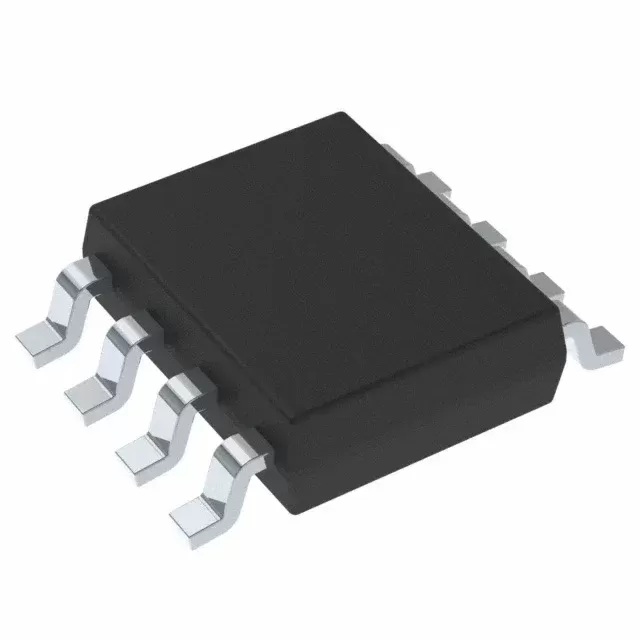

INA2134UA-2K5
Brand: Texas Instruments
Texas Instruments INA2134UA-2K5 is a power management component designed for Industrial Automation and related applications. In stock at Superb Automation — request a quote for competitive pricing and fast delivery.
Product Specifications
INA2134UA-2K5
Texas Instruments — Power Management & Signal Chain
Product Overview
The INA2134UA-2K5 from Texas Instruments is a power management / signal chain IC delivering high efficiency, precision regulation, and robust protection. Texas Instruments (TI) is a global leader in analog ICs, power management solutions, and embedded processors.
Superb Automation partners with leading brands including Qorvo, TI, ADI, XILINX, NVIDIA, Intel, ST, MACOM, Renesas, and Coilcraft to provide complete BOM and supply-chain solutions.
Key Features
- High-efficiency power conversion with low quiescent current
- Wide input voltage range with precision output regulation
- Integrated over-current, over-temperature, and short-circuit protection
- Small footprint packaging for space-constrained designs
- AEC-Q100 qualified options available for automotive applications
- Flexible sequencing and soft-start control
Key Specifications
| Input Voltage | V |
| Output Voltage | V |
| Output Current | A |
| Switching Frequency | kHz |
| Efficiency | % |
| Quiescent Current | µA |
| Topology | — |
| Package | — |
| Operating Temp | °C |
| Protection | — |
Applications
Industrial Automation
Automotive Electronics
Telecom Infrastructure
Server & Data Center Power
Medical Devices
Consumer Electronics
Request Quote — In Stock, 100% New & Original, Full Warranty
INA2134UA-2K5: the same 0 dB receiver on a 2500 piece reel
INA2134UA-2K5 is the dual audio differential line receiver in the fourteen pin SOIC on a 2500 piece large reel, the vendor string INA2134UA/2K5. The reel uses a 330 millimetre carrier with a 16.4 millimetre tape, and the part is moisture level 3 with a 168 hour floor life, the same level as the tube.
The electrical rows are the 0 dB receiver's: 0.0005 per cent of distortion at 1 kilohertz, minus 100 dBu of noise floor, plus 23 dBu of headroom, 90 dB typical of rejection at 31 volts of common mode, 2.4 milliamps per amplifier and a fixed gain of 1. A mixing console or a stage box that builds in thousands buys this reel, and a repair bench buys the tube.
INA2134UA-2K5 as the vendor document publishes it
| Channels | 2 |
| Gain | 1 V/V, 0 dB, fixed |
| Supply | plus or minus 4 to plus or minus 18 volts |
| Quiescent current | 2.4 milliamps typical, 2.9 maximum per amplifier |
| Distortion | 0.0005 per cent total harmonic distortion plus noise at 1 kilohertz, 10 volts RMS |
| Noise floor | minus 100 dBu over a 20 kilohertz band |
| Headroom | plus 23 dBu at 1 per cent distortion |
| Bandwidth and slew | 3.1 megahertz, 14 volts per microsecond |
| Settling time | 2 microseconds to 0.1 per cent on a 10 volt step |
| Channel separation | 117 decibels at 1 kilohertz |
| Offset voltage | 100 microvolts typical, 1000 maximum |
| Offset drift | 2 microvolts per degree over the specified range |
| Rejection | 74 minimum, 90 typical decibels at 31 volts of common mode |
| Gain error | 0.02 typical, 0.1 maximum per cent |
| Output drive | plus or minus 60 milliamps, stable into 500 picofarads |
| Temperature range | minus 40 to plus 85 degrees |
| Vendor status | active, 2500 piece large reel |
| Catalogue code | INA2134UA-2K5 |
| Vendor string | INA2134UA/2K5 |
| Carrier | large reel of 2500, 330 millimetre |
| Moisture level | level 3, 260 degrees, 168 hour floor life |
Five thousandths of a per cent of distortion
The audio rows of INA2134UA-2K5 are the reason to buy it. Total harmonic distortion plus noise is 0.0005 per cent at 1 kilohertz with a 10 volt RMS input, the noise floor is minus 100 dBu over a 20 kilohertz bandwidth, and the headroom is plus 23 dBu at the point where distortion reaches 1 per cent. The channel separation between the two halves is 117 dB at 1 kilohertz.
Translated into a converter budget, 0.0005 per cent is 5 parts per million, which is below the distortion of any audio converter that would follow it, and minus 100 dBu is 7 microvolts RMS of noise in the audio band. A 24 bit converter with a 2 volt input has a 0.12 microvolt bit, so the receiver is 60 dB above the converter floor and never the limiting element. The 117 dB separation matters when one package carries the left and right channels of a balanced input.
A line receiver with a gain of one and no adjustment
INA2134UA-2K5 is a dual audio differential line receiver with a fixed gain of 1, which is 0 dB, built on a trimmed resistor network. The bandwidth is 3.1 megahertz, the slew rate is 14 volts per microsecond and the settling time is 2 microseconds to 0.1 per cent on a 10 volt step, so the part is fast enough to pass a 20 kilohertz audio signal with no visible phase error at the top of the band.
The fixed gain is the point. A balanced line receiver made from four resistors and an op amp has a gain error set by the resistor tolerance, typically 0.1 per cent, and a common mode rejection that depends on how well the four resistors match. Inside this package the network is trimmed as a unit, so the gain error is 0.02 per cent typical and the rejection is 90 dB typical without any matching step on the board.
Ninety decibels of rejection at thirty one volts of common mode
The common mode rejection of INA2134UA-2K5 is 74 dB minimum and 90 dB typical, measured with 31 volts of common mode on the input and a source impedance of zero. The common mode window reaches 2 times the positive rail minus 5 volts at the top and 2 times the negative rail plus 5 volts at the bottom, so a part on a plus and minus 18 volt rail accepts plus and minus 31 volts.
That window is what a line receiver is for. Two pieces of equipment plugged into different mains circuits sit on grounds that differ by volts, and a receiver that can only accept its own rail to rail range needs a transformer or an isolation amplifier. At 90 dB, 10 volts of ground difference becomes 316 microvolts at the output, which is 34 dB below a 20 millivolt signal and inaudible. The minimum of 74 dB is the number to budget, and it gives 2 millivolts, which is still 20 dB below the signal.
Two point four milliamps, seventeen volts of swing, sixty milliamps of drive
INA2134UA-2K5 runs from plus and minus 4 to plus and minus 18 volts and draws 2.4 milliamps typical and 2.9 maximum per amplifier. The output swings to within 1.8 volts of each rail at light load and delivers 60 milliamps continuously, which is enough to drive a 600 ohm load to plus 20 dBu, and it is stable into 500 picofarads of cable capacitance.
The 2.9 milliamp ceiling is the row that decides whether the part can live in a bus powered interface. Two channels cost 5.8 milliamps, which is most of what a USB 2.0 port can give a single device at low power, so a product with four inputs needs either a bigger budget or a lower current receiver. The 17 volts of swing on an 18 volt rail is what gives the plus 23 dBu headroom, and that headroom is why the part is used at the input of a console rather than at its output.
One hundred microvolts of offset, and a gain error of two hundredths of a per cent
The offset of INA2134UA-2K5 is 100 microvolts typical and 1000 maximum at 25 degrees, with a drift of 2 microvolts per degree over the specified range and a power supply rejection of 5 microvolts per volt typical against 60 maximum over plus and minus 4 to plus and minus 18 volts. The gain error is 0.02 per cent typical and 0.1 maximum, with a gain drift of 1 part per million per degree typical and 10 maximum.
In an audio path the offset is a DC term that a coupling capacitor removes, and the gain error is a 0.01 dB level difference between channels, which is below the 0.1 dB that a listening test can resolve. The drift and the rejection matter in a DC coupled path, where 1 millivolt of offset at the output becomes 1 millivolt of DC at the converter and eats a thousandth of a 2 volt range. The nonlinearity row of 0.0001 per cent is the one that has to hold, and it is measured over the full plus and minus 16 volt output swing.
Where a fixed 0 dB line receiver belongs
INA2134UA-2K5 belongs on the input of a mixing console, a powered speaker, an audio interface, a stage box and any product that takes a balanced line from another chassis. The ground loop case is the strongest: a receiver with a 31 volt common mode window and 90 dB of rejection breaks a loop that would otherwise need a transformer, and it does so for the price of an eight pin package.
It does not belong where gain is needed, because the gain is fixed at 1. It does not belong on a 3.3 volt single rail, because the supply floor is plus and minus 4 volts. It does not belong on a source below 50 kilo-ohms of impedance if the source is meant to drive a 50 kilo-ohm input, because that is the input impedance of the network. And it does not belong where the signal has to be attenuated, which is what the 6 dB member of the family is for. Our amplifier cross reference page covers the two receiver gains side by side, and the BOM scrubbing page covers the input network against the bill of materials.
A 2500 piece reel is a production commitment on a part that costs cents. Our vendor consolidation page covers holding one receiver across several products, and the traceability report page covers the reel label.
Does the reel change any electrical row? No. Same die, same network, same distortion and rejection; only the carrier and the quantity change.
Is the tape width standard? The reel is 330 millimetres with a 16.4 millimetre tape, which is the usual fourteen pin SOIC carrier.