


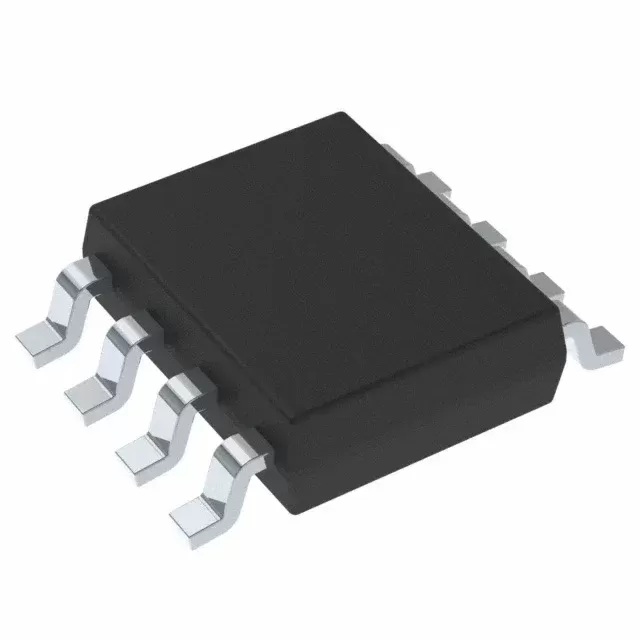

INA2126UA-2K5
Brand: Texas Instruments
Texas Instruments INA2126UA-2K5 is a power management component designed for Industrial Automation and related applications. In stock at Superb Automation — request a quote for competitive pricing and fast delivery.
Product Specifications
INA2126UA-2K5
Texas Instruments — Power Management & Signal Chain
Product Overview
The INA2126UA-2K5 from Texas Instruments is a power management / signal chain IC delivering high efficiency, precision regulation, and robust protection. Texas Instruments (TI) is a global leader in analog ICs, power management solutions, and embedded processors.
Superb Automation partners with leading brands including Qorvo, TI, ADI, XILINX, NVIDIA, Intel, ST, MACOM, Renesas, and Coilcraft to provide complete BOM and supply-chain solutions.
Key Features
- High-efficiency power conversion with low quiescent current
- Wide input voltage range with precision output regulation
- Integrated over-current, over-temperature, and short-circuit protection
- Small footprint packaging for space-constrained designs
- AEC-Q100 qualified options available for automotive applications
- Flexible sequencing and soft-start control
Key Specifications
| Input Voltage | V |
| Output Voltage | V |
| Output Current | A |
| Switching Frequency | kHz |
| Efficiency | % |
| Quiescent Current | µA |
| Topology | — |
| Package | — |
| Operating Temp | °C |
| Protection | — |
Applications
Industrial Automation
Automotive Electronics
Telecom Infrastructure
Server & Data Center Power
Medical Devices
Consumer Electronics
Request Quote — In Stock, 100% New & Original, Full Warranty
INA2126UA-2K5: the second catalogue entry for the same 2500 piece reel
INA2126UA-2K5 is a second catalogue entry that resolves to the same orderable code as the page beside it: INA2126UA/2K5, the A grade of the dual micro power instrumentation amplifier in the sixteen pin SOIC on a 2500 piece large reel. The two entries describe one part and one reel, and this page repeats the electrical rows with the hyphenated spelling so that a search lands on the right document.
Both entries are live and both are thin, which is a catalogue duplication rather than a product difference. No address has been changed and no page has been removed: the content here is written from the same SBOS062D document, and the rows, the carrier, the moisture level and the marking are identical to the entry without the hyphen.
INA2126UA-2K5 as the vendor document publishes it
| Channels | 2 |
| Gain | 5 to 10000 V/V, 5 + 80 kilo-ohms / RG |
| Supply | plus or minus 1.35 to plus or minus 18 volts |
| Quiescent current | 175 microamps typical, 200 maximum per channel |
| Offset, plain code | 100 microvolts typical, 250 maximum |
| Offset, A code | 150 microvolts typical, 500 maximum |
| Offset drift, plain / A | 0.5 typical with 3 maximum / 5 maximum microvolts per degree |
| Input bias current, plain / A | 10 typical with 25 maximum / 50 maximum nanoamps |
| Rejection, plain / A | 80 minimum, 94 typical / 74 minimum, 83 typical decibels |
| Voltage noise | 35 nanovolts per root hertz at 1 kilohertz, 24 on the TID flow |
| Bandwidth | 200 kilohertz at a gain of 5, 250 on the TID flow |
| Slew rate | 0.4 volts per microsecond |
| Settling time | 160 microseconds to 0.01 per cent at a gain of 100 |
| Channel separation | 130 decibels at a gain of 5 |
| Temperature range | minus 40 to plus 85 degrees |
| Package | 16 pins, SOIC body D |
| Vendor status | active, 2500 piece large reel |
| Catalogue code | INA2126UA-2K5 |
| Vendor string | INA2126UA/2K5 |
| Catalogue note | second entry for the reel code published as INA2126UA2K5 |
| Moisture level | level 3, 260 degrees, 168 hour floor life |
Gain from five to ten thousand on one resistor
The gain law of INA2126UA-2K5 is 5 plus 80 kilo-ohms divided by the resistor between the two gain pins, so a single resistor covers 5 to 10000. With the pins left open the gain is exactly 5, which is the value the part is trimmed at; a 20 kilo-ohm resistor gives 9, a 2 kilo-ohm resistor gives 45 and a 100 ohm resistor gives 805.
The floor of 5 is deliberate. A two op amp instrumentation amplifier needs gain to keep its input stage inside the common mode window, and the data sheet states that a minimum circuit gain of 5 is what permits an adequate DC common mode range and enough bandwidth. A channel that needs unity gain, a buffer or a gain of 2 is not this part, and forcing it lower moves the input stage out of its linear region before the output reaches the rail.
Two channels that draw one hundred and seventy five microamps each
INA2126UA-2K5 is the dual member of a two op amp instrumentation amplifier family that runs from a total supply of 2.7 to 36 volts, which is plus and minus 1.35 to plus and minus 18 volts on a split rail. Each channel draws 175 microamps typical and 200 microamps maximum, so a two channel front end costs 400 microamps on the supply and leaves the rest of a battery instrument to its converter and its radio.
The low current is bought against bandwidth rather than against accuracy: the offset of the family is in the hundreds of microvolts and the gain error is a fraction of a per cent, which is a different trade from the chopper parts that draw 50 microamps and hold 25 microvolts. A channel that samples a bridge once a second does not need bandwidth, and this is the family that spends its current budget on the second channel instead.
Two hundred and fifty microvolts, and the grade letter that widens it
The offset sort is where the two grade letters separate, and the direction surprises buyers. The plain codes, INA2126U and INA2126E, are printed at 100 microvolts typical and 250 microvolts maximum at 25 degrees, with a drift of 0.5 microvolts per degree typical and 3 maximum. The A codes, INA2126UA and INA2126EA, are printed at 150 microvolts typical and 500 microvolts maximum, with a drift of 5 microvolts per degree maximum.
The same split runs through the rest of the table. Common mode rejection is 80 dB minimum and 94 dB typical on the plain codes against 74 dB minimum and 83 dB typical on the A codes, and the input bias current maximum is 25 nanoamps against 50. On this family the A suffix marks the wider of the two sorts rather than a premium bin, so a purchase order that treats A as better will pay for a looser part.
Two hundred kilohertz at a gain of five, and one hundred and sixty microseconds to settle
The 3 dB bandwidth of INA2126UA-2K5 is 200 kilohertz at a gain of 5 on one flow and 250 kilohertz on the other, with a slew rate of 0.4 volts per microsecond and a settling time of 160 microseconds to 0.01 per cent at a gain of 100. The output swings to within 0.9 volts of the positive rail and 0.95 volts of the negative one, and the part is stable into 1000 picofarads of load.
Those rows set the scan rate of a multiplexed front end. At a gain of 100 the part needs 160 microseconds to settle, so eight channels scanned in sequence cost 1.3 milliseconds before any conversion time is added, which is a 750 sample per second ceiling for the whole bank. A channel that needs more has to raise the gain later in the chain or accept fewer channels, and a channel that runs at a gain of 5 has the full 200 kilohertz to work with.
Thirty five nanovolts, and the second chip flow
The voltage noise of INA2126UA-2K5 is 35 nanovolts per root hertz at 1 kHz and at 100 Hz on the SHE flow, and 24 nanovolts per root hertz on the TID flow, with 0.7 microvolts peak to peak from 0.1 to 10 Hz on the first and 0.5 on the second. The current noise is 160 femtoamps per root hertz, which against a 10 kilo-ohm source is under 2 nanovolts and against a 1 megaohm source is 160 nanovolts.
The document states that TI qualifies more than one fabrication flow for the part and that the difference is labelled by chip site origin. The two columns are not a sorting option: a board is built from whichever flow is in the reel. That is why the data sheet recommends a budget that covers both, and why the offset and the bias current rows carry the same split. A low impedance source sees the noise difference as 3 nanovolts and does not care about the current column at all.
Where a two op amp front end fits, and the four rows that rule it out
INA2126UA-2K5 fits a bridge or an RTD channel in a handheld instrument, a thermocouple front end with cold junction compensation, a 4 to 20 milliamp receiver with a sense resistor, and any two channel data acquisition board that has to run from a split rail of plus and minus 5 or plus and minus 15 volts. The 130 dB of channel separation at a gain of 5 also makes it usable for two sensors that share a return.
It stops at four rows. The supply floor of 2.7 volts total rules out a single lithium cell without a boost. The gain floor of 5 rules out a buffer. The common mode window of plus and minus 11.25 volts on a 15 volt rail rules out a high side sense on a 48 volt bus. And an offset class of hundreds of microvolts rules out a shunt or a load cell that has to resolve tens of microvolts without a calibration step. Our amplifier cross reference page covers the zero drift parts for that last case, and the BOM scrubbing page covers the gain resistor against the bill of materials.
The hyphen is a spelling of the vendor string, not a different part. Our amplifier cross reference page covers the family, and the traceability report page covers the reel documentation.
Is this a different part from INA2126UA2K5? No. Both entries resolve to INA2126UA/2K5 on the vendor addendum, and both describe the same 2500 piece reel.
Which spelling goes on a purchase order? The vendor string uses a slash, INA2126UA/2K5, and a distributor will accept either the slash or the dash form.