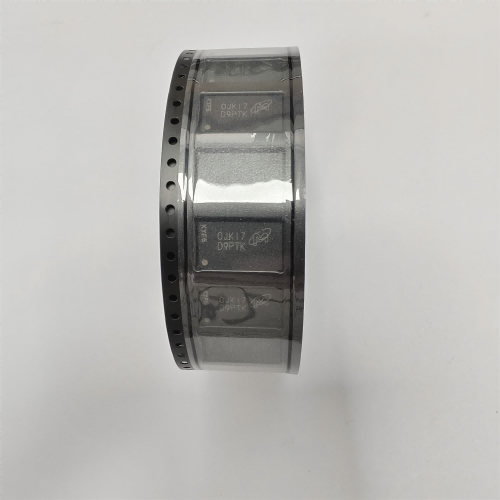
MAX809LEUR+T
Brand: Analog Devices
Analog Devices MAX809LEUR+T is a analog & mixed-signal component designed for Instrumentation and related applications. In stock at Superb Automation — request a quote for competitive pricing and fast delivery.
Product Specifications
MAX809LEUR+T
Analog Devices — Analog & Mixed-Signal ICs
Product Overview
The MAX809LEUR+T from Analog Devices is a high-performance analog / mixed-signal IC providing precision signal acquisition, conversion, and conditioning. Analog Devices (ADI) is a world leader in high-performance analog, mixed-signal, and DSP ICs for instrumentation, healthcare, automotive, and communications.
Superb Automation partners with leading brands including Qorvo, TI, ADI, XILINX, NVIDIA, Intel, ST, MACOM, Renesas, and Coilcraft to provide complete BOM and supply-chain solutions.
Key Features
- High-resolution data conversion with excellent SNR and THD
- Wide dynamic range and high linearity across operating conditions
- Integrated voltage reference with low temperature drift
- Flexible digital interface — SPI, I2C, or parallel options
- Industrial/automotive temperature range with guaranteed specs
- Low power consumption with power-down modes
Key Specifications
| Resolution | bits |
| Channels | — |
| Sample Rate | kSPS |
| Interface | — |
| Supply Voltage | V |
| Operating Temp | °C |
| Package | — |
| INL | LSB |
| SNR | dB |
| THD | dB |
Applications
Precision Instrumentation
Industrial Process Control
Medical Imaging & Diagnostics
Automotive Sensor Interfaces
Communications Infrastructure
Test & Measurement
Request Quote — In Stock, 100% New & Original, Full Warranty
MAX809LEUR+T: A 4.63 V Reset Threshold on a 5 V Rail Has Less Margin Than It Looks
The MAX809LEUR+T is a three-pin microprocessor reset circuit with a push-pull active low output and a 4.63 V threshold, which is the L option of a family that also offers 4.38 V, 4.00 V, 3.08 V, 2.93 V, 2.63 V and 2.32 V. It holds reset asserted for at least 140 ms after the supply rises back above the threshold, draws 12 uA in the feature list and 24 uA typical in the electrical table, and guarantees the output is in the correct logic state down to a 1 V supply. The order code matters as much as the threshold: EUR is the SC70 body rated to plus 105 degrees, and EXR is the SOT23 body rated to plus 125 degrees, so the temperature window that comes with the part on this page is the narrower one.
Threshold windows against a real 5 V rail
At 25 degrees the L threshold sits between 4.56 V and 4.70 V. A 5 V rail at minus 5 percent is 4.75 V, which leaves 50 mV of margin to the top of that window at room temperature. Over minus 40 to plus 85 degrees the window widens to 4.50 V to 4.75 V, and the margin against a 5 V rail at minus 5 percent becomes zero. Over minus 40 to plus 125 degrees, which belongs to the EXR grade and not to this SC70 part, the window top is 4.86 V and the supervisor trips on a supply that is still inside its own specification. That progression is the whole engineering content of a reset threshold choice: a 4.63 V part is a 5 V part only if the rail tolerance is tight and the temperature range is modest, and the same part on a 5 V rail at plus or minus 10 percent will assert reset during normal operation.
Reset timeout, output type and what the host sees
The 140 ms minimum timeout is a factory-trimmed delay that starts when the supply crosses the threshold on the way up, and it is there to keep the processor in reset until its own oscillator and supply are stable. The MAX809 has a push-pull active low output, so it drives the reset pin high and low without a pull-up, and it cannot be wire-ORed with another reset source. The MAX803 in the same family has an open drain output that can be pulled to a voltage above the supply, which is the version to use when two supervisors or a manual reset have to share a line. Choosing between them is a wiring question, not a threshold question, and mixing them on one net is the mistake that makes a reset line stick low.
| Parameter | Value on this order code | What it decides |
|---|---|---|
| Threshold | 4.63 V nominal, L option | Window 4.56 to 4.70 V at 25 degrees |
| Threshold window | 4.50 to 4.75 V over minus 40 to plus 85 | Zero margin to a 5 V rail at minus 5 percent |
| Reset timeout | 140 ms minimum | Holds the processor until its supply is stable |
| Output | Push-pull, active low | No pull-up, and not wire-ORable |
| Valid below supply | Guaranteed to a 1 V supply | Reset is defined during a deep brown-out |
| Supply current | 12 uA feature list, 24 uA typical table | Under 1 mAh a year on a standby rail |
| Package | 3-pin SC70, EUR suffix | Rated to plus 105 degrees, not plus 125 |
| Family options | 4.63, 4.38, 4.00, 3.08, 2.93, 2.63, 2.32 V | The suffix letter is the threshold, not a grade |
| Transient immunity | Reset comparator ignores fast supply glitches | Short noise spikes do not reset the host |
Where a 4.63 V supervisor belongs
Five volt logic, relay and interface boards, and any system whose processor has to be held off until a 5 V rail is genuinely up will use this option. Where the rail is 3.3 V the S option at 2.93 V is the appropriate part and the L option would sit above the rail and never release. Where the rail is 3.0 V the T option at 3.08 V is already marginal, because a 3.0 V rail at minus 5 percent is 2.85 V and the threshold sits above it, so the correct choice is the S option at 2.93 V rather than the T. The habit worth building is to write the rail tolerance next to the threshold on the drawing, because a supervisor that is nominally correct and actually on the edge fails only in the field.
Second source and substitution
Three-pin reset circuits are not pin compatible across vendors in any dependable way, and the threshold lettering is vendor specific, so a substitute has to be compared on threshold window, hysteresis, output type and timeout rather than on the package. The ADI part second source page sets out the fields to compare, the pin to pin cross reference covers the body question, and the one stop BOM sourcing page covers buying the supervisor with the rest of the power chain on one order.