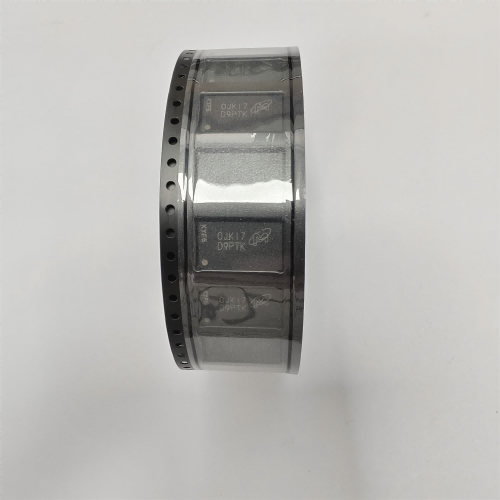
LTM8024IY#PBF
Brand: Analog Devices
Analog Devices LTM8024IY#PBF is a analog & mixed-signal component designed for Precision Instrumentation and related applications. In stock at Superb Automation — request a quote for competitive pricing and fast delivery.
Product Specifications
LTM8024IY#PBF
Analog Devices — Analog & Mixed-Signal ICs
Product Overview
The LTM8024IY#PBF from Analog Devices is a high-performance analog / mixed-signal IC providing precision signal acquisition, conversion, and conditioning. Analog Devices (ADI) is a world leader in high-performance analog, mixed-signal, and DSP ICs for instrumentation, healthcare, automotive, and communications.
Superb Automation partners with leading brands including Qorvo, TI, ADI, XILINX, NVIDIA, Intel, ST, MACOM, Renesas, and Coilcraft to provide complete BOM and supply-chain solutions.
Key Features
- High-resolution data conversion with excellent SNR and THD
- Wide dynamic range and high linearity across operating conditions
- Integrated voltage reference with low temperature drift
- Flexible digital interface — SPI, I2C, or parallel options
- Industrial/automotive temperature range with guaranteed specs
- Low power consumption with power-down modes
Key Specifications
| Resolution | bits |
| Channels | — |
| Sample Rate | kSPS |
| Interface | — |
| Supply Voltage | V |
| Operating Temp | °C |
| Package | — |
| INL | LSB |
| SNR | dB |
| THD | dB |
Applications
Precision Instrumentation
Industrial Process Control
Medical Imaging & Diagnostics
Automotive Sensor Interfaces
Communications Infrastructure
Test & Measurement
Request Quote — In Stock, 100% New & Original, Full Warranty
LTM8024IY#PBF: two 3.5 A channels, Silent Switcher and a CISPR22 Class B claim
The LTM8024IY#PBF is a 40 V dual step-down module, 3.5 A per channel or 7 A in parallel, in a 9 mm by 11.25 mm by 3.32 mm ball grid array. It uses the Silent Switcher arrangement, which is the vendor's name for an arrangement that keeps the high di/dt loop inside the package, and it is published as CISPR22 Class B compliant. The I grade is -40 C to 125 C at the junction, the input range is 3 V to 40 V, and the output range is 0.8 V to 8 V per channel.
Published values
| Parameter | Value |
|---|---|
| Input voltage | 3 V to 40 V |
| Output voltage | 0.8 V to 8 V per channel, set by one resistor |
| Output current | 3.5 A per channel at 12 V in, 3.3 V out, 80 C ambient |
| Parallel output | 7 A with the channels tied |
| Switching frequency | 200 kHz to 3 MHz, RT sets it |
| RT for 200 kHz | 200 k |
| RT for 1 MHz | 35.7 k |
| Junction to ambient | 18.0 C/W, 4.5 C/W to board |
| Package | 9 mm x 11.25 mm x 3.32 mm BGA, MSL 3 |
| Temperature range | -40 C to 125 C, I grade |
The 3.5 A figure has an ambient attached to it
The headline current is quoted at 12 V in, 3.3 V out and 80 C ambient, which is a specific operating point rather than a blanket rating. Two channels at 3.5 A is 23.1 W out and about 2.86 W of loss at 89 percent, which on 18.0 C/W is a 51.5 C rise, and that is consistent with an 80 C ambient at a 125 C junction with a little margin.
At 40 V in and the same current, each channel is 17.5 W out with 2.39 W of loss, a 43 C rise. The package is thermally busier at high input voltage even though the output power is unchanged, because the duty cycle is short and the switching loss stays fixed.
The 4.5 C/W junction to board is the number that improves with copper. This body is small, 9 mm by 11.25 mm, and its thermal performance is almost entirely a function of the board underneath rather than of anything the module can do on its own.
Silent Switcher and what the EMC claim covers
The published claim is CISPR22 Class B, which is a conducted and radiated emission limit for information technology equipment. The architecture that gets there is a split hot loop with the return path inside the package, so the area that radiates is not the customer's board, and the vendor's own demonstration board is what the measurement was made on.
A board that copies the demonstration board's copper gets the same result. A board that reduces the input capacitor count, extends the input loop to a connector or runs a long trace under the module does not, and the claim does not travel with the part number.
Spread spectrum, sync and the clock out
The SYNC pin has a threshold between 2.8 V and 4.0 V above which spread spectrum is enabled, and the same pin accepts an external clock. Spread spectrum moves the switching harmonics around a few percent of the centre frequency, which buys several dB of margin at the emission peaks at the cost of a small output ripple increase.
The CLKOUT pin carries a waveform about 90 degrees out of phase with channel 1 when SYNC is above 2.8 V, which is how two modules or two channels are made to interleave instead of adding their ripple currents in phase. For a 7 A parallel output that interleaving is what keeps the input capacitor from doubling in size.
Two assembly facts that are easy to miss
The package is ball grid array only, so there is no land grid array option in this family and no tin-lead ball finish on the site's codes: both LTM8024EY and LTM8024IY carry SAC305 balls under finish code e1.
The vendor's note also states that the product is not recommended for second side reflow. A board that puts this module on the underside has to either reflow the module side last or hand-place it, and that constraint belongs in the process plan rather than in the purchasing notes.
The pages that answer this most often are the power management cross reference for the family alternatives, medical device components for the acceptance test, and vendor consolidation for the case where a replacement has to be fitted before the next build.
Two questions buyers ask
Is 3.5 A per channel available at any input voltage? The headline is at 12 V in, 3.3 V out and 80 C ambient. At 40 V in the loss rises with the same current, and the board copper decides whether the ambient can be held.
Does the module meet CISPR22 Class B on any board? The claim is made on the vendor's demonstration board. The input loop, the capacitor count and the trace routing decide whether a customer board repeats it.