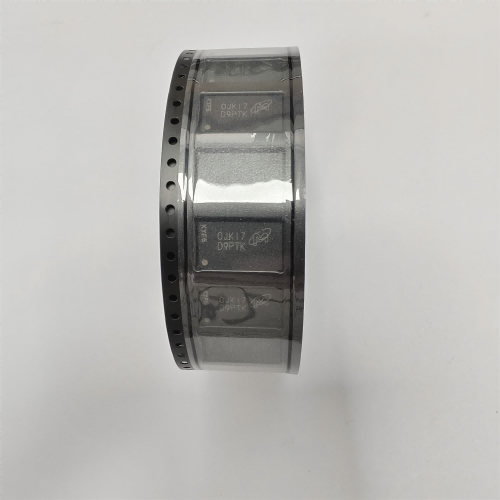
LTC2870IUFD#TRPBF
Brand: Analog Devices
Analog Devices LTC2870IUFD#TRPBF is a analog & mixed-signal component designed for Precision Instrumentation and related applications. In stock at Superb Automation — request a quote for competitive pricing and fast delivery.
Product Specifications
LTC2870IUFD#TRPBF
Analog Devices — Analog & Mixed-Signal ICs
Product Overview
The LTC2870IUFD#TRPBF from Analog Devices is a high-performance analog / mixed-signal IC providing precision signal acquisition, conversion, and conditioning. Analog Devices (ADI) is a world leader in high-performance analog, mixed-signal, and DSP ICs for instrumentation, healthcare, automotive, and communications.
Superb Automation partners with leading brands including Qorvo, TI, ADI, XILINX, NVIDIA, Intel, ST, MACOM, Renesas, and Coilcraft to provide complete BOM and supply-chain solutions.
Key Features
- High-resolution data conversion with excellent SNR and THD
- Wide dynamic range and high linearity across operating conditions
- Integrated voltage reference with low temperature drift
- Flexible digital interface — SPI, I2C, or parallel options
- Industrial/automotive temperature range with guaranteed specs
- Low power consumption with power-down modes
Key Specifications
| Resolution | bits |
| Channels | — |
| Sample Rate | kSPS |
| Interface | — |
| Supply Voltage | V |
| Operating Temp | °C |
| Package | — |
| INL | LSB |
| SNR | dB |
| THD | dB |
Applications
Precision Instrumentation
Industrial Process Control
Medical Imaging & Diagnostics
Automotive Sensor Interfaces
Communications Infrastructure
Test & Measurement
LTC2870IUFD#TRPBF: one RS485 and two RS232 ports on a single 3 V to 5.5 V rail
The LTC2870IUFD#TRPBF is an Analog Devices multiprotocol transceiver that carries one RS485 and two RS232 transceivers in one body, running from 3 V to 5.5 V. The RS485 side reaches 20 Mbps and the RS232 side 500 kbps. The part selects its own termination: 120 ohm for RS485 and 5 kohm for RS232, both inside the package and switched by pin, which removes the relay or the jumper block that a shared connector normally needs. Half and full duplex RS485 are selected by pin, the logic interface works from 1.7 V to 5.5 V so it can sit directly on a low voltage processor, ESD rating is plus or minus 26 kV, and the RS485 receiver has full failsafe so a floating or shorted bus does not lock the UART. The bus supports up to 256 nodes. The IUFD code in this order is the industrial temperature part in the 28-pin 4 mm by 5 mm QFN. It is on the analog and mixed-signal IC line card.
20 Mbps against 500 kbps is a 40 to 1 range in one package
At 20 Mbps one bit lasts 50 ns, and at 500 kbps one bit lasts 2 us. The same silicon therefore has to hold its driver symmetry at 50 ns and its slew rate inside the RS232 limit at 2 us. That is what the integrated termination makes possible: on a shared connector the RS485 pair sees 120 ohm and the RS232 lines see 5 kohm, a ratio of 2.4 percent, and both are switched inside the package rather than by external parts that would add stub length at 20 Mbps.
| Parameter | Vendor figure | What it means on a board |
|---|---|---|
| Supply | 3 V to 5.5 V single | one rail for both protocols |
| RS485 rate | 20 Mbps | 50 ns per bit |
| RS232 rate | 500 kbps | 2 us per bit |
| Termination | 120 ohm and 5 kohm, switched | no external resistors or relays |
| Nodes | up to 256 on RS485 | unit load receiver, failsafe |
| ESD | plus or minus 26 kV | connector side, no external array needed |
| Logic interface | 1.7 V to 5.5 V | direct to a 1.8 V or 3.3 V processor |
One body, two protocols, one connector
The LTC2870 puts both protocols on shared I/O lines: it is configured either as two RS232 single-ended transceivers or as one RS485 differential transceiver. The LTC2871 in the same family gives independent control with separate I/O for each of the three transceivers and a larger 38-pin body. The choice between them is a choice about whether the connector is shared. A shared connector means one cable and one protocol selected in firmware; independent lines mean two cables that can be live at once, which is what a service port plus a field bus installation usually needs.
Selection notes
- The H grade extends the temperature range to -40 C to +125 C, which matters for equipment mounted in an enclosure without active cooling.
- The logic loopback mode steers the driver inputs to the receiver outputs, which allows a self test at production without a bus partner.
- Failsafe receivers eliminate the lockup that occurs when a bus is idle, shorted or correctly terminated but undriven.
- Because the termination is internal, a shared connector has no external resistor that can be left fitted in the wrong mode, which is the most common field failure on combined RS232 and RS485 ports.
Questions buyers ask
Can it drive RS422 as well? Yes. RS422 is the differential electrical layer of RS485 with a single driver, so the RS485 mode covers it.
Does the 26 kV rating replace an external protection device? It covers the connector pin against the standard test waveform. A surge requirement beyond that test still needs its own clamp.
Where a combined port is being replaced on an existing board, the pin comparison is on pin to pin cross reference, and allocation on these interface parts is tracked under component lead time solutions.
Request Quote — In Stock, 100% New & Original, Full Warranty