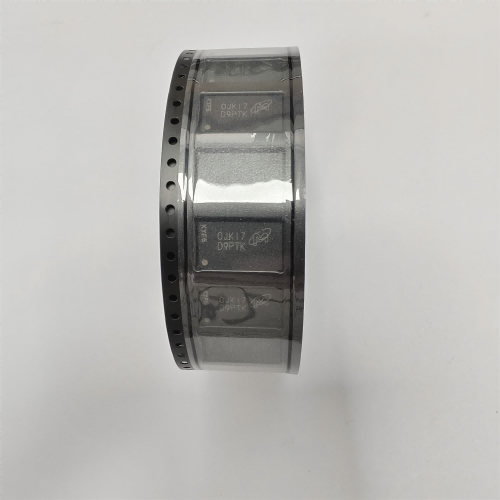
LT8645SIV#WPBF
Brand: Analog Devices
Analog Devices LT8645SIV#WPBF is a analog & mixed-signal component designed for Precision Instrumentation and related applications. In stock at Superb Automation — request a quote for competitive pricing and fast delivery.
Product Specifications
LT8645SIV#WPBF
Analog Devices — Analog & Mixed-Signal ICs
Product Overview
The LT8645SIV#WPBF from Analog Devices is a high-performance analog / mixed-signal IC providing precision signal acquisition, conversion, and conditioning. Analog Devices (ADI) is a world leader in high-performance analog, mixed-signal, and DSP ICs for instrumentation, healthcare, automotive, and communications.
Superb Automation partners with leading brands including Qorvo, TI, ADI, XILINX, NVIDIA, Intel, ST, MACOM, Renesas, and Coilcraft to provide complete BOM and supply-chain solutions.
Key Features
- High-resolution data conversion with excellent SNR and THD
- Wide dynamic range and high linearity across operating conditions
- Integrated voltage reference with low temperature drift
- Flexible digital interface — SPI, I2C, or parallel options
- Industrial/automotive temperature range with guaranteed specs
- Low power consumption with power-down modes
Key Specifications
| Resolution | bits |
| Channels | — |
| Sample Rate | kSPS |
| Interface | — |
| Supply Voltage | V |
| Operating Temp | °C |
| Package | — |
| INL | LSB |
| SNR | dB |
| THD | dB |
Applications
Precision Instrumentation
Industrial Process Control
Medical Imaging & Diagnostics
Automotive Sensor Interfaces
Communications Infrastructure
Test & Measurement
LT8645SIV#WPBF: 65 V and 8 A with the automotive flow at the I grade
The LT8645SIV#WPBF is the I grade, automotive controlled version of the 65 V, 8 A synchronous step-down regulator, in the 32-lead 6 mm by 4 mm laminate QFN. The I grade is minus 40 C to 125 C junction, the same range as the E grade in this family, and the W marks the controlled process flow that the vendor reserves for automotive applications.
What is on the code
| Grade | I, minus 40 C to 125 C junction |
| Flow | W, automotive controlled process |
| Input range | 3.4 V to 65 V |
| Output current | 8 A |
| Feedback reference | 0.970 V, 0.964 V to 0.976 V |
| Quiescent current | 2.5 uA regulating 12 V to 3.3 V |
| Minimum on time | 40 ns |
| Frequency | 200 kHz to 2.2 MHz |
| Thermal resistance | 30 C/W JEDEC board, 17 C/W demo board, 0.6 C/W junction to top |
| Package | 32-lead 6 mm by 4 mm laminate QFN, MSL 3 |
Two suffixes that answer different questions
The I answers the temperature question and the W answers the qualification question. Neither answers the thermal question, which is the one that decides how much current the part can actually deliver in an enclosure. A buyer who asks for the automotive code and then runs 8 A at 65 V in a sealed box has the right part number and the wrong operating point, and the data sheet's thermal table is where that shows up: 4.4 W at 30 C/W is 133 C of rise.
So the useful conversation about this code starts with the ambient and the input voltage, not with the current rating. At 24 V in and 5 V out, 8 A is 2.6 W and a 44 C rise on the demo board, which a 105 C ambient turns into 149 C: over the limit. At 5 A the loss falls to about 1.6 W and the rise to 27 C, which fits. The number to take to a review is the derated one.
Cold crank, load dump and the two ends of the range
The input range is 3.4 V to 65 V, and both ends are decisions rather than specifications. At the top, a clamped load dump on a 24 V system can be held in the forties, and 65 V leaves room for the clamp tolerance and the wiring transient. At the bottom, a cold crank that takes the bus to 4 V keeps the regulator in regulation, and one that takes it to 3 V does not: below 3.4 V the part is out of regulation and the output follows the input down through the inductor and the body diode.
The frequency ceiling matters at the top of the range. At 2.2 MHz the 40 ns minimum on time is 8.8 percent of a period, so any conversion with a duty below that cannot run at that frequency. A 48 V to 5 V conversion is 10.4 percent and works at 2.2 MHz; a 60 V to 3.3 V conversion is 5.5 percent and needs to be below about 1.4 MHz. Both are legal, and only one of them is legal at 2.2 MHz.
The divider and the 0.970 V reference
The feedback reference is 0.970 V nominal with a 0.964 V to 0.976 V window over temperature, so a 5 V output is a divider ratio of 4.155 to 1 and the divider is where the output accuracy is actually decided. With a 100 uA divider current the lower resistor is 9.7 kohm and the upper is 40.3 kohm, and the reference window alone moves the output by plus or minus 30 mV on 5 V, which is 0.6 percent. A pair of 0.1 percent resistors adds about 10 mV more, so the output is a 5 V rail with roughly plus or minus 40 mV of static error before any load regulation is counted.
Two practical points follow. The first is that the divider current is not free: 100 uA through the divider is forty times the 2.5 uA quiescent current, so a product that is bought for its standby behaviour should use a much larger divider and accept the noise pickup that comes with it. The second is that the divider sits between the output and ground across the whole temperature range, and the resistors chosen for 150 C work are not the same parts as the ones chosen for a lab build.
Two questions buyers ask
Can this replace LT8645SEV#WPBF without a change? Electrically yes, since both are the same part at the same temperature range, and on a purchase order they are separate line items. The reason to hold both is availability rather than preference, and the bill of materials should name one of them rather than leave the choice to the buyer.
Does the J grade exist for this part? No. The order table for this family lists E and I only, in both the standard and the automotive columns. A requirement for a 150 C junction is served by the other members of the Silent Switcher 2 range rather than by this one, and a project that has written a J code against a 65 V, 8 A line should check the menu before the board is frozen.
Sourcing notes and next step
Tell us the exact code, the annual quantity, the ambient and whether the line needs tape and reel. We will quote against the string and flag the thermal case before the purchase order rather than after. The defense grade components page covers the parallel high reliability documentation question, the drop in replacement page lists what to re check, and the analog and mixed signal category holds the family.
Request Quote — In Stock, 100% New & Original, Full Warranty