


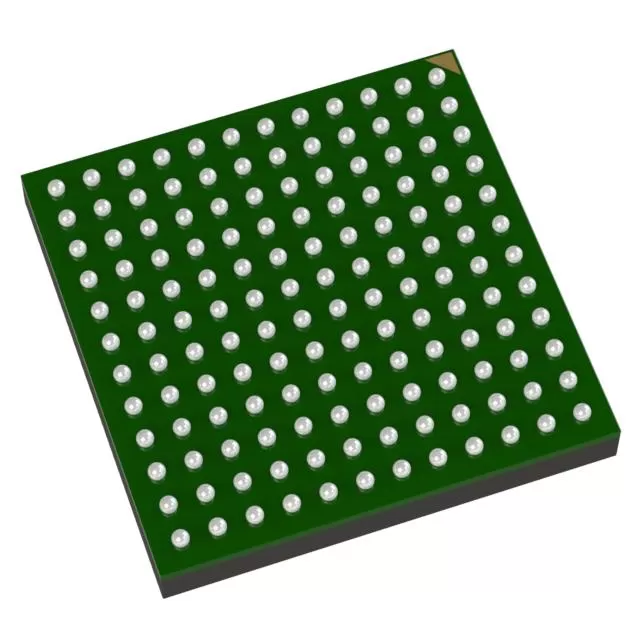

LT8609AEDDM#WTRPBF
Brand: Analog Devices
Analog Devices LT8609AEDDM#WTRPBF is a analog & mixed-signal component designed for Precision Instrumentation and related applications. In stock at Superb Automation — request a quote for competitive pricing and fast delivery.
Product Specifications
LT8609AEDDM#WTRPBF
Analog Devices — Analog & Mixed-Signal ICs
Product Overview
The LT8609AEDDM#WTRPBF from Analog Devices is a high-performance analog / mixed-signal IC providing precision signal acquisition, conversion, and conditioning. Analog Devices (ADI) is a world leader in high-performance analog, mixed-signal, and DSP ICs for instrumentation, healthcare, automotive, and communications.
Superb Automation partners with leading brands including Qorvo, TI, ADI, XILINX, NVIDIA, Intel, ST, MACOM, Renesas, and Coilcraft to provide complete BOM and supply-chain solutions.
Key Features
- High-resolution data conversion with excellent SNR and THD
- Wide dynamic range and high linearity across operating conditions
- Integrated voltage reference with low temperature drift
- Flexible digital interface — SPI, I2C, or parallel options
- Industrial/automotive temperature range with guaranteed specs
- Low power consumption with power-down modes
Key Specifications
| Resolution | bits |
| Channels | — |
| Sample Rate | kSPS |
| Interface | — |
| Supply Voltage | V |
| Operating Temp | °C |
| Package | — |
| INL | LSB |
| SNR | dB |
| THD | dB |
Applications
Precision Instrumentation
Industrial Process Control
Medical Imaging & Diagnostics
Automotive Sensor Interfaces
Communications Infrastructure
Test & Measurement
Request Quote — In Stock, 100% New & Original, Full Warranty
LT8609AEDDM#WTRPBF: what the W suffix adds to the 3 A buck
LT8609AEDDM#WTRPBF is the automotive release of the E grade 3 mm DFN part in the LT8609 family, on tape and reel. The W is the field that decides whether a part can be used on a vehicle programme at all, and it is the field most often dropped when a part number is copied from a distributor listing. The electrical limits are the ones the rest of the family publishes; the qualification and the paperwork are what the W buys.
Published values
| Parameter | Value |
|---|---|
| Order code | LT8609AEDDM#WTRPBF, automotive release, tape and reel |
| Qualification | AEC-Q100, per the vendor's automotive product note |
| Input voltage | 3.0 V to 42 V, 2.7 V minimum operating |
| Continuous output | 3 A |
| Feedback reference | 0.782 V, 0.770 V to 0.794 V over temperature |
| Minimum on time | 45 ns typical, 75 ns maximum |
| Top switch current limit | 3.4 A minimum, 4.5 A typical |
| Thermal resistance | theta JA 45 C/W, theta JC 10 C/W |
| Temperature grade | E, 0 C to 125 C specified |
| Family position | A version, medium switch edges, lower emission than the base part |
The W is a process and paperwork field
The vendor states that only the automotive grade models may be used in automotive applications, and that the W suffix marks the models released for that use, with reliability reports available per model. That is a compliance statement, not a performance one: the die is the same and the electrical table is unchanged.
So the buyer's question is not whether the W part is better, it is whether the programme can use a part without it. On a body control module the answer is no, and on an industrial controller the same silicon without the W is the cheaper and equally valid order.
Where the slower edge pays on a vehicle
The A version has medium switch edges rather than fast ones, which the vendor frames as lower radiated emission. On a harness that runs past an AM receiver, the difference between medium and fast edges is often the difference between passing and reworking the filter.
The trade is switching loss: a slower edge spends more time in the linear region. At 2 MHz and 5 V out the part already runs a 59.5 ns on time at 42 V in, so there is room; at 3.3 V out the ceiling is 1.746 MHz, which is where the emission and the duty cycle meet.
Traceability that a distributor listing will not show
Automotive programmes ask for the reliability report per model, the moisture level, and the date code on the reel label. Those are orderable attributes of this code and they are not visible in a parametric search row that shows only voltage, current and package.
That gap is where counterfeit and re-marked parts enter a line: a part that looks right in a listing and cannot produce the reports. We check the label, the marking and the report before a reel ships.
Sourcing notes for this family: defense grade components holds the cross references, component obsolescence management is the pre substitution check, and OEM procurement is what we use when the part on the drawing is not on the shelf.
Two questions buyers ask
Can an industrial board use the W part? It can, and it will work, but the W carries qualification cost that an industrial programme does not need. The reverse is not true: an automotive programme cannot use the non W code.
Is the marking different on the reel? The part marking on the body is shared across the family; the W field lives in the order code and the reel label. That is why the label, not the body, is the record to keep.