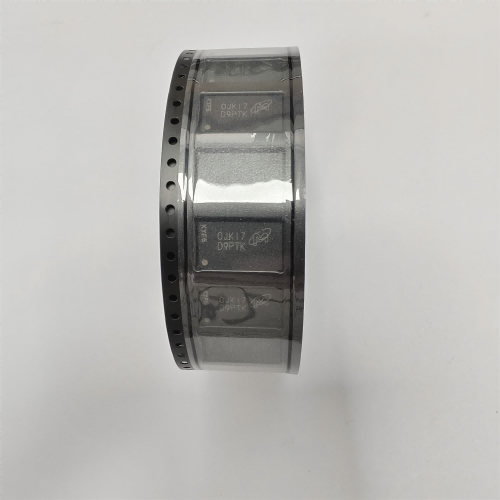
LT3014HVIS5#TRMPBF
Brand: Analog Devices
Analog Devices LT3014HVIS5#TRMPBF is a analog & mixed-signal component designed for Precision Instrumentation and related applications. In stock at Superb Automation — request a quote for competitive pricing and fast delivery.
Product Specifications
LT3014HVIS5#TRMPBF
Analog Devices — Analog & Mixed-Signal ICs
Product Overview
The LT3014HVIS5#TRMPBF from Analog Devices is a high-performance analog / mixed-signal IC providing precision signal acquisition, conversion, and conditioning. Analog Devices (ADI) is a world leader in high-performance analog, mixed-signal, and DSP ICs for instrumentation, healthcare, automotive, and communications.
Superb Automation partners with leading brands including Qorvo, TI, ADI, XILINX, NVIDIA, Intel, ST, MACOM, Renesas, and Coilcraft to provide complete BOM and supply-chain solutions.
Key Features
- High-resolution data conversion with excellent SNR and THD
- Wide dynamic range and high linearity across operating conditions
- Integrated voltage reference with low temperature drift
- Flexible digital interface — SPI, I2C, or parallel options
- Industrial/automotive temperature range with guaranteed specs
- Low power consumption with power-down modes
Key Specifications
| Resolution | bits |
| Channels | — |
| Sample Rate | kSPS |
| Interface | — |
| Supply Voltage | V |
| Operating Temp | °C |
| Package | — |
| INL | LSB |
| SNR | dB |
| THD | dB |
Applications
Precision Instrumentation
Industrial Process Control
Medical Imaging & Diagnostics
Automotive Sensor Interfaces
Communications Infrastructure
Test & Measurement
LT3014HVIS5#TRMPBF: 80 V In, 20 mA Out, 7 uA of Quiescent Current
The LT3014HVIS5#TRMPBF is a micropower linear regulator that takes 3 V to 80 V in, delivers 20 mA, and draws 7 uA of quiescent current, in a 5-lead ThinSOT. The HV suffix is the version that survives 100 V transients for 2 ms, which is what a 48 V industrial rail does when a contactor opens. It is the part chosen when a small, always on rail has to exist on a high voltage bus without a switching stage, and when the stand by current matters more than the load current.
Seventeen and a half ohms of output resistance
The dropout is 350 mV at 20 mA, which is 17.5 ohm. That is the number that governs the whole application: a 5 V output needs at least 5.35 V of input at full load, and a 3.3 V output needs 3.65 V. It also means the part cannot hold a rail through a deep sag, because the load current times 17.5 ohm is subtracted from whatever is left of the input. Seven microamps of quiescent current is 61.3 mAh over a year, which is why the part is used on rails that are alive all the time.
| Input range | 3 V to 80 V, 100 V for 2 ms on the HV version |
| Output current | 20 mA |
| Output range | Adjustable 1.22 V to 60 V |
| Dropout | 350 mV at 20 mA, 17.5 ohm |
| Minimum input for 5 V out | 5.35 V at full load |
| Quiescent current | 7 uA, 61.3 mAh over a year |
| Shutdown current | 1 uA |
| Minimum output capacitor | 0.47 uF, any dielectric |
| Package | 5-lead ThinSOT and 8-lead DFN |
The thermal limit is closer than it looks
Eighty volts in, 5 V out at 20 mA is 1.5 W in a 5-lead SOT-23. That is beyond the package for continuous operation, and during a 100 V transient at 20 mA it is 1.9 W. The part is therefore not a 20 mA regulator at 80 V; it is a regulator whose usable input voltage falls as the load current rises, and the calculation is the dissipation, not the voltage rating. The usual arrangement is a series resistor ahead of the part to move most of the drop out of the package, which is legitimate as long as the resistor is sized for the transient too.
The 3 V minimum input and the 1.22 V to 60 V adjustable output mean the part can also run a 1.8 V or 2.5 V housekeeping rail from a high bus, and the 0.47 uF minimum capacitor allows a small ceramic with any dielectric, which is unusual for a regulator with this input range and simplifies the bill of materials.
Where it fits
Four to twenty milliamp current loops, 48 V telecom and industrial control rails, high side gate drive bias, battery monitoring on a high voltage stack and always on housekeeping supplies. The reverse battery protection and the absence of a reverse current path matter on a bus that can be back fed, and the thermal limiting with hysteresis protects the part during a fault without latching the rail off permanently.
Two questions buyers ask
Why not a resistor and a Zener?
Because a Zener string draws the load current plus its own knee current all the time and its output moves with the input. Seven microamps of quiescent current and a regulated output are the difference, and on a loop powered instrument that difference is the whole power budget.
Can it take a 100 V spike continuously?
No. The HV version survives 100 V for 2 ms, which is a transient rating, and the steady state ceiling is 80 V. A bus that sits at 90 V needs a different part, and a bus that spikes to 100 V needs the transient energy checked against the 1.9 W it produces at full load.
Supply and matching
The IS5 code is the 5-lead ThinSOT, tape and reel, lead free. The HV and non HV versions are not interchangeable on a bus that sees the transient, and the package decides the dissipation. The family is on the analog mixed signal ICs page, high voltage alternatives are compared in the power management cross reference, and long life industrial requirements are covered under component lead time solutions.
Request Quote — In Stock, 100% New & Original, Full Warranty