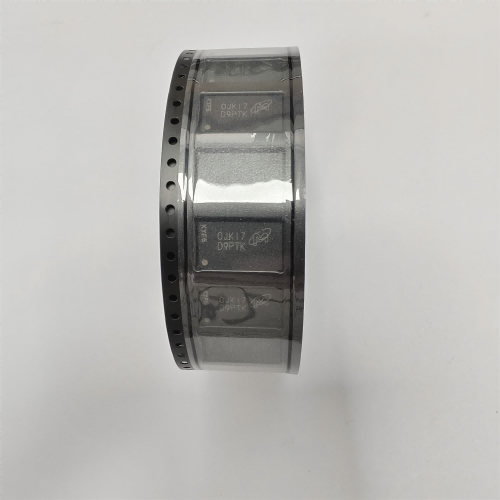
LT1965EQ#TRPBF
Brand: Analog Devices
Analog Devices LT1965EQ#TRPBF is a analog & mixed-signal component designed for Precision Instrumentation and related applications. In stock at Superb Automation — request a quote for competitive pricing and fast delivery.
Product Specifications
LT1965EQ#TRPBF
Analog Devices — Analog & Mixed-Signal ICs
Product Overview
The LT1965EQ#TRPBF from Analog Devices is a high-performance analog / mixed-signal IC providing precision signal acquisition, conversion, and conditioning. Analog Devices (ADI) is a world leader in high-performance analog, mixed-signal, and DSP ICs for instrumentation, healthcare, automotive, and communications.
Superb Automation partners with leading brands including Qorvo, TI, ADI, XILINX, NVIDIA, Intel, ST, MACOM, Renesas, and Coilcraft to provide complete BOM and supply-chain solutions.
Key Features
- High-resolution data conversion with excellent SNR and THD
- Wide dynamic range and high linearity across operating conditions
- Integrated voltage reference with low temperature drift
- Flexible digital interface — SPI, I2C, or parallel options
- Industrial/automotive temperature range with guaranteed specs
- Low power consumption with power-down modes
Key Specifications
| Resolution | bits |
| Channels | — |
| Sample Rate | kSPS |
| Interface | — |
| Supply Voltage | V |
| Operating Temp | °C |
| Package | — |
| INL | LSB |
| SNR | dB |
| THD | dB |
Applications
Precision Instrumentation
Industrial Process Control
Medical Imaging & Diagnostics
Automotive Sensor Interfaces
Communications Infrastructure
Test & Measurement
LT1965EQ#TRPBF: 1.1 A of low noise with 1.87 W to get rid of
The LT1965 is an adjustable low dropout regulator that delivers 1.1 A with a 310 mV dropout, 40 microvolts rms of output noise from 10 Hz to 100 kHz, and 500 microamps of quiescent current. The input range is 1.8 V to 20 V and the output is set from 1.20 V up to 19.5 V with two resistors, with fixed 1.5 V, 1.8 V, 2.5 V and 3.3 V versions in the same family. The order code reads EQ for the 5-lead DD-Pak body in the E grade, and TRPBF for tape and reel in a lead free finish. The part needs no protection diodes, holds its quiescent current in dropout instead of letting it climb, and is stable with 10 microfarads of ceramic or tantalum on the output. For a buyer the question that decides whether this part is right is not the noise figure but where the heat goes.
What the vendor page states
| Parameter | Value |
|---|---|
| Output current | 1.1 A |
| Dropout voltage | 310 mV typical at full load |
| Output noise | 40 microvolts rms, 10 Hz to 100 kHz |
| Quiescent current | 500 microamps adjustable version, under 1 microamp in shutdown |
| Input range | 1.8 V to 20 V |
| Output range | 1.20 V to 19.5 V adjustable, 1.5 V to 3.3 V fixed versions |
| Output capacitor | stable from 10 microfarads, ceramic or tantalum |
| Protection | reverse battery, reverse current, foldback current limit, thermal limit |
| Package | 5-lead DD-Pak, also TO-220, 8-lead MSOP and 3 mm by 3 mm DFN |
The heat arithmetic before the noise arithmetic
A regulator dissipates the voltage it drops multiplied by the current it passes. At the dropout limit that is 310 mV across 1.1 A, or 341 mW. In the more common case of 5 V in and 3.3 V out the drop is 1.7 V, so the part burns 1.87 W while delivering 3.63 W, which is 66 percent efficiency. Feed the same regulator from 12 V and the dissipation becomes 9.57 W, more than the load receives, and no DD-Pak survives that without a heatsink and airflow. This is why a low dropout regulator belongs after a switching stage rather than straight off a 12 V bus: the noise figure only matters once the part is in a position where it can survive its own dissipation.
What 40 microvolts of noise is worth
Against a 3.3 V rail, 40 microvolts rms is 12.1 ppm, or minus 98.3 dB. For an analog front end that means the supply is 98 dB below the rail, which is adequate for a 16-bit converter and not enough for a 20-bit one without a post filter. For an RF or clocking load the 10 Hz to 100 kHz band quoted is the right band to compare, since the regulator's output impedance rises with frequency and the ceramic capacitor is what carries the current above 100 kHz.
Quiescent current at both ends of the load range
500 microamps is 0.045 percent of a 1.1 A load and 5 percent of a 10 mA load. On a board that sleeps at 10 mA the regulator itself is one of the larger consumers, and the under 1 microamp shutdown plus the controlled quiescent current in dropout are the two features that make a battery last. The dropout behaviour matters for a different reason: a regulator whose quiescent current rises in dropout draws more precisely when the battery is empty, which is when the budget is tightest.
When a fixed 3.3 V or 2.5 V version clears the stock problem faster than the adjustable one, the power management cross reference lists the fixed options in the same body. The component lead time page covers what the DD-Pak and DFN options do to a schedule, and the analog and mixed signal category page holds the rest of the power devices.
Request Quote — In Stock, 100% New & Original, Full Warranty