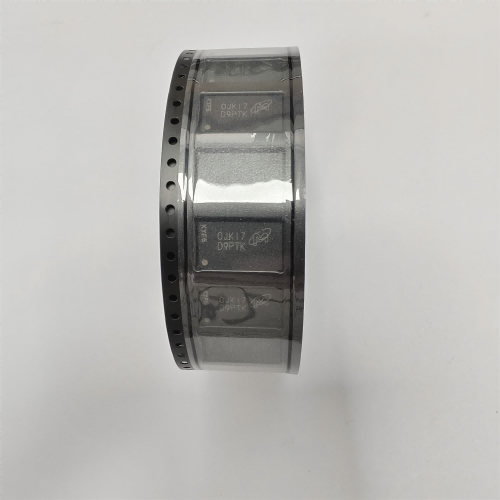
LT1965EMS8E#PBF
Brand: Analog Devices
Analog Devices LT1965EMS8E#PBF is a analog & mixed-signal component designed for Precision Instrumentation and related applications. In stock at Superb Automation — request a quote for competitive pricing and fast delivery.
Product Specifications
LT1965EMS8E#PBF
Analog Devices — Analog & Mixed-Signal ICs
Product Overview
The LT1965EMS8E#PBF from Analog Devices is a high-performance analog / mixed-signal IC providing precision signal acquisition, conversion, and conditioning. Analog Devices (ADI) is a world leader in high-performance analog, mixed-signal, and DSP ICs for instrumentation, healthcare, automotive, and communications.
Superb Automation partners with leading brands including Qorvo, TI, ADI, XILINX, NVIDIA, Intel, ST, MACOM, Renesas, and Coilcraft to provide complete BOM and supply-chain solutions.
Key Features
- High-resolution data conversion with excellent SNR and THD
- Wide dynamic range and high linearity across operating conditions
- Integrated voltage reference with low temperature drift
- Flexible digital interface — SPI, I2C, or parallel options
- Industrial/automotive temperature range with guaranteed specs
- Low power consumption with power-down modes
Key Specifications
| Resolution | bits |
| Channels | — |
| Sample Rate | kSPS |
| Interface | — |
| Supply Voltage | V |
| Operating Temp | °C |
| Package | — |
| INL | LSB |
| SNR | dB |
| THD | dB |
Applications
Precision Instrumentation
Industrial Process Control
Medical Imaging & Diagnostics
Automotive Sensor Interfaces
Communications Infrastructure
Test & Measurement
LT1965EMS8E#PBF: 1.1 A, 310 mV Dropout, 40 uV of Noise
The LT1965EMS8E#PBF is a 1.1 A low noise low dropout regulator with a 1.8 V to 20 V input range, 310 mV of dropout, 40 uV RMS of output noise and 500 uA of quiescent current in the adjustable version, in an 8-lead MSOP with an exposed pad. It is the lower current companion to the 1.5 A LT1963A, and the difference that matters on a dense board is the quiescent current at light load and the smaller package.
What 1.1 A costs in heat
Three hundred and ten millivolts at 1.1 A is 0.282 ohm. From 5 V in to 3.3 V out at full current the part dissipates 1.87 W, which the exposed pad has to move into the copper. From 2.5 V to 1.8 V at the same current it dissipates 0.77 W and the efficiency is 72 percent. The regulator is therefore a post regulator in the honest sense: it removes switching ripple from a rail that is already close to its final value, and it is the wrong part for dropping 5 V to 1.8 V at 1.1 A unless the thermal path is a deliberate part of the board.
| Input range | 1.8 V to 20 V |
| Output current | 1.1 A |
| Dropout | 310 mV, 0.282 ohm at 1.1 A |
| Output noise | 40 uV RMS from 10 Hz to 100 kHz |
| Quiescent current | 500 uA adjustable version, under 1 uA in shutdown |
| Output range | Adjustable 1.20 V to 19.5 V, fixed 1.5, 1.8, 2.5, 3.3 V |
| Noise against a 16 bit LSB at 1.8 V | 1.46 LSB, where one LSB is 27.5 uV |
| Minimum output capacitor | 10 uF, ceramic or tantalum |
| Packages | 8-lead MSOP with pad, 3 mm by 3 mm DFN, DD-Pak, TO-220 |
Noise at 1.8 V is not the same as noise at 3.3 V
Forty microvolts RMS is 0.79 LSB of a 16 bit converter on a 3.3 V range and 1.46 LSB on a 1.8 V range, because the LSB shrinks while the noise does not. A 1.8 V rail feeding an ADC reference or a precision sensor front end therefore needs the noise figure checked against the smaller full scale, not against the number that was acceptable at 3.3 V. The part is quiet enough for most 16 bit work at 3.3 V and marginal at 1.8 V, which is a statement about the converter, not about the regulator.
Quiescent current of 500 uA is the adjustable version's figure, and it is the reason this part is preferred over the 1.5 A device on a rail that idles. At 1 mA of load the regulator's own current is a third of the total, so a 1.8 V stand by rail that draws 1 mA is really a 1.5 mA load, and the efficiency of the whole rail is set by that ratio rather than by the dropout.
Where it fits
Post regulation of switching rails, low noise bias for analogue and RF stages, 1.8 V core rails from 2.5 V, and instrumentation supplies where the 20 V input ceiling covers a 12 V or 15 V bus. The fixed versions remove the divider, and the adjustable version at 1.20 V is the one to use where the rail has to be trimmed.
Two questions buyers ask
Does it need a minimum load?
No minimum load is specified, which is one practical difference from the current source regulators in the same catalogue. A rail that sleeps at a few microamps will still regulate, and the output capacitor is the stability condition rather than the load.
Can the DFN and the MSOP be interchanged?
Only with a footprint change. Both have an exposed pad and both are rated for the same current, but the thermal resistance and the pad geometry differ, and the board copper has to be sized for the package that is actually fitted.
Supply and matching
The EMS8E code is the 8-lead MSOP with the exposed pad, lead free. The fixed and adjustable versions are separate order codes and the fixed ones carry no divider error. The family is on the analog mixed signal ICs page, regulator alternatives are compared in the power management cross reference, and a converter front end that needs a quiet reference can be matched through ADC and DAC cross reference.
Request Quote — In Stock, 100% New & Original, Full Warranty