


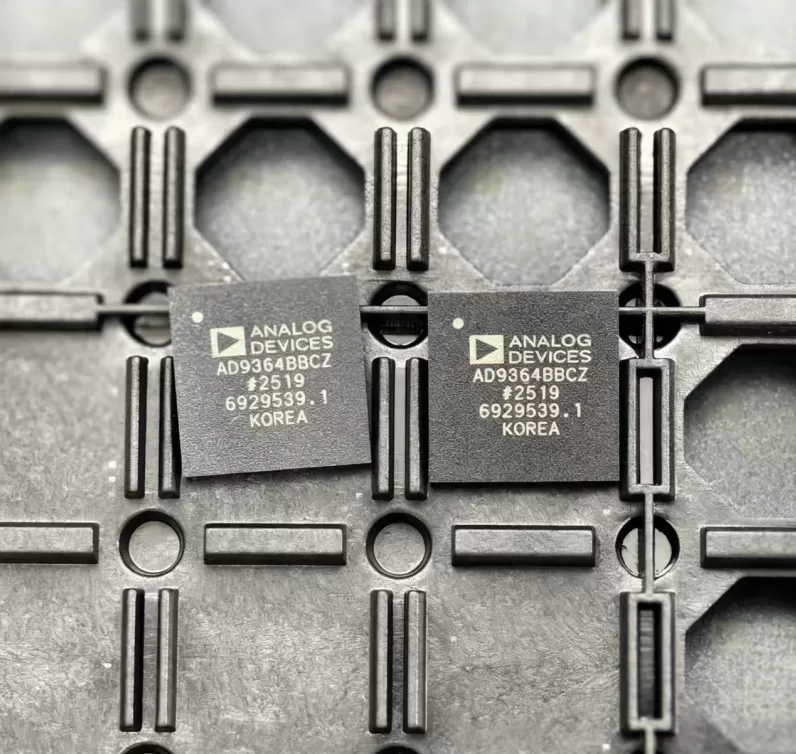

LT1790BIS6-1.25#TRPBF
Brand: Analog Devices
Analog Devices LT1790BIS6-1.25#TRPBF is a analog & mixed-signal component designed for Precision Instrumentation and related applications. In stock at Superb Automation — request a quote for competitive pricing and fast delivery.
Product Specifications
LT1790BIS6-1.25#TRPBF
Analog Devices — Analog & Mixed-Signal ICs
Product Overview
The LT1790BIS6-1.25#TRPBF from Analog Devices is a high-performance analog / mixed-signal IC providing precision signal acquisition, conversion, and conditioning. Analog Devices (ADI) is a world leader in high-performance analog, mixed-signal, and DSP ICs for instrumentation, healthcare, automotive, and communications.
Superb Automation partners with leading brands including Qorvo, TI, ADI, XILINX, NVIDIA, Intel, ST, MACOM, Renesas, and Coilcraft to provide complete BOM and supply-chain solutions.
Key Features
- High-resolution data conversion with excellent SNR and THD
- Wide dynamic range and high linearity across operating conditions
- Integrated voltage reference with low temperature drift
- Flexible digital interface — SPI, I2C, or parallel options
- Industrial/automotive temperature range with guaranteed specs
- Low power consumption with power-down modes
Key Specifications
| Resolution | bits |
| Channels | — |
| Sample Rate | kSPS |
| Interface | — |
| Supply Voltage | V |
| Operating Temp | °C |
| Package | — |
| INL | LSB |
| SNR | dB |
| THD | dB |
Applications
Precision Instrumentation
Industrial Process Control
Medical Imaging & Diagnostics
Automotive Sensor Interfaces
Communications Infrastructure
Test & Measurement
LT1790BIS6-1.25#TRPBF: what the I grade letter changes on a 1.25 V reference
What this order code is
LT1790BIS6-1.25#TRPBF is the 1.25 V, B accuracy grade member of the LT1790 series in the 6-lead SOT-23 body with the I temperature code, on tape and reel with a lead free finish. The output, the accuracy grade and the package are identical to the C temperature code of the same voltage, so the difference between the two order codes is the guaranteed temperature range and the test flow behind it, not the die.
That distinction matters commercially. A buyer comparing two prices for what looks like the same 1.25 V reference is usually comparing the C and the I code, and the price difference is the cost of guaranteeing the electrical table over a wider range. The limits themselves belong to the ordering table in the data sheet, which is the document that carries the number for each letter.
Parameters as published
| Item | Value |
|---|---|
| Output voltage | 1.25 V |
| Initial accuracy, B grade | 0.1 percent maximum |
| Drift, B grade | 25 ppm per degree C maximum |
| Thermal hysteresis | 40 ppm typical, -40 C to 85 C |
| Supply current | 60 uA maximum |
| Supply voltage | up to 18 V |
| Output current | sinks and sources |
| Guaranteed operating range | set by the temperature letter, in the ordering table |
| Body | 6-lead SOT-23, 1 mm profile |
| Packing | tape and reel, lead free |
Numbers that decide the application
0.1 percent of 1.25 V is 1.25 mV, which is 4.1 codes of a 12 bit converter on the same full scale and 65 codes of a 16 bit one. Drift of 25 ppm per degree C is the term that decides which temperature code to buy: at 25 degrees of swing it is 781 uV, at 100 degrees it is 3.1 mV, and across the full -40 to 125 C span it is 5.16 mV. A part specified to a narrow range and used outside it does not stop working, it stops being guaranteed, and that is exactly the failure mode a production test does not catch because the test runs at room temperature.
The supply current is 60 uA maximum, which is 526 mAh over a year, and the family's typical figure of 35 uA is 307 mAh. On a 1.25 V reference in a handheld instrument the reference is often the largest single standing current after the converter, so the 1 mm SOT-23 and the 60 uA line are the reason this part wins over a shunt reference, which has to idle the whole load current to regulate.
Hysteresis of 40 ppm typical is 50 uV on 1.25 V. That is the term that separates a reference that reads the same after every power cycle from one that reads a code or two differently, and it is not improved by the temperature letter or by the accuracy grade. In a system that calibrates at power up and measures immediately, hysteresis is irrelevant; in one that calibrates once in the factory, it is the long term accuracy floor.
Where it fits and where it does not
It fits an instrument that has to be specified below 0 C, a transmitter or sensor node that runs outdoors, a 12 bit channel where 1.25 V is the natural full scale, and any board where the reference has to sink current to serve a negative range. It does not fit a 2.5 V or 4.096 V converter full scale without gain, a load beyond the reference output current, or a 16 bit absolute measurement over temperature without calibration.
Supply and second source questions
The letter after the B is the field buyers most often drop when a line is copied between projects, and it is the one that changes the guarantee. A substitute quoted at the same 1.25 V and the same 0.1 percent but with a 50 ppm drift meets the same 25 C number and misses the temperature spec by a factor of two. The reference parts with the same footprint, their grades and their temperature codes are compared on the ADI part second source page.
Sourcing notes and next step
We confirm the voltage, the grade letter, the temperature letter and the packing on every line, and we will not substitute a C code for an I code without saying so first. Send the line items, quantities and required date through the BOM shortage recovery page and we will answer with availability. The wider reference list sits on the analog and mixed signal IC page.
Request Quote — In Stock, 100% New & Original, Full Warranty