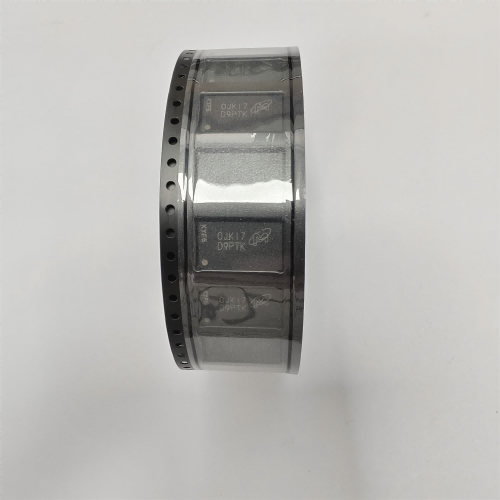
ADXL382-1BCCZ-RL7
Brand: Analog Devices
Analog Devices ADXL382-1BCCZ-RL7 is a analog & mixed-signal component designed for Precision Instrumentation and related applications. In stock at Superb Automation — request a quote for competitive pricing and fast delivery.
Product Specifications
ADXL382-1BCCZ-RL7
Analog Devices — Analog & Mixed-Signal ICs
Product Overview
The ADXL382-1BCCZ-RL7 from Analog Devices is a high-performance analog / mixed-signal IC providing precision signal acquisition, conversion, and conditioning. Analog Devices (ADI) is a world leader in high-performance analog, mixed-signal, and DSP ICs for instrumentation, healthcare, automotive, and communications.
Superb Automation partners with leading brands including Qorvo, TI, ADI, XILINX, NVIDIA, Intel, ST, MACOM, Renesas, and Coilcraft to provide complete BOM and supply-chain solutions.
Key Features
- High-resolution data conversion with excellent SNR and THD
- Wide dynamic range and high linearity across operating conditions
- Integrated voltage reference with low temperature drift
- Flexible digital interface — SPI, I2C, or parallel options
- Industrial/automotive temperature range with guaranteed specs
- Low power consumption with power-down modes
Key Specifications
| Resolution | bits |
| Channels | — |
| Sample Rate | kSPS |
| Interface | — |
| Supply Voltage | V |
| Operating Temp | °C |
| Package | — |
| INL | LSB |
| SNR | dB |
| THD | dB |
Applications
Precision Instrumentation
Industrial Process Control
Medical Imaging & Diagnostics
Automotive Sensor Interfaces
Communications Infrastructure
Test & Measurement
ADXL382-1BCCZ-RL7: 44 ug per root hertz at 8 kHz of bandwidth
The ADXL382-1BCCZ-RL7 is a three-axis MEMS accelerometer with selectable ranges of plus or minus 15 g, 30 g and 60 g, a 16-bit converter, and a noise density of 44 ug per root hertz on the X and Y axes and 55 ug on Z. It draws 520 uA in the high performance mode and 33 uA in the ultra low power mode, covers 8 kHz of bandwidth with under 85 us of group delay, and provides SPI or I2C control with I2S, TDM and PDM audio style data outputs. A 320 word FIFO, tap detection and activity and inactivity detection are included. It runs from 2.25 V to 3.6 V, covers -40 C to 125 C, survives 10,000 g of shock, and comes in a 14-terminal LGA measuring 2.9 mm by 2.8 mm by 0.87 mm. It is listed in the analog and mixed-signal IC line card with the rest of the sensor range.
Noise, bandwidth and the number of bits that survive
Noise density is a per root hertz figure, so the noise that reaches the converter depends on the bandwidth that is let through:
| Bandwidth | Noise, 44 ug per root hertz | Against one 16-bit code at 15 g |
|---|---|---|
| 1 kHz | 1.39 mg root mean square | 3 codes |
| 8 kHz | 3.94 mg root mean square | 8.6 codes of a 458 ug LSB |
| Effective bits at 8 kHz | 12.9 bits over the 30 g span | |
| Supply current, high performance | 520 uA at 3.3 V | 1.72 mW |
| Supply current, ultra low power | 33 uA at 3.3 V | 109 uW |
| FIFO | 320 words | 40 ms of buffer at 8 kHz |
One 16-bit code at a 15 g range is 458 ug. At 1 kHz the noise is 1.39 mg, about 3 codes, so the converter is doing useful work. At 8 kHz the noise is 3.94 mg and the usable resolution is about 12.9 bits, which is what the data sheet's noise figure implies and what a vibration measurement actually gets. A product that quotes 16 bits and runs at 8 kHz is quoting a resolution that the noise does not support.
The three ranges and the low power mode
The 15 g, 30 g and 60 g ranges share one 16-bit converter, so the sensitivity in codes per g falls as the range rises. That is the normal trade: a 60 g range for an impact and a 15 g range for a tilt measurement, with the same part configured differently.
The 33 uA mode is a different operating point, not a sleep state. A battery product that needs continuous activity detection can run there and switch to the 520 uA mode when an event arrives, which is the usual architecture for a condition monitor: the low power mode watches, the high performance mode measures, and the FIFO holds the event so the host can wake up after it.
Selection notes
- The device survives 10,000 g of shock, well above the 400 g full scale of a dedicated impact sensor, so it can be mounted on a structure that is also struck.
- Group delay under 85 us at the top of the bandwidth is what makes the part usable in a closed loop rather than only in a recorder.
- I2S, TDM and PDM outputs allow the three axes to be treated as audio channels by a host that already has an audio interface, which avoids a separate sensor bus.
- The LGA is 2.9 mm by 2.8 mm with a 0.87 mm height; the land pattern and the stencil are part of the mechanical outline of the board, not an afterthought.
Questions buyers ask
Should the bandwidth be set as high as possible? No. Noise rises with the square root of bandwidth, so 8 kHz gives 2.8 times the noise of 1 kHz. The bandwidth should be the lowest that passes the vibration of interest.
Can it detect a tap and log an impact? Yes, single, double and triple tap detection plus the FIFO allow a low power mode to watch and a burst of data to be captured around the event without the host staying awake. The medical and instrumentation range covers the companion parts that usually sit next to it.
What should a quote request include? The order code, the range, the bandwidth and output data rate, the interface, and the supply. Send the BOM line to the shortage and continuity desk for stock and date code, since the LGA package has a limited number of sources at any one time.
Request Quote — In Stock, 100% New & Original, Full Warranty