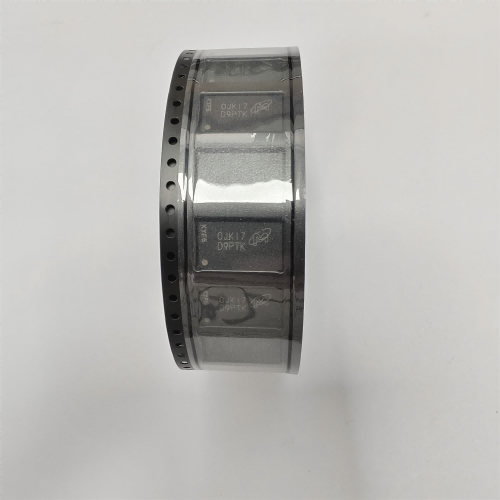
ADV7125KSTZ50(2)
Brand: Analog Devices
Analog Devices ADV7125KSTZ50(2) is a analog & mixed-signal component designed for Instrumentation and related applications. In stock at Superb Automation — request a quote for competitive pricing and fast delivery.
Product Specifications
ADV7125KSTZ50(2)
Analog Devices — Analog & Mixed-Signal ICs
Product Overview
The ADV7125KSTZ50(2) from Analog Devices is a high-performance analog / mixed-signal IC providing precision signal acquisition, conversion, and conditioning. Analog Devices (ADI) is a world leader in high-performance analog, mixed-signal, and DSP ICs for instrumentation, healthcare, automotive, and communications.
Superb Automation partners with leading brands including Qorvo, TI, ADI, XILINX, NVIDIA, Intel, ST, MACOM, Renesas, and Coilcraft to provide complete BOM and supply-chain solutions.
Key Features
- High-resolution data conversion with excellent SNR and THD
- Wide dynamic range and high linearity across operating conditions
- Integrated voltage reference with low temperature drift
- Flexible digital interface — SPI, I2C, or parallel options
- Industrial/automotive temperature range with guaranteed specs
- Low power consumption with power-down modes
Key Specifications
| Resolution | bits |
| Channels | — |
| Sample Rate | kSPS |
| Interface | — |
| Supply Voltage | V |
| Operating Temp | °C |
| Package | — |
| INL | LSB |
| SNR | dB |
| THD | dB |
Applications
Precision Instrumentation
Industrial Process Control
Medical Imaging & Diagnostics
Automotive Sensor Interfaces
Communications Infrastructure
Test & Measurement
Request Quote — In Stock, 100% New & Original, Full Warranty
ADV7125KSTZ50: triple 8-bit video DAC, 50 MHz grade
The ADV7125KSTZ50 is a triple 8-bit digital to analog converter for video in a 48-lead LQFP, screened over -40 to +85 C, at 50 MHz. It is the 8-bit member of the pair that includes the 10-bit ADV7123, and the 50 MHz code is the slowest screen in a family that reaches 330 MSPS at 3.3 V. Composite, S-video and 480p class displays are where this grade earns its place.
Published values
| Parameter | Value |
|---|---|
| Resolution | Three 8-bit DACs, one per colour channel |
| Speed on this code | 50 MHz |
| Temperature | -40 C to +85 C |
| Output | Complementary current outputs, 2.0 mA to 26.5 mA |
| Reference | Internal 1.235 V reference |
| Inputs | TTL compatible, three 8-bit ports plus SYNC and BLANK |
| Supply | Single 5 V or 3.3 V |
| Power | 30 mW minimum at 3 V, 6 mW typical in standby at 3 V |
| Monotonicity | Guaranteed to eight bits |
| Output standard | RS-343A and RS-170 compatible |
| Package | 48-lead LQFP, option ST-48 |
| Family ceiling | 330 MSPS at 3.3 V, reached by the JSTZ330 code at 0 to +70 C |
Eight bits over 50 MHz is a different accuracy story from ten bits
Eight bits is 256 levels per channel, and the eye stops noticing steps above that on a moving picture while test equipment still measures them. The part is monotonic to eight bits, which is the property that matters: a monotonic converter never steps backwards, so a slowly rising ramp comes out as a ramp rather than as a staircase with a notch.
Fifty megahertz caps the pixel rate. At 50 MHz the practical formats are 800 by 600 and 1024 by 768 at 60 Hz, and pushing a 1280 wide frame through it means accepting a lower refresh rate. That is a decision about the display, not about the converter, and it is usually the reason a customer moves up to the 140 MHz code in the same body.
The supply decides which of the two numbers applies
The 330 MSPS ceiling is a 3.3 V figure. On 5 V the same part is slower, so a board that keeps a 5 V rail for legacy reasons does not get the family's headline speed and should check the clock against the 5 V column rather than the summary line.
The output current range starts at 2.0 mA. Below that the part is outside its specified operating point, which matters on a low power variant that tries to cut the drive current to save a few milliwatts. Fifty ohm loads and short traces are the friendlier way to save power here.
The pages that answer this most often are the ADC and DAC cross reference for the family alternatives, the obsolete part cross reference hub for the acceptance test, and component lead time solutions for the case where a replacement has to be fitted before the next build.
Two questions buyers ask
What separates this code from the 140 MHz one? Only the speed screen. The body, the 8-bit ports, the reference and the current output are identical, so the difference is a reel label and the pixel clock the display can run.
Does the part work on a 5 V rail? Yes, but the 330 MSPS ceiling in the family summary is a 3.3 V figure. On 5 V the clock has to be checked against the 5 V column rather than against the headline.