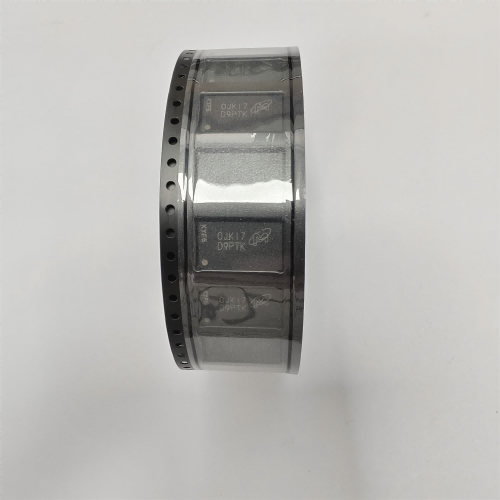
ADUM3160BRWZ-RL
Brand: Analog Devices
Analog Devices ADUM3160BRWZ-RL is a analog & mixed-signal component designed for Precision Instrumentation and related applications. In stock at Superb Automation — request a quote for competitive pricing and fast delivery.
Product Specifications
ADUM3160BRWZ-RL
Analog Devices — Analog & Mixed-Signal ICs
Product Overview
The ADUM3160BRWZ-RL from Analog Devices is a high-performance analog / mixed-signal IC providing precision signal acquisition, conversion, and conditioning. Analog Devices (ADI) is a world leader in high-performance analog, mixed-signal, and DSP ICs for instrumentation, healthcare, automotive, and communications.
Superb Automation partners with leading brands including Qorvo, TI, ADI, XILINX, NVIDIA, Intel, ST, MACOM, Renesas, and Coilcraft to provide complete BOM and supply-chain solutions.
Key Features
- High-resolution data conversion with excellent SNR and THD
- Wide dynamic range and high linearity across operating conditions
- Integrated voltage reference with low temperature drift
- Flexible digital interface — SPI, I2C, or parallel options
- Industrial/automotive temperature range with guaranteed specs
- Low power consumption with power-down modes
Key Specifications
| Resolution | bits |
| Channels | — |
| Sample Rate | kSPS |
| Interface | — |
| Supply Voltage | V |
| Operating Temp | °C |
| Package | — |
| INL | LSB |
| SNR | dB |
| THD | dB |
Applications
Precision Instrumentation
Industrial Process Control
Medical Imaging & Diagnostics
Automotive Sensor Interfaces
Communications Infrastructure
Test & Measurement
ADuM3160BRWZ-RL: a full speed USB port isolator with 2.5 kV of barrier
What this order code is
ADuM3160BRWZ-RL is the ADuM3160 USB isolator in the 16-lead SOIC wide body, on a reel. It sits on the upstream facing port of a peripheral, is compatible with USB 2.0 low speed and full speed at 1.5 Mbps and 12 Mbps, runs from a 4.5 V to 5.5 V bus supply with the signalling level regulated internally, draws 7 mA maximum upstream at low speed and 8 mA at full speed, and provides a 2500 V RMS barrier for one minute under UL 1577 with a 645 V peak working voltage under VDE 0884-17.
What makes a USB isolator different from a general purpose digital isolator is direction. A USB data line is bidirectional and the peripheral has to know, packet by packet, whether it is driving the line or listening, and it has to control the pull-up resistor that announces its presence. This part handles both, which is why it can sit in front of a microcontroller that only brings D+ and D- to its pins.
Parameters as published
| Item | Value |
|---|---|
| Standard | USB 2.0, low and full speed |
| Data rate | 1.5 Mbps and 12 Mbps |
| Bus supply | 4.5 V to 5.5 V |
| Upstream current at 1.5 Mbps | 7 mA maximum |
| Upstream current at 12 Mbps | 8 mA maximum |
| Idle current | 2.3 mA maximum |
| Isolation test | 2500 V RMS for 1 minute |
| Working voltage | 645 V peak |
| Temperature | 105 C maximum |
| ESD | class 3A contact per ANSI/ESD STM5.1-2007 |
| Body | 16-lead SOIC wide body |
| Higher barrier sibling | ADuM4160 at 5 kV reinforced |
Numbers that decide the application
Full speed USB is 12 Mbps, which is an 83.3 ns bit, and low speed is 1.5 Mbps, a 667 ns bit. The isolator's propagation delay is described as comparable to a hub plus a cable, and that is the right way to read it: USB budgets a cable delay and a hub delay in its turn around timing, and an isolator that stays inside those numbers is transparent to the protocol. A part with a much longer delay would still pass bits and fail enumeration, which is why the delay spec is stated against the hub and not only in nanoseconds.
Current is small enough that the suspend state is not needed to meet the standard. 8 mA at 5 V is 40 mW and the 2.3 mA idle figure is 11.5 mW, so a peripheral that is bus powered and has to stay under the 100 mA an unconfigured device may draw is not troubled by this part. The 2500 V RMS barrier is a basic insulation level; a product that needs reinforced insulation for a medical or mains referenced port belongs on the ADuM4160 at 5 kV, and the difference is a safety classification rather than a better version of the same part.
The two voltage figures need to be kept apart again. 2500 V RMS for one minute is a test, 645 V peak is the working voltage the barrier holds continuously, and 645 V peak is 456 V RMS. The body is a wide body SOIC with the creepage that goes with it, and the 105 C maximum is the operating ceiling. Class 3A contact ESD is a device level figure, so a user accessible connector still needs its own protection.
Where it fits and where it does not
It fits an isolated USB peripheral, a USB port on a medical or industrial instrument where the host and the device sit at different ground potentials, an isolated hub, and any product where the microcontroller implements USB with only D+ and D- pins. It does not fit high speed USB at 480 Mbps, it does not fit a host side port, because the part faces upstream, and it does not fit a barrier that has to be reinforced, where the 5 kV sibling is the part.
Supply and second source questions
Substitution runs into three fields: the facing direction, the barrier class and the speed class. A part that isolates the downstream side of a hub, or a part rated for low speed only, will enumerate on a bench and fail on a product that uses a full speed device. The current draw is also worth checking, because a bus powered peripheral has a hard budget before it is configured. The isolator families are listed on the second source page.
Sourcing notes and next step
We quote the code with the body and the packing, and we ask what sits on each side of the barrier and whether the insulation has to be basic or reinforced. Send the line items, quantities and required date through the BOM shortage recovery page and we will answer with availability. The wider interface list sits on the analog and mixed signal IC page.
Request Quote — In Stock, 100% New & Original, Full Warranty