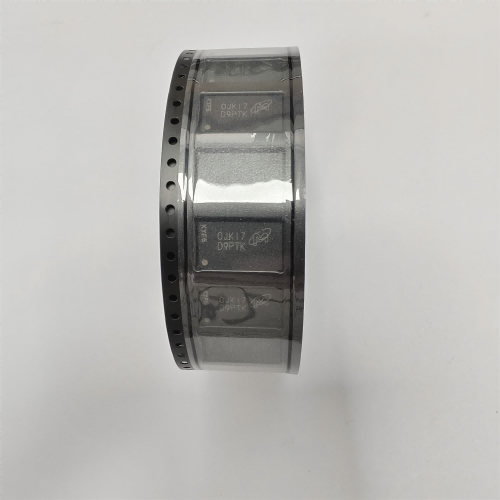
ADUM1402CRWZ
Brand: Analog Devices
Analog Devices ADUM1402CRWZ is a analog & mixed-signal component designed for Instrumentation and related applications. In stock at Superb Automation — request a quote for competitive pricing and fast delivery.
Product Specifications
ADUM1402CRWZ
Analog Devices — Analog & Mixed-Signal ICs
Product Overview
The ADUM1402CRWZ from Analog Devices is a high-performance analog / mixed-signal IC providing precision signal acquisition, conversion, and conditioning. Analog Devices (ADI) is a world leader in high-performance analog, mixed-signal, and DSP ICs for instrumentation, healthcare, automotive, and communications.
Superb Automation partners with leading brands including Qorvo, TI, ADI, XILINX, NVIDIA, Intel, ST, MACOM, Renesas, and Coilcraft to provide complete BOM and supply-chain solutions.
Key Features
- High-resolution data conversion with excellent SNR and THD
- Wide dynamic range and high linearity across operating conditions
- Integrated voltage reference with low temperature drift
- Flexible digital interface — SPI, I2C, or parallel options
- Industrial/automotive temperature range with guaranteed specs
- Low power consumption with power-down modes
Key Specifications
| Resolution | bits |
| Channels | — |
| Sample Rate | kSPS |
| Interface | — |
| Supply Voltage | V |
| Operating Temp | °C |
| Package | — |
| INL | LSB |
| SNR | dB |
| THD | dB |
Applications
Precision Instrumentation
Industrial Process Control
Medical Imaging & Diagnostics
Automotive Sensor Interfaces
Communications Infrastructure
Test & Measurement
Request Quote — In Stock, 100% New & Original, Full Warranty
ADuM1402CRWZ: two channels each way at 90 Mbps
The ADuM1402CRWZ is the 90 Mbps grade of the symmetric quad isolator, two inputs on each side, in the 16-lead wide body SOIC. It is the fastest member of the family in both directions, and the one a high speed bidirectional link across a barrier has to use when a parallel bus or a fast serial pair has to keep its timing.
Published values
| Parameter | Value |
|---|---|
| Channels | Four, two inputs on each side |
| Data rate, C grade | 90 Mbps |
| Propagation delay, C grade | 32 ns maximum at 5 V |
| Pulse width distortion, C grade | 2 ns maximum |
| Channel to channel matching | 2 ns maximum |
| A grade for reference | 1 Mbps, 100 ns, 40 ns distortion |
| B grade for reference | 10 Mbps, 50 ns, 3 ns distortion |
| Isolation, UL 1577 | 2500 V rms for one minute |
| Working voltage, VDE 0884-17 | 560 V peak |
| Current at 5 V, 90 Mbps | 31 mA per channel maximum |
| Current at 3 V, 90 Mbps | 20 mA per channel maximum |
| Package | 16-lead wide body SOIC, option RW-16 |
Timing at 90 Mbps
A bit lasts 11.1 ns and the delay is 32 ns, so the barrier costs 2.9 bit periods in each direction. A round trip is 5.8 bits before either side has processed anything, which is the number that decides whether a hardware handshake can keep up.
Two nanoseconds of distortion is 18 percent of a bit and two nanoseconds of channel to channel matching is what keeps a clock and its data line in step. For a source synchronous link that matching figure is the real specification, not the headline rate.
Ninety megabits costs real current
31 mA per channel on 5 V is 124 mA for the quad, 620 mW in a 16-lead body. On 3 V it is 20 mA per channel, 80 mA and 264 mW. The 3 V numbers are why high speed links are usually built on the lower rail and why the decoupling has to be close to the part.
Because both sides draw the same, a bidirectional link at this rate is a two supply problem: each side needs its own isolated rail sized for 264 mW at 3.3 V, plus margin for the converter's own losses.
What the high grade does not change
Isolation ratings, body, pin count and supply range are identical to the 1 Mbps member of the family. What changes is rate, delay, distortion and current. A board that was laid out for the A grade can carry the C grade, and the supply has to be rechecked rather than the footprint.
The Z suffix marks the RoHS moulding. The automotive versions of this family use different rate letters and reach +125 C, and the fastest automotive code is 25 Mbps, so this part is not an automotive substitute.
Where it is used
High speed data acquisition across a barrier, isolated camera or sensor links, motor drive interfaces with fast current feedback, and bidirectional parallel buses between a floating stage and a chassis side controller.
Where a customer needs a second position on this part, the ADI second source page is the starting point, how to verify a drop in replacement sets out the checks a substitution has to pass, and component lead time solutions is the short lead time route we quote against.
Two questions buyers ask
Is 90 Mbps available in both directions at once? Yes, each channel runs independently at up to 90 Mbps, so two each way is 90 Mbps each way.
Can this replace the automotive part at 125 C? No. This code is rated to +105 C and is not AEC-Q100 qualified. The automotive codes in the family top out at 25 Mbps.
Decoupling and jitter at 90 Mbps
At 90 Mbps each channel draws 31 mA on 5 V in bursts that follow the data, so four channels is 124 mA and 620 mW, or 80 mA and 264 mW on 3 V. Those bursts are why the decoupling has to sit at the body rather than at the edge of the board: a capacitor a few millimetres away has enough trace inductance to turn a fast current step into a supply dip, and a supply dip at this rate shows up as jitter rather than as a clean failure.
The thermal side is quieter but real. 264 mW in a 16-lead wide body is comfortable, 620 mW at 5 V needs the copper around the part to be part of the answer, and both figures are the maximum at the top of the band rather than the average of a link that idles between frames.