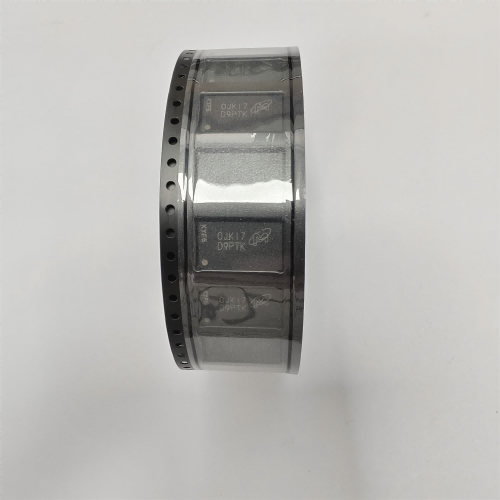
ADUC7026BSTZ62
Brand: Analog Devices
Analog Devices ADUC7026BSTZ62 is a analog & mixed-signal component designed for Instrumentation and related applications. In stock at Superb Automation — request a quote for competitive pricing and fast delivery.
Product Specifications
ADUC7026BSTZ62
Analog Devices — Analog & Mixed-Signal ICs
Product Overview
The ADUC7026BSTZ62 from Analog Devices is a high-performance analog / mixed-signal IC providing precision signal acquisition, conversion, and conditioning. Analog Devices (ADI) is a world leader in high-performance analog, mixed-signal, and DSP ICs for instrumentation, healthcare, automotive, and communications.
Superb Automation partners with leading brands including Qorvo, TI, ADI, XILINX, NVIDIA, Intel, ST, MACOM, Renesas, and Coilcraft to provide complete BOM and supply-chain solutions.
Key Features
- High-resolution data conversion with excellent SNR and THD
- Wide dynamic range and high linearity across operating conditions
- Integrated voltage reference with low temperature drift
- Flexible digital interface — SPI, I2C, or parallel options
- Industrial/automotive temperature range with guaranteed specs
- Low power consumption with power-down modes
Key Specifications
| Resolution | bits |
| Channels | — |
| Sample Rate | kSPS |
| Interface | — |
| Supply Voltage | V |
| Operating Temp | °C |
| Package | — |
| INL | LSB |
| SNR | dB |
| THD | dB |
Applications
Precision Instrumentation
Industrial Process Control
Medical Imaging & Diagnostics
Automotive Sensor Interfaces
Communications Infrastructure
Test & Measurement
Request Quote — In Stock, 100% New & Original, Full Warranty
ADUC7026BSTZ62: 62 kB of flash, an ARM7TDMI core and a 12-bit 1 MSPS converter on one die
The ADUC7026BSTZ62 is a precision analog microcontroller from the ADuC7019 to ADuC7029 family: an ARM7TDMI core running to 41.78 MHz with 62 kB of flash and 8 kB of SRAM, next to a multichannel 12-bit 1 MSPS converter, a voltage comparator, a temperature sensor and a PWM block. It is the part chosen when a board has to acquire several analogue channels, do the math locally and talk on a serial bus, without a separate converter and a separate microcontroller.
Published values
| Parameter | Value |
|---|---|
| Core | ARM7TDMI, 16/32-bit RISC, up to 41.78 MHz |
| Memory | 62 kB flash and EEPROM, 8 kB SRAM |
| ADC | 12-bit, 1 MSPS, up to 16 channels, single ended and differential |
| Other analogue | Voltage comparator, on chip temperature sensor, DAC outputs on some family members |
| Serial | UART, two I2C, SPI |
| Digital | Up to 40 GPIO, four general purpose timers, three phase PWM |
| Supply current | 11 mA at 5 MHz, 40 mA at 41.78 MHz, specified at 3 V |
| Debug | JTAG, in circuit download and debug |
| Package | 40-lead LFCSP, 6 mm x 6 mm |
Putting the converter next to the core removes a bus
A 1 MSPS converter on the same die as the core means the samples move through an internal bus instead of across a serial link, so there is no digital isolation problem and no timing negotiation between two parts. On a smart sensor or an industrial control board that also removes a power rail and a set of decoupling components, which is the practical reason this family exists.
The cost is that the analogue performance now depends on what the core is doing. At 41.78 MHz the supply current is 40 mA, and the switching noise from the core couples into the converter unless the analogue supply pins are decoupled separately and the ground return is kept under the analogue side of the package.
Flash and EEPROM in the same array
The 62 kB is flash and EEPROM together, with the split set by the part configuration, so a programme that needs 60 kB of code leaves very little for stored calibration. That split is decided at programming time and is not something a board can change afterwards, so it has to be settled before the first production programming run rather than adjusted later.
What to verify on a substitute
The family spans several memory sizes and two package families, and the parts are not interchangeable by name. Before any substitution we compare the flash and SRAM size, the number of ADC channels, whether the part has DAC outputs, and the package and pin count. A part with fewer ADC channels will still run the code and silently return the wrong channel on the upper inputs.
Buyers usually arrive at the ADI second source page to find the family alternatives, then use the pin to pin cross reference to confirm a substitute before it is fitted; how to verify a drop in replacement is the routine for a part that has already stopped shipping.
Two questions buyers ask
Is the ADUC7026 5 V tolerant? The analogue section is specified at 3 V operation and the digital IO levels follow the supply. Treating the part as a 5 V device is outside the published condition, and level shifting belongs on the board.
Does it need an external crystal? It has an internal oscillator and a PLL with a programmable divider, so a crystal is optional. A crystal is used where the serial timing or the sampling clock has to be accurate over temperature.