


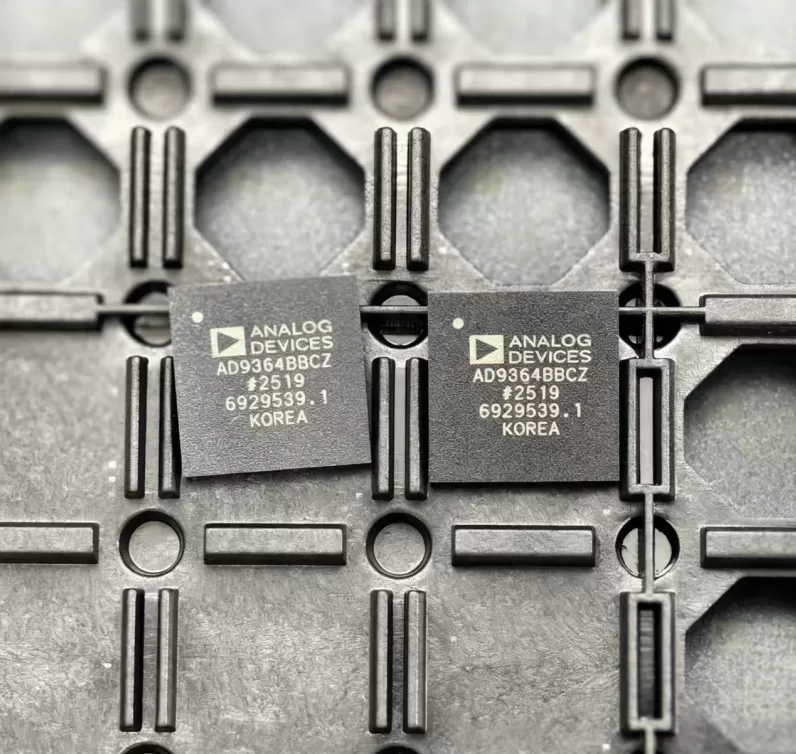

ADM2682EBRIZ-RL7
Brand: Analog Devices
Analog Devices ADM2682EBRIZ-RL7 is a analog & mixed-signal component designed for Precision Instrumentation and related applications. In stock at Superb Automation — request a quote for competitive pricing and fast delivery.
Product Specifications
ADM2682EBRIZ-RL7
Analog Devices — Analog & Mixed-Signal ICs
Product Overview
The ADM2682EBRIZ-RL7 from Analog Devices is a high-performance analog / mixed-signal IC providing precision signal acquisition, conversion, and conditioning. Analog Devices (ADI) is a world leader in high-performance analog, mixed-signal, and DSP ICs for instrumentation, healthcare, automotive, and communications.
Superb Automation partners with leading brands including Qorvo, TI, ADI, XILINX, NVIDIA, Intel, ST, MACOM, Renesas, and Coilcraft to provide complete BOM and supply-chain solutions.
Key Features
- High-resolution data conversion with excellent SNR and THD
- Wide dynamic range and high linearity across operating conditions
- Integrated voltage reference with low temperature drift
- Flexible digital interface — SPI, I2C, or parallel options
- Industrial/automotive temperature range with guaranteed specs
- Low power consumption with power-down modes
Key Specifications
| Resolution | bits |
| Channels | — |
| Sample Rate | kSPS |
| Interface | — |
| Supply Voltage | V |
| Operating Temp | °C |
| Package | — |
| INL | LSB |
| SNR | dB |
| THD | dB |
Applications
Precision Instrumentation
Industrial Process Control
Medical Imaging & Diagnostics
Automotive Sensor Interfaces
Communications Infrastructure
Test & Measurement
ADM2682EBRIZ-RL7: a 16 Mbps RS-485 transceiver with 5 kV of isolation and the dc to dc inside
What this order code is
ADM2682EBRIZ-RL7 is a fully integrated isolated RS-485 and RS-422 transceiver in a 16-lead wide body SOIC on a reel. It combines a three channel digital isolator, a three state differential driver, a differential receiver and an isolated dc to dc converter in one package, so a node needs one supply on the logic side and nothing on the field side except the bus. The isolation rating is 5 kV RMS for one minute under UL 1577, the bus pins carry plus or minus 15 kV of ESD protection, and the part can be configured as half duplex or full duplex by the way the pins are wired. The data rate is 16 Mbps on this code, against 500 kbps on the ADM2687E, which is the same die with a slower output stage.
Isolated power is the reason this part exists. A conventional isolated RS-485 node needs a transceiver, a digital isolator and an isolated dc to dc brick, and the brick is the bulky, expensive and least available of the three. Integrating it removes the brick, the transformer and the second set of approvals, and it leaves the creepage of the package as the limiting insulation dimension: the wide body gives more than 8 mm of creepage and clearance, which is what a 5 kV part needs and what a narrow body cannot give.
Parameters as published
| Item | Value |
|---|---|
| Function | isolated RS-485 and RS-422 transceiver |
| Data rate | 16 Mbps on this code |
| Isolation rating | 5 kV RMS for 1 minute, UL 1577 |
| Working voltage | 846 V peak under VDE 0884-17, approval pending |
| Isolated power | integrated dc to dc converter |
| ESD on bus pins | plus or minus 15 kV |
| Supply | 5 V or 3.3 V |
| Nodes on one bus | up to 256 |
| Duplex | configurable half or full |
| Common mode transient immunity | above 25 kV per microsecond |
| Receiver fail safe | open and short circuit inputs |
| Protection | thermal shutdown |
| Body | 16-lead wide body SOIC, over 8 mm creepage |
| Temperature range | minus 40 C to plus 85 C |
| Standards | ANSI/TIA/EIA-485-A-98, ISO 8482 |
Numbers that decide the application
The two voltage figures in the approvals column are not the same measurement and are often read as if they were. Five kilovolts RMS for one minute is a withstand test, which in peak terms is 7071 V, while the 846 V peak is the continuous working voltage the component is rated for under the VDE standard. The ratio between them is 8.4, and a bus that sits at 600 V is inside the working rating while a bus at 1 kV is outside it even though the part would survive a one minute test at that level. The VDE approval is also listed as pending on the data sheet, so a product that needs the certificate should plan around that date.
At 16 Mbps a bit is 62.5 ns. A 100 m run of cable at roughly 5 ns per metre is 500 ns, which is eight bit periods, so the delay is large compared with the bit and the protocol has to be one that tolerates it; this is why isolated high speed links are usually built around a fixed frame with a known turnaround rather than around a byte by byte handshake. The 25 kV per microsecond of common mode transient immunity is what keeps the receiver from producing false edges when a motor or a contactor couples a fast transient into the pair.
The node count of 256 is a loading statement. An RS-485 unit load is defined so that 32 of them load the bus as much as the standard terminator pair, and 256 nodes means each receiver presents one eighth of a unit load, so the differential level is preserved with 256 receivers and two 120 ohm terminators. A buyer who replaces this part with a plain 32 node transceiver and keeps the same network will find that the bus no longer reaches the far end, because the load has gone up eight times.
Where it fits and where it does not
It fits industrial networks that cross a safety barrier, motor drive control, metering, building automation, medical equipment with a patient connected side, and any node where the field side has no local supply. It does not fit a bus that has to run at 50 Mbps, and it does not fit a product that needs an isolation certificate beyond UL 1577 today, because the VDE approval is pending. The 85 C ceiling and the wide body also mean it is not a candidate for a dense card where a narrow body was assumed.
Supply and second source questions
The questions that come back on this code are about the data rate grade, the isolation standard and whether the isolated supply can feed anything else. The rate is a code level difference, so a 500 kbps member with the same footprint will not run a 16 Mbps bus, and the working voltage and the withstand voltage answer different questions. The parts that share the package and the ones that only look similar are separated on the ADI part second source page.
Sourcing notes and next step
We quote this code against the bill of materials and check the data rate grade, the isolation paperwork, the duplex configuration and the body, because the wide body is part of the insulation and not a packaging preference. Where the exact code is short we will say so rather than ship the 500 kbps member into a 16 Mbps socket. Send the line items, quantities and required date through the BOM shortage recovery page and we will answer with availability. The interface family list sits on the analog and mixed signal IC page.
Request Quote — In Stock, 100% New & Original, Full Warranty