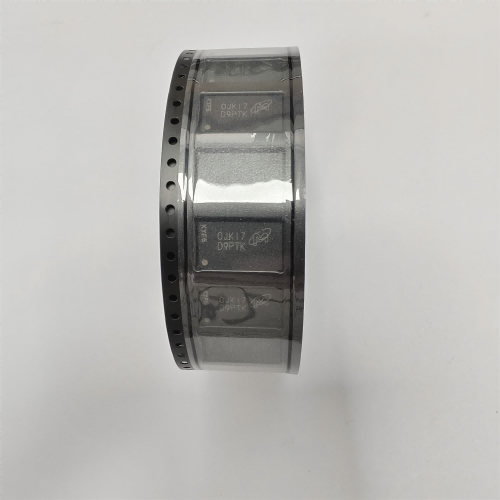
AD8628AUJZ
Brand: Analog Devices
Analog Devices AD8628AUJZ is a analog & mixed-signal component designed for Instrumentation and related applications. In stock at Superb Automation — request a quote for competitive pricing and fast delivery.
Product Specifications
AD8628AUJZ
Analog Devices — Analog & Mixed-Signal ICs
Product Overview
The AD8628AUJZ from Analog Devices is a high-performance analog / mixed-signal IC providing precision signal acquisition, conversion, and conditioning. Analog Devices (ADI) is a world leader in high-performance analog, mixed-signal, and DSP ICs for instrumentation, healthcare, automotive, and communications.
Superb Automation partners with leading brands including Qorvo, TI, ADI, XILINX, NVIDIA, Intel, ST, MACOM, Renesas, and Coilcraft to provide complete BOM and supply-chain solutions.
Key Features
- High-resolution data conversion with excellent SNR and THD
- Wide dynamic range and high linearity across operating conditions
- Integrated voltage reference with low temperature drift
- Flexible digital interface — SPI, I2C, or parallel options
- Industrial/automotive temperature range with guaranteed specs
- Low power consumption with power-down modes
Key Specifications
| Resolution | bits |
| Channels | — |
| Sample Rate | kSPS |
| Interface | — |
| Supply Voltage | V |
| Operating Temp | °C |
| Package | — |
| INL | LSB |
| SNR | dB |
| THD | dB |
Applications
Precision Instrumentation
Industrial Process Control
Medical Imaging & Diagnostics
Automotive Sensor Interfaces
Communications Infrastructure
Test & Measurement
Request Quote — In Stock, 100% New & Original, Full Warranty
AD8628AUJZ: zero drift amplifier in the thin 5-lead TSOT package
The AD8628AUJZ is the 5-lead TSOT version of the AD8628 auto-zero single amplifier. It is the same die and the same 1 uV offset and 2.5 MHz bandwidth as the SOT-23 and SOIC versions, in a body about 1 mm tall, which is what decides the part on a sensor head that has to fit under a connector shroud.
Published values
| Parameter | Value |
|---|---|
| Offset voltage | 1 uV typical, 5 uV maximum |
| Offset voltage drift | 0.002 uV/C typical, 0.02 uV/C maximum |
| Input bias current | 100 pA maximum |
| Supply current | 0.85 mA typical, 1.1 mA maximum |
| Gain bandwidth | 2.5 MHz at 5 V |
| Slew rate | 1.0 V/us |
| Voltage noise density | 22 nV/root Hz at 1 kHz |
| Overload recovery | 50 us |
| Output swing | 4.99 V minimum high into 100 k |
| Short circuit current | 25 mA typical |
| Supply range | 2.7 V to 5.5 V single supply |
| Package | 5-lead TSOT (UJ-5), 1 mm nominal height |
TSOT against SOT-23 on the same board
The two packages carry the same die and the same pin functions but different body dimensions and different lead forms, so the pad geometry is not shared. A board routed for the SOT-23 needs a new footprint before the TSOT part can be fitted, and a build that swaps between them needs two placements in the assembly data rather than a substitution note.
The reason to take the TSOT is height: about 1 mm against 1.1 mm to 1.45 mm for a standard SOT-23, plus a smaller body area. On a stack of boards with a 2 mm gap, or inside a connector housing, that difference is what makes the assembly close. On an open board it buys nothing, and the SOT-23 or the SOIC version is the cheaper reel.
What the package does to the analog behaviour
The electrical limits are the same as the other two packages: 5 uV maximum offset, 0.02 uV/C drift, 2.5 MHz at 5 V, 1.1 mA maximum. The thermal resistance is higher because the body is smaller, so the 1.1 mA at 5 V gives about 5.5 mW and a junction rise of a few degrees, which does not touch the electrical limits on its own.
Where the smaller body does matter is the input pins: they are closer together and closer to the supply pin, so flux residue and board leakage show up as bias current. With 100 pA of bias current and a 1 MOhm source, 0.1 uV is the intended error and a 100 MOhm leakage path adds a millivolt. Clean the board and keep the input trace short.
Choosing between the three packages
Same die, three bodies: SOT-23 for the lowest cost on a board with room, SOIC for hand rework and probing, TSOT for height. The part number suffix is the package, so a purchase order that specifies the wrong suffix delivers an amplifier that will not fit the footprint even though every electrical line matches. That is the most common mistake with this family and it is worth a note on the drawing.
Two pages worth reading before a purchase order goes out are component lead time solutions and how to verify a drop in replacement; the first lists what else fits the socket, the second is the test sequence for a drop in, and one stop BOM sourcing covers the case where the shortage is already on the line.
Two questions buyers ask
Are the SOT-23 and TSOT versions electrically identical? Yes. Same die, same 1 uV offset, same 2.5 MHz, same 1.1 mA. Only the body and therefore the thermal resistance and the footprint differ.
Can the TSOT part dissipate 1.1 mA at 5 V? That is 5.5 mW in a body with a junction to ambient resistance of a few hundred degrees per watt, so the rise is a couple of degrees and well inside the 125 C limit.