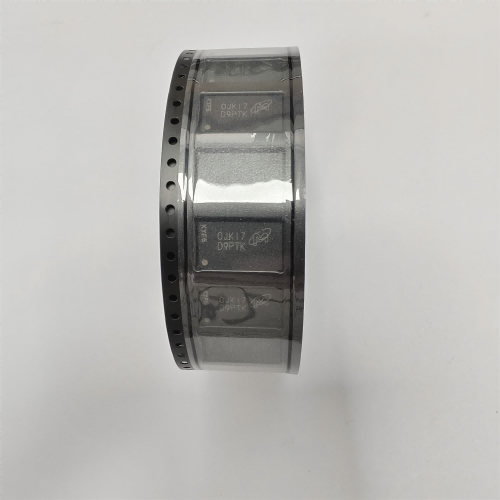
AD8602ARMZ-REEL
Brand: Analog Devices
Analog Devices AD8602ARMZ-REEL is a analog & mixed-signal component designed for Precision Instrumentation and related applications. In stock at Superb Automation — request a quote for competitive pricing and fast delivery.
Product Specifications
AD8602ARMZ-REEL
Analog Devices — Analog & Mixed-Signal ICs
Product Overview
The AD8602ARMZ-REEL from Analog Devices is a high-performance analog / mixed-signal IC providing precision signal acquisition, conversion, and conditioning. Analog Devices (ADI) is a world leader in high-performance analog, mixed-signal, and DSP ICs for instrumentation, healthcare, automotive, and communications.
Superb Automation partners with leading brands including Qorvo, TI, ADI, XILINX, NVIDIA, Intel, ST, MACOM, Renesas, and Coilcraft to provide complete BOM and supply-chain solutions.
Key Features
- High-resolution data conversion with excellent SNR and THD
- Wide dynamic range and high linearity across operating conditions
- Integrated voltage reference with low temperature drift
- Flexible digital interface — SPI, I2C, or parallel options
- Industrial/automotive temperature range with guaranteed specs
- Low power consumption with power-down modes
Key Specifications
| Resolution | bits |
| Channels | — |
| Sample Rate | kSPS |
| Interface | — |
| Supply Voltage | V |
| Operating Temp | °C |
| Package | — |
| INL | LSB |
| SNR | dB |
| THD | dB |
Applications
Precision Instrumentation
Industrial Process Control
Medical Imaging & Diagnostics
Automotive Sensor Interfaces
Communications Infrastructure
Test & Measurement
AD8602ARMZ-REEL: a dual rail to rail CMOS amplifier with 500 microvolts of maximum offset
What this order code is
AD8602ARMZ-REEL is the dual member of the AD8601, AD8602 and AD8604 family, single, dual and quad rail to rail input and output amplifiers built on a CMOS process with a trimming technique the vendor calls DigiTrim. The part runs from 2.7 V to 5.5 V, provides 8 MHz of bandwidth with a 5 V per microsecond slew rate, and holds its input offset to 500 microvolts maximum. ARMZ is the 8-lead MSOP body and REEL is the tape and reel packing.
Input and output both swing to the rails, and the input bias current is measured in picoamps rather than nanoamps, which is what makes the part usable in front of a high impedance sensor. There is no phase reversal when the input is driven beyond the rails, and the amplifier is unity gain stable. The family is specified over minus 40 to plus 125 degrees C. A D grade exists in the same family with the same ac performance and looser dc precision at a lower price.
Parameters as published
| Item | Value |
|---|---|
| Offset voltage | 500 microvolts maximum |
| Supply range | 2.7 V to 5.5 V single supply |
| Supply current | 750 microamps per amplifier |
| Gain bandwidth | 8 MHz |
| Slew rate | 5 V per microsecond |
| Input bias current | picoamp range at 25 C |
| Input and output range | rail to rail |
| Phase reversal | none on overdrive |
| Stability | unity gain stable |
| Temperature range | minus 40 C to plus 125 C |
| Package | 8-lead MSOP, 8-lead narrow SOIC |
| Grades | B and D, the D with looser dc precision |
Numbers that decide the application
Five hundred microvolts maximum against a 16 bit converter on a 5 V range, where one count is 76.3 microvolts, is 6.55 counts. That is the whole offset budget for a 16 bit channel and it is used up by the amplifier alone, so a 16 bit front end needs either a calibration step or a part with a lower offset. On a 12 bit converter the same offset is 0.41 of a count and the part is comfortable.
Bandwidth and gain have to be read together. At unity gain the 8 MHz product is the closed loop bandwidth. At a gain of 10 it is 800 kHz and at a gain of 100 it is 80 kHz. The slew rate sets a second limit that does not move with gain: 5 V per microsecond at a 5 V peak to peak output is 318 kHz, and at 2 V peak to peak it is 796 kHz. A gain of 100 stage on a 5 V rail therefore runs out of bandwidth long before it runs out of slew rate, and a gain of 1 stage is limited by slew rate first.
Supply current is 750 microamps per amplifier, so the dual draws 1.5 mA and 13.14 Ah across a year. Bias current in the picoamp range is 10 microvolts across a 10 megohm source, four hundred times below the 500 microvolt offset limit, which is the number that says the part is genuinely usable with a high impedance source rather than only specified that way.
Selection and cross reference notes
The grade letter is the first field to compare. The B grade carries the 500 microvolt maximum offset and the D grade trades that for price with the same bandwidth and slew rate. A board qualified on the B grade that is offered a D grade as a substitute has lost dc precision and kept ac performance, which is either an acceptable saving or a failed channel depending on the circuit, and the datasheet table is where that decision is settled.
Rail to rail input on a CMOS part usually means two input pairs and a crossover region, and the offset behaviour around that crossover is worth reading in the data sheet before the part is used in a precision follower. The 8 MHz bandwidth and the 5 V per microsecond slew rate are the two numbers that decide whether a filter stage built around this part will settle in the time the converter needs.
Where it fits
The vendor lists audio amplification in portable devices, phone headsets, bar code scanners, portable instruments, cellular power amplifier control and multipole filters, and the rail to rail swing is aimed at buffering CMOS converters and ASICs. Filters, integrators, diode amplifiers, shunt current sensors and high impedance sensors are the applications named in the same paragraph. Buyers who need the family view can start at the analog and mixed signal category page, and teams comparing this part against a JFET input device usually work from the amplifier cross reference page.
Buying notes
The order string carries the family, the grade, the body and the packing: 8602 is the dual, A is the grade step in this code, RMZ is the 8-lead MSOP and REEL is the reel. The same die is sold in an 8-lead narrow SOIC under a different body code, and the two are not interchangeable on a land pattern. Reel and date code are the fields that change between sellers.
Sourcing notes and next step
These duals move in volume, and the practical questions are the grade letter, the body and the reel size. We quote against a bill of materials with the full order string and check the grade against the drawing before anything ships, because a B grade line filled with a D grade part is a quiet failure rather than a visible one. Send the codes and quantities through the BOM shortage recovery page and we will answer with availability and packaging.
Request Quote — In Stock, 100% New & Original, Full Warranty