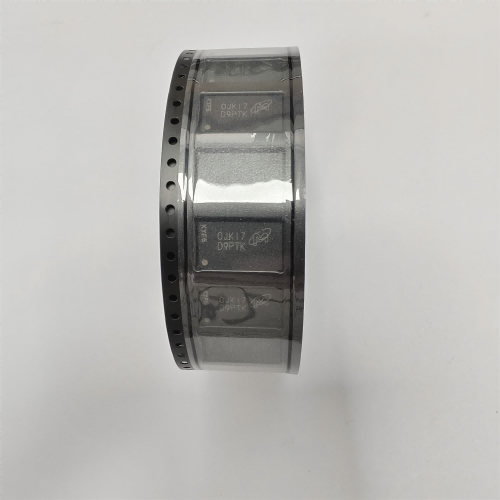
AD706ARZ
Brand: Analog Devices
Analog Devices AD706ARZ is a analog & mixed-signal component designed for Instrumentation and related applications. In stock at Superb Automation — request a quote for competitive pricing and fast delivery.
Product Specifications
AD706ARZ
Analog Devices — Analog & Mixed-Signal ICs
Product Overview
The AD706ARZ from Analog Devices is a high-performance analog / mixed-signal IC providing precision signal acquisition, conversion, and conditioning. Analog Devices (ADI) is a world leader in high-performance analog, mixed-signal, and DSP ICs for instrumentation, healthcare, automotive, and communications.
Superb Automation partners with leading brands including Qorvo, TI, ADI, XILINX, NVIDIA, Intel, ST, MACOM, Renesas, and Coilcraft to provide complete BOM and supply-chain solutions.
Key Features
- High-resolution data conversion with excellent SNR and THD
- Wide dynamic range and high linearity across operating conditions
- Integrated voltage reference with low temperature drift
- Flexible digital interface — SPI, I2C, or parallel options
- Industrial/automotive temperature range with guaranteed specs
- Low power consumption with power-down modes
Key Specifications
| Resolution | bits |
| Channels | — |
| Sample Rate | kSPS |
| Interface | — |
| Supply Voltage | V |
| Operating Temp | °C |
| Package | — |
| INL | LSB |
| SNR | dB |
| THD | dB |
Applications
Precision Instrumentation
Industrial Process Control
Medical Imaging & Diagnostics
Automotive Sensor Interfaces
Communications Infrastructure
Test & Measurement
Request Quote — In Stock, 100% New & Original, Full Warranty
AD706ARZ: 200 pA of Bias Current With Bipolar Drift Behaviour
The AD706ARZ is a dual operational amplifier with a picoampere class input bias current and the offset drift of a bipolar part rather than a JFET. The published limits are 100 microvolts maximum offset, 1.5 microvolts per degree Celsius maximum drift, 200 pA maximum input bias current, 0.5 microvolts peak to peak of 0.1 Hz to 10 Hz noise, and 750 microamps of supply current for the pair. That combination is unusual: a JFET input amplifier reaches the same bias current but its drift climbs steeply with temperature, while a precision bipolar part holds drift and cannot reach the bias current. The AD706 sits in the gap, which is why it survives in integrators, low frequency active filters and precision instrumentation that has to hold offset over a wide temperature range.
Published values
| Parameter | Value |
|---|---|
| Channels | 2, with a quad version in the AD704 |
| Input offset | 100 microvolts maximum |
| Offset drift | 1.5 microvolts per degree Celsius maximum |
| Input bias current | 200 pA maximum |
| Low frequency noise | 0.5 microvolts peak to peak, 0.1 Hz to 10 Hz |
| Supply current | 750 microamps for the pair |
| Bodies | 8-lead DIP and 8-lead surface mount |
| Grades | J grade and A grade, with different temperature windows |
| Data sheet applications | Low frequency active filters, precision instrumentation, precision integrators |
| Tape and reel | Surface mount body available to EIA-481A |
Superbeta input stage and why drift stays flat
The input transistors are Superbeta devices, which is how a bipolar process reaches 200 pA without the leakage that a JFET gate would show. Bias current in a JFET doubles roughly every 10 degrees Celsius, so a part that starts at 200 pA at room temperature is in the nanoampere range at 85 degrees, and the offset it develops across a 1 megohm source grows with it. A Superbeta bipolar input keeps its bias current much flatter, so an integrator built around it holds its offset over temperature without a chopper. The trade is that the bias current is still larger than a good JFET at room temperature, so very high impedance sources are better served by a different part.
Where a 1.5 microvolt per degree amplifier earns its price
An integrator with a 10 second time constant and a 1 megohm input resistor turns 100 microvolts of offset into a ramp that saturates the output in about a quarter of an hour, which is why precision integrators ask for low offset and low drift rather than bandwidth. The same arithmetic applies to a low frequency active filter: the dc gain of the filter multiplies the input offset, and a filter with 40 dB of passband gain and 100 microvolts of offset puts 10 millivolts at the output. Choosing between this part and a chopper stabilised amplifier comes down to noise: a chopper removes offset and drift but puts switching artefacts in the band, and a low drift linear part does not.
Grade, body and the quad option
The J and A grades differ in temperature window rather than in dc specification, so an instrument that only runs in a cabinet can take the J grade while an outdoor unit needs the A. Where four channels are needed, the AD704 is the same amplifier in a quad body, which is worth knowing because a BOM that carries two duals often converts to one quad and saves board area. The amplifier cross reference lists the precision op amp families we supply, the ADI second source page covers grade equivalence, and the cost reduction page covers the consolidation arithmetic for a BOM with several precision amplifiers.