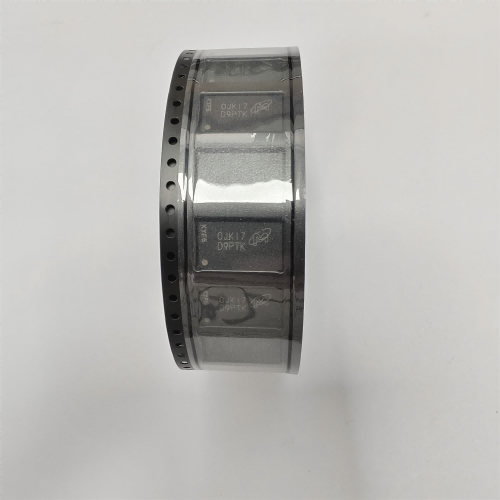
AD2428WCCSZ
Brand: Analog Devices
Analog Devices AD2428WCCSZ is a analog & mixed-signal component designed for Precision Instrumentation and related applications. In stock at Superb Automation — request a quote for competitive pricing and fast delivery.
Product Specifications
AD2428WCCSZ
Analog Devices — Analog & Mixed-Signal ICs
Product Overview
The AD2428WCCSZ from Analog Devices is a high-performance analog / mixed-signal IC providing precision signal acquisition, conversion, and conditioning. Analog Devices (ADI) is a world leader in high-performance analog, mixed-signal, and DSP ICs for instrumentation, healthcare, automotive, and communications.
Superb Automation partners with leading brands including Qorvo, TI, ADI, XILINX, NVIDIA, Intel, ST, MACOM, Renesas, and Coilcraft to provide complete BOM and supply-chain solutions.
Key Features
- High-resolution data conversion with excellent SNR and THD
- Wide dynamic range and high linearity across operating conditions
- Integrated voltage reference with low temperature drift
- Flexible digital interface — SPI, I2C, or parallel options
- Industrial/automotive temperature range with guaranteed specs
- Low power consumption with power-down modes
Key Specifications
| Resolution | bits |
| Channels | — |
| Sample Rate | kSPS |
| Interface | — |
| Supply Voltage | V |
| Operating Temp | °C |
| Package | — |
| INL | LSB |
| SNR | dB |
| THD | dB |
Applications
Precision Instrumentation
Industrial Process Control
Medical Imaging & Diagnostics
Automotive Sensor Interfaces
Communications Infrastructure
Test & Measurement
AD2428WCCSZ: an A2B bus master transceiver that carries 32 channels of audio over one twisted pair
What this order code is
AD2428WCCSZ is the master capable member of the Analog Devices Automotive Audio Bus family. It puts multichannel I2S or TDM audio, a synchronous clock, control data and status onto a single differential twisted pair, in a line topology with one master and up to ten discoverable slaves. The same pair can also carry bus power to the slave nodes, which is what removes a separate supply wire from a microphone or a door module. The part has both A and B transceiver blocks, which is why it can sit at the head of a chain and also pass the bus onward.
The W in the code is the automotive qualified version and the letter string after it is the body and the packing, not a performance step. The family table lists five members and the differences are functional, not graded: only the AD2428 and AD2429 can be master, only the AD2428 and AD2429 have I2S and TDM support, and the node to node cable limit is 15 m for the 2426, 2427 and 2428 against 5 m for the 2420 and 2429. A buyer who searches the family and takes the cheapest line will very often land on a part that cannot do the job the master position needs.
Parameters as published
| Item | Value |
|---|---|
| Bus role | master capable, configurable as master or slave |
| Slaves discoverable | up to 10 |
| Transceiver blocks | A and B |
| Cable length, node to node | 15 m |
| Cable length, overall | 40 m |
| Audio interface | I2S and TDM, 8 bit to 32 bit, programmable rate |
| Channel count | up to 32 upstream and 32 downstream |
| Microphone interface | PDM, up to 4 microphones |
| Control channel | I2C to I2C over distance, GPIO and interrupt |
| Bus powering | slave nodes can be bus powered or locally powered |
| Qualification | AEC-Q100 |
| Wiring | crossover or straight through cable |
Numbers that decide the application
The channel count and the audio rate set the payload before any protocol overhead is counted. Thirty two channels at 24 bit and 48 kHz is 36.9 Mbit per second in each direction, and that has to fit inside a frame that repeats every 20.8 microseconds. A node that is asked for 32 channels at 96 kHz is asking for double that payload, which is why the family states the channel count at the standard audio rate and not as an absolute limit.
The two cable figures do not scale with each other. Fifteen metres between nodes and ten slaves would be 150 m if every node sat at the maximum spacing, but the overall limit is 40 m, so ten nodes means an average span of four metres and at most two nodes can be at the full spacing. Cable delay at roughly 5 ns per metre is 75 ns for a 15 m hop, which is 0.36 percent of a 20.8 microsecond frame, and the 40 m total is 200 ns or about 1 percent. The clock and framing are generated by the master, so the delay shows up as a fixed offset in every node rather than as drift, and the bus is specified as phase aligned across nodes for that reason.
Bus powering is the feature that changes the harness, and it is also the feature that has to be sized. Every slave that draws from the pair adds current through the same 15 m of wire, and the voltage at the far end is the master supply minus the drop in both conductors. A chain of ten bus powered nodes at the far end of 40 m is a different current budget from one node at 3 m, and the master side current limit is what decides whether the far node starts at all.
Where it fits and where it does not
It fits in car audio and active noise cancellation, microphone arrays and beamforming, hands free and in car communication, and audio and video conferencing hardware where a single pair has to replace a bundle of analogue cables. It does not fit an application that needs more than 32 channels at the base rate, a star topology, or a bus longer than 40 m regardless of how few nodes are on it. It is also the wrong part for a node that only has to repeat the bus and read PDM microphones, because the AD2427 does that without paying for the I2S and TDM interface.
Supply and second source questions
The questions that come back on this code are about the master role, the number of slaves, the cable budget and the qualification, and about which family member is actually being second sourced. Members share a package and a bus but not a capability, so a substitute that fits the footprint can still leave a head unit unable to discover its nodes. The members that carry the same blocks and the ones that only look similar in a distributor search are listed on the ADI part second source page.
Sourcing notes and next step
We quote this code against the bill of materials and check the four fields that decide whether the line runs: master capability, transceiver blocks, cable rating and the automotive grade. The 32 channel payload and the 40 m total are the two figures that come up most often when a harness is being shortened, and both are on the vendor page rather than in a distributor description. Send the line items, quantities and required date through the BOM shortage recovery page and we will answer with availability, and where the code is not on the shelf we will say so rather than offer a family member that cannot take the master position. The broader part list sits on the analog and mixed signal IC page.
Request Quote — In Stock, 100% New & Original, Full Warranty