


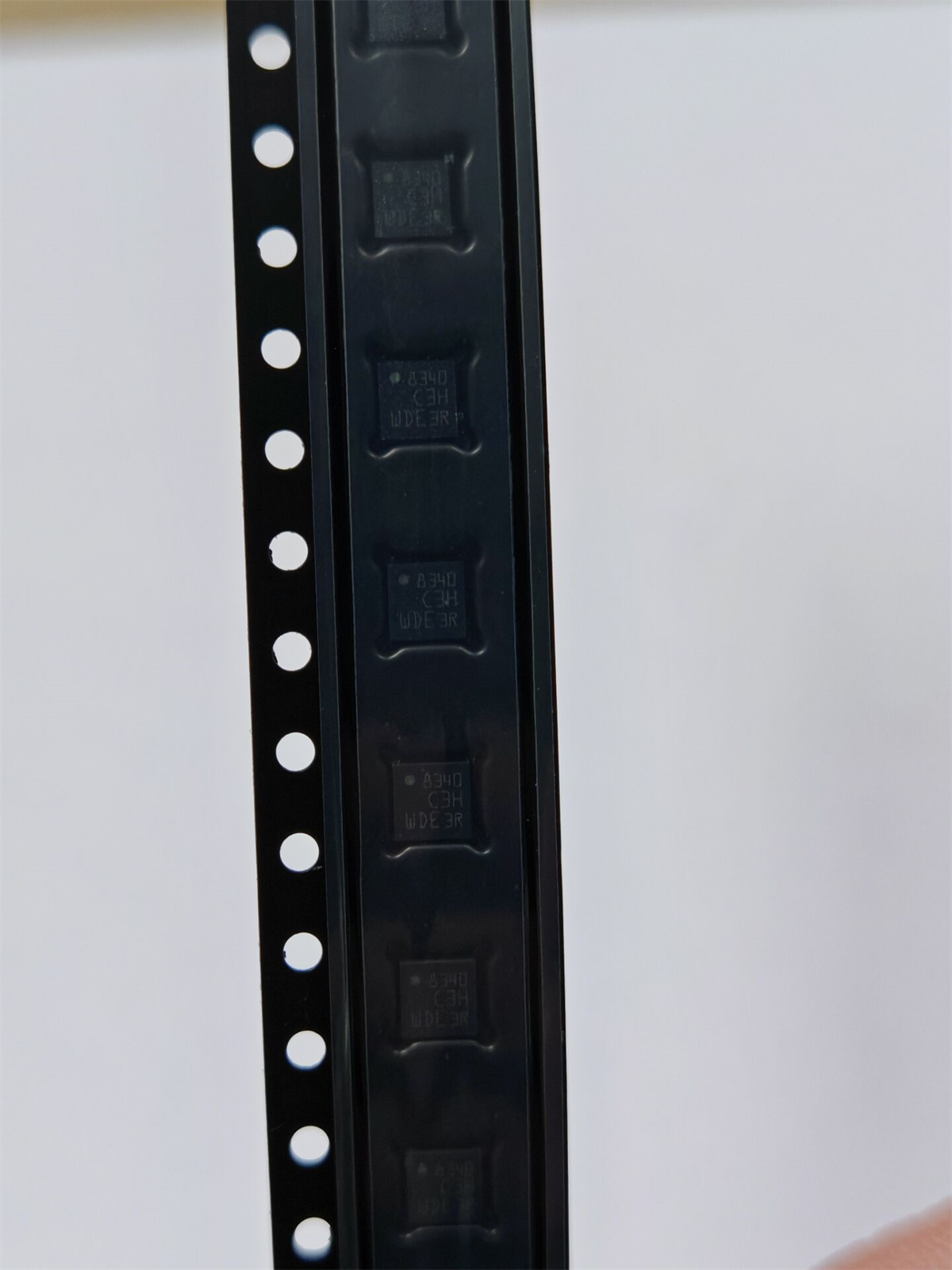

SN65ELT21DGKR
Brand: Texas Instruments
Texas Instruments SN65ELT21DGKR is a power management component designed for AI Servers & Low-Altitude Economy (Drone and UAV) and related applications. In stock at Superb Automation — request a quote for competitive pricing and fast delivery.
Product Specifications
SN65ELT21DGKR
Texas Instruments — Power Management & Signal Chain
Product Overview
The SN65ELT21DGKR from Texas Instruments is a power management / signal chain IC delivering high efficiency, precision regulation, and robust protection. Texas Instruments (TI) is a global leader in analog ICs, power management solutions, and embedded processors.
Superb Automation partners with leading brands including Qorvo, TI, ADI, XILINX, NVIDIA, Intel, ST, MACOM, Renesas, and Coilcraft to provide complete BOM and supply-chain solutions.
Key Features
- High-efficiency power conversion with low quiescent current
- Wide input voltage range with precision output regulation
- Integrated over-current, over-temperature, and short-circuit protection
- Small footprint packaging for space-constrained designs
- AEC-Q100 qualified options available for automotive applications
- Flexible sequencing and soft-start control
Key Specifications
| Input Voltage | V |
| Output Voltage | V |
| Output Current | A |
| Switching Frequency | kHz |
| Efficiency | % |
| Quiescent Current | µA |
| Topology | — |
| Package | — |
| Operating Temp | °C |
| Protection | — |
Applications
Industrial Automation
Automotive Electronics
Telecom Infrastructure
Server & Data Center Power
Medical Devices
Consumer Electronics
Request Quote — In Stock, 100% New & Original, Full Warranty
SN65ELT21DGKR: a 5 V PECL to TTL translator with a 3 ns typical delay
The SN65ELT21DGKR converts a differential PECL signal to a single ended TTL output on a 5 V supply. It is the small translator that sits between an ECL clock tree and a TTL counter, or between a PECL line receiver and a microcontroller input, at propagation delays of 3 ns typical and output currents of 24 mA, which is enough to drive a terminated 50 ohm line or a fanout of several TTL inputs.
The part runs on VCC of 4.2 V to 5.7 V with ground as the only other rail, and it includes temperature compensation on the input threshold so the switching point does not drift across the operating range. A VBB reference output of roughly 1.3 V below VCC is provided for single ended use: the unused input is tied to VBB, and that pin is decoupled with a 0.01 uF capacitor while the sink or source current stays under 0.5 mA.
Key data for the SN65ELT21DGKR
| Function | Differential PECL input to single ended TTL output, one channel |
| Supply | 4.2 V to 5.7 V with ground at 0 V, the PECL rail is the only supply the part needs |
| Delay | 3 ns typical propagation delay, which is fast enough for clock distribution rather than only for static levels |
| Drive | 24 mA TTL output current, enough for a 50 ohm terminated line or several TTL loads |
| Fail state | Deterministic output value when the inputs are open or below 1.3 V, so a disconnected cable does not produce a random clock |
| Temperature | Minus 40 C to 85 C, storage minus 65 C to 150 C, absolute supply 6 V |
Body, marking and reel data
| Body | DGK, VSSOP 8 at 3.00 mm by 3.00 mm, also published as a D SOIC 8 in the same family |
| Reel | 2500 pieces on a large reel, carrier tape 12.4 mm, 330 mm reel |
| Marking | SIII on the DGKR row, ELT21 on the SOIC row, so the body is visible from the printed code |
| Handling | Moisture level 1, 260 C peak, unlimited floor life, nickel palladium gold lead finish |
| ESD note | The vendor states limited built in protection on this device, so it is handled in conductive foam rather than a plain tray |
Where an ECL to TTL translator still matters
PECL and ECL logic survives in instruments, in older telecom shelves and in any place where a fast clock has to travel a long way with low noise. The receiving side is often a modern TTL or CMOS counter that cannot accept the 1.6 V swing of a PECL pair. A translator in an 8 pin body is cheaper and quieter than an AC coupled comparator with an external reference, and it keeps the duty cycle because both edges pass through the same threshold.
The open input behaviour is the feature that saves field returns. When a backplane card is pulled, the input pair floats. A comparator front end can oscillate and feed a burst of clocks into a counter that then reads a wrong total. The SN65ELT21DGKR holds the output at a defined level in that state, and it does the same when the input amplitude falls below 1.3 V, which is what a dying driver produces.
Questions we get when this code is on a BOM
The question that comes up most is whether this part can replace an MC10ELT21 or an MC100ELT21 on an existing board. The vendor positions it as a drop in equivalent, and the pinout matches: D, Dbar, Q, VBB, VCC and ground in the same places. What has to be checked is the supply tolerance and the load on VBB, because the reference pin has a 0.5 mA limit and some older boards pull more than that.
The second question is about the output swing into a long line. The 24 mA rating covers a 50 ohm line with a 5 V supply, but the edge rate is not slew controlled, so a long unshielded run radiates. Where EMC matters, a series resistor at the output or a shielded pair is the usual fix, and the translator itself does not need to change.
How SUPERB supports this line item
Every offer we send for the SN65ELT21DGKR carries the body, the marking and the reel quantity, and we flag the handling note because the vendor publishes limited built in ESD protection on this die. Customers replacing an obsolete ECL translator can start from our obsolete part cross reference hub, which collects the pinout and threshold checks we run before a substitute is proposed.
When the substitute also has to be verified on the customer board, how to verify a drop in replacement sets out the bench sequence we follow, from pin continuity to the timing at the real load.

